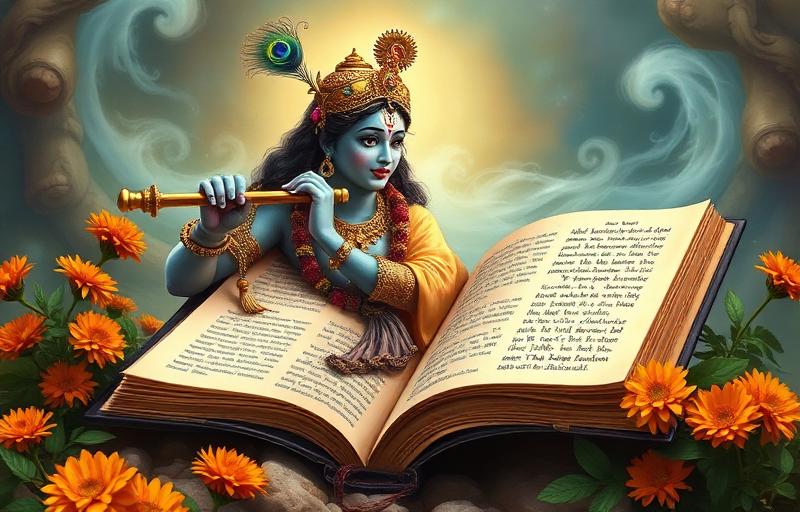
Why These 10 Shlokas Are Loved Across the World
The Bhagavad Gita contains 700 shlokas spoken on the battlefield of Kurukshetra, where Shri Krishna counsels the despairing warrior Arjuna. Yet a handful of verses have risen above the rest - quoted by grandmothers and presidents, printed on classroom walls, whispered in hospital corridors.
Why these ten? Because each one answers a question every human being eventually asks: How do I work without anxiety? What happens at death? Does God intervene in the world? Whose responsibility is my life? What is left when nothing else works?
In this guide you will find each shloka in Devanagari, with IAST transliteration and a 1-2 line meaning in simple language. Read them slowly. Ten verses, properly absorbed, can carry more weight than ten thousand pages of advice - that is the enduring magic of the Gita.
Shlokas 1-2: The Heart of Karma Yoga (Gita 2.47 and 2.48)
1. Karmanye vadhikaraste (Gita 2.47) - the most quoted verse of the entire Gita.
कर्मण्येवाधिकारस्ते मा फलेषु कदाचन । मा कर्मफलहेतुर्भूर्मा ते सङ्गोऽस्त्वकर्मणि ॥
karmany evadhikaras te ma phaleshu kadachana ma karma-phala-hetur bhur ma te sango 'stv akarmani
Meaning: Your right is to action alone, never to its fruits. Do not let the fruit be your motive, and do not be attached to inaction either.
2. Yoga-sthah kuru karmani (Gita 2.48) - the definition of yoga itself.
योगस्थः कुरु कर्माणि सङ्गं त्यक्त्वा धनञ्जय । सिद्ध्यसिद्ध्योः समो भूत्वा समत्वं योग उच्यते ॥
yoga-sthah kuru karmani sangam tyaktva dhananjaya siddhy-asiddhyoh samo bhutva samatvam yoga uchyate
Meaning: Established in yoga, perform your duties, abandoning attachment, equal in success and failure. That evenness of mind is called yoga.
Shlokas 3-4: The Immortal Soul (Gita 2.22 and 2.23)
3. Vasamsi jirnani (Gita 2.22) - the famous metaphor of changing clothes.
वासांसि जीर्णानि यथा विहाय नवानि गृह्णाति नरोऽपराणि । तथा शरीराणि विहाय जीर्णान्यन्यानि संयाति नवानि देही ॥
vasamsi jirnani yatha vihaya navani grihnati naro 'parani tatha sharirani vihaya jirnany anyani samyati navani dehi
Meaning: As a person discards worn-out clothes and puts on new ones, so the embodied soul discards worn-out bodies and takes on new ones.
4. Nainam chindanti shastrani (Gita 2.23) - the indestructibility of the atma.
नैनं छिन्दन्ति शस्त्राणि नैनं दहति पावकः । न चैनं क्लेदयन्त्यापो न शोषयति मारुतः ॥
nainam chindanti shastrani nainam dahati pavakah na chainam kledayanty apo na shoshayati marutah
Meaning: Weapons cannot cut the soul, fire cannot burn it, water cannot wet it, wind cannot dry it. These two verses, often recited at last rites, turn grief toward the deathless.
Shlokas 5-6: The Lord's Promise to Descend (Gita 4.7-4.8) and the Reward of Faith (4.39)

5. Yada yada hi dharmasya (Gita 4.7-4.8) - the great promise of avatara.
यदा यदा हि धर्मस्य ग्लानिर्भवति भारत । अभ्युत्थानमधर्मस्य तदात्मानं सृजाम्यहम् ॥ परित्राणाय साधूनां विनाशाय च दुष्कृताम् । धर्मसंस्थापनार्थाय सम्भवामि युगे युगे ॥
yada yada hi dharmasya glanir bhavati bharata abhyutthanam adharmasya tadatmanam srijamy aham paritranaya sadhunam vinashaya cha dushkritam dharma-samsthapanarthaya sambhavami yuge yuge
Meaning: Whenever dharma declines and adharma rises, I manifest myself. To protect the good, destroy the wicked and re-establish dharma, I appear age after age.
6. Shraddhavan labhate jnanam (Gita 4.39) - faith bears the fruit of wisdom.
श्रद्धावाँल्लभते ज्ञानं तत्परः संयतेन्द्रियः । ज्ञानं लब्ध्वा परां शान्तिमचिरेणाधिगच्छति ॥
shraddhavan labhate jnanam tat-parah samyatendriyah jnanam labdhva param shantim achirenadhigachchhati
Meaning: The person of faith, devoted and self-controlled, attains knowledge - and having attained it, quickly reaches supreme peace.
Shlokas 7-8: Lift Yourself (Gita 6.5) and the Lord Carries the Devoted (9.22)
7. Uddhared atmanatmanam (Gita 6.5) - self-responsibility in one verse.
उद्धरेदात्मनात्मानं नात्मानमवसादयेत् । आत्मैव ह्यात्मनो बन्धुरात्मैव रिपुरात्मनः ॥
uddhared atmanatmanam natmanam avasadayet atmaiva hy atmano bandhur atmaiva ripur atmanah
Meaning: Lift yourself by your own self; do not degrade yourself. The self alone is one's friend, and the self alone is one's enemy.
8. Ananyas chintayanto mam (Gita 9.22) - the promise of yoga-kshema.
अनन्याश्चिन्तयन्तो मां ये जनाः पर्युपासते । तेषां नित्याभियुक्तानां योगक्षेमं वहाम्यहम् ॥
ananyash chintayanto mam ye janah paryupasate tesham nityabhiyuktanam yoga-kshemam vahamy aham
Meaning: Those who worship me with undivided devotion, ever united with me - I personally carry what they lack and protect what they have. Together, these two verses balance effort and grace: stand on your own feet, and the Lord holds your hand.
Shlokas 9-10: The Final Teaching of Surrender (Gita 18.65 and 18.66)
9. Man-mana bhava mad-bhakto (Gita 18.65) - Krishna's tender assurance.
मन्मना भव मद्भक्तो मद्याजी मां नमस्कुरु । मामेवैष्यसि सत्यं ते प्रतिजाने प्रियोऽसि मे ॥
man-mana bhava mad-bhakto mad-yaji mam namaskuru mam evaishyasi satyam te pratijane priyo 'si me
Meaning: Fix your mind on me, be my devotee, worship me, bow to me - you will surely come to me. I promise you this truly, for you are dear to me.
10. Sarva-dharman parityajya (Gita 18.66) - the charama shloka, the Gita's final word.
सर्वधर्मान्परित्यज्य मामेकं शरणं व्रज । अहं त्वां सर्वपापेभ्यो मोक्षयिष्यामि मा शुचः ॥
sarva-dharman parityajya mam ekam sharanam vraja aham tvam sarva-papebhyo mokshayishyami ma shuchah
Meaning: Abandon all dharmas and take refuge in me alone. I will free you from all sins - do not grieve. Tradition reveres this as the charama shloka, the summit of the entire Gita: when every effort is exhausted, surrender remains, and it is enough.
How to Make These Shlokas Part of Your Daily Life

Memorizing all ten is wonderful, but even one verse, lived, transforms a life. A practical approach:
1. One shloka a week - read it aloud each morning for seven days; by week's end it recites itself in your mind. 2. Match the verse to the moment - chant 2.47 before stressful work, 2.22-2.23 in grief, 9.22 in financial worry, 18.66 when everything feels beyond your strength. 3. Keep a shloka diary - note one situation each day where a verse changed your response. 4. Recite with family - children who learn yada yada hi dharmasya young carry it for life. 5. Go deeper gradually - once these ten feel like old friends, begin a full reading of the Gita, one chapter at a time.
On Vandnaa you can keep these shlokas alongside your daily aarti and paath, turning ten famous verses into a quiet, lifelong companionship with Shri Krishna's wisdom.
Quick Answers
Which is the most famous shloka of the Bhagavad Gita?+
Karmanye vadhikaraste ma phaleshu kadachana (Gita 2.47) is widely regarded as the most famous verse. It teaches that our right is to action alone, never to its fruits - the essence of karma yoga.
Which Gita shloka is best for students?+
Gita 2.47 (karmanye vadhikaraste) helps students focus on effort rather than result anxiety, and 4.39 (shraddhavan labhate jnanam) teaches that faith, dedication and self-control are the path to knowledge and peace.
Which Gita shloka helps with stress and anxiety?+
Gita 2.48 (yoga-sthah kuru karmani) teaches evenness in success and failure, 9.22 assures that the Lord carries the needs of the devoted, and 18.66 (ma shuchah - do not grieve) is the ultimate verse of reassurance.
What does yada yada hi dharmasya mean?+
In Gita 4.7-4.8 Krishna declares: whenever dharma declines and adharma rises, I manifest myself - to protect the good, destroy the wicked and re-establish dharma, I appear age after age.
What is the charama shloka of the Gita?+
Gita 18.66 - sarva-dharman parityajya - is revered as the charama shloka, the final teaching: abandon all dharmas, take refuge in the Lord alone, and he will free you from all sins; do not grieve.
How should a beginner start memorizing Gita shlokas?+
Take one shloka per week. Read it aloud every morning, learn its meaning first, then the Sanskrit line by line. Start with 2.47, the simplest and most useful, and let daily repetition do the work.
About the author
Acharya Vinaya Kapoor · M.A. Sanskrit, Mantra & Stotra Studies
Acharya Vinaya holds an M.A. in Sanskrit from Banaras Hindu University and writes the mantra and stotra commentary on Vandnaa. Her focus is on accurate pronunciation, traditional context, and helping modern readers connect with classical texts.
Meet the Vandnaa editorial team →