
Why Bhagavad Gita 2.47 Is the Most Quoted Shloka
Karmanye Vadhikaraste Ma Phaleshu Kadachana is arguably the single most quoted verse of the Bhagavad Gita. Spoken by Lord Krishna to Arjuna on the battlefield of Kurukshetra, it appears as verse 47 of Chapter 2, the Sankhya Yoga. Arjuna stands paralysed by doubt, unwilling to fight against his own kin. Krishna's reply in this shloka cuts through that confusion with one clear principle - do your duty, and let go of anxiety about the outcome. The verse has travelled far beyond temples and scriptures. Students write it on study desks, leaders quote it in speeches, and counsellors share it with people facing stress at work. Its power lies in how it compresses a deep philosophy, Nishkama Karma or desireless action, into a single memorable line that anyone can carry through an ordinary working day.
Full Shloka in Sanskrit with Transliteration
Here is the complete shloka exactly as it appears in Bhagavad Gita 2.47:
कर्मण्येवाधिकारस्ते मा फलेषु कदाचन । मा कर्मफलहेतुर्भूर्मा ते सङ्गोऽस्त्वकर्मणि ॥
IAST transliteration: karmaṇy evādhikāras te mā phaleṣu kadācana | mā karma-phala-hetur bhūr mā te saṅgo 'stv akarmaṇi ||
Overall meaning: You have a right only to perform your prescribed duty, never to the fruits of that action. Do not consider yourself the cause of the results of your work, and never let yourself become attached to inaction. In two short lines Krishna gives four distinct instructions - act, do not obsess over results, do not claim ownership of outcomes, and do not use detachment as an excuse to stop working. Read the verse slowly and you will notice that each quarter adds one new layer to the teaching.
Word-by-Word Meaning of Karmanye Vadhikaraste
Breaking the shloka into its Sanskrit components makes the teaching much clearer. Here is the word-by-word meaning: 1. karmaṇi - in action, in your prescribed duty 2. eva - only, certainly 3. adhikāraḥ - right, entitlement 4. te - your 5. mā - never, not 6. phaleṣu - in the fruits or results 7. kadācana - at any time 8. karma-phala-hetuḥ - the cause of the results of action 9. bhūḥ - become 10. te saṅgaḥ - your attachment 11. astu - let there be 12. akarmaṇi - in inaction, in not doing your duty Notice how the word mā (never) appears three times. Krishna is issuing three protective warnings - never claim the fruit, never assume doership of results, and never slide into inaction. The single positive entitlement, adhikāraḥ, applies only to the work itself.
The Deeper Meaning - Nishkama Karma

At its heart, Gita 2.47 teaches Nishkama Karma - action performed without selfish craving for reward. Krishna is not asking Arjuna to be indifferent to quality or to work carelessly. He is separating two things we usually fuse together - the effort, which is fully in our hands, and the outcome, which depends on countless factors beyond us. Anxiety is born exactly in that gap. When the mind keeps leaping ahead to results, the present action suffers, and so does our peace. The shloka also dismantles the ego of doership. We contribute effort, but we are never the sole cause of any result. Finally, Krishna closes the escape route - if results do not belong to me, why work at all? He answers - because attachment to inaction is just another bondage. Work done as an offering, with full skill and zero clinging, becomes Karma Yoga.
When and How to Use This Shloka in Daily Life
This shloka is most powerful when it moves from memory into moments. Practical ways to use it: 1. Morning recitation - chant it once after waking or during your morning puja, setting the intention to focus on effort for the day. 2. Before exams or interviews - students can recite it three times to calm the mind when result-anxiety peaks. 3. At the work desk - when a project outcome feels uncertain, pause, breathe, and silently repeat the first line. 4. School prayer - many Indian schools include Gita 2.47 in morning assembly; it teaches children effort-focus early. 5. Before sleep - recall the day's work and mentally offer the results, releasing the day's worries. No elaborate ritual is needed. Sit comfortably, pronounce the words clearly, and spend thirty seconds reflecting on one task where you can apply it today.
Benefits of Reciting Gita 2.47 Regularly
Regular recitation of this shloka, combined with honest reflection on its meaning, brings benefits that devotees and practitioners have reported for centuries: 1. Reduced anxiety - shifting attention from uncontrollable results to controllable effort directly lowers performance stress. 2. Better focus - a mind not split between work and worry gives fuller attention to the task at hand. 3. Equanimity - praise and criticism, success and failure begin to matter less, creating emotional steadiness. 4. Freedom from procrastination - the warning against akarmaṇi counters the habit of avoiding work out of fear of failing. 5. Spiritual growth - offering the fruits of work to the Divine turns ordinary duties into a living Karma Yoga practice. The shloka works gradually. Reciting it is the reminder; applying it during one real decision each day is where the transformation actually happens.
Teaching This Shloka to Children
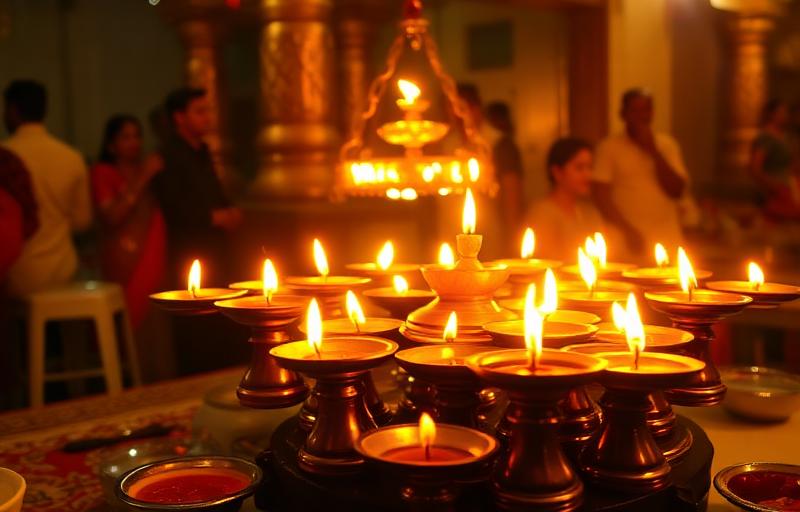
Children learn this shloka best through story and example rather than abstract philosophy. Begin with the scene - Arjuna afraid on the battlefield, Krishna as his guide and charioteer. Then translate the message into a child's world: study with full effort, and let the marks take care of themselves. A simple practice is to recite the shloka together before homework or before a match, one line at a time, letting the child repeat each phrase. Explain just one word per week - karma this week, phala the next - so meaning builds slowly without overwhelm. Praise the child's effort explicitly instead of only celebrating results; this models the verse at home. By the time they face board exams or competitive pressure, the shloka is already an inner voice they trust, not a lesson imposed from outside.
What People Ask Most
What is the meaning of Karmanye Vadhikaraste in one line?+
It means: you have the right only to perform your duty, never to its fruits - so act sincerely without attachment to results and without sliding into inaction.
Does this shloka say we should not expect any results at all?+
No. Krishna does not forbid goals or planning. He asks us not to be emotionally enslaved to outcomes. You can aim high and work hard; the teaching is to keep your peace and effort independent of whether the result arrives exactly as desired.
Which chapter and verse of the Bhagavad Gita is Karmanye Vadhikaraste from?+
It is verse 47 of Chapter 2 (Sankhya Yoga) of the Bhagavad Gita, spoken by Lord Krishna to Arjuna on the battlefield of Kurukshetra.
Can students chant this shloka before exams?+
Yes, it is ideal for students. Reciting it three times before study or an exam calms result-anxiety and redirects the mind to preparation and effort, which are the only things actually in the student's control.
How do I pronounce Karmanye Vadhikaraste correctly?+
Break it as karmaṇi + eva + adhikāraḥ + te, spoken together as karmaṇy-evādhikāras-te. Recite slowly: kar-man-ye vaa-dhi-kaa-ras-te, maa pha-le-shu ka-daa-cha-na. Listening to a traditional rendering a few times makes the flow natural.
Can Gita 2.47 be used as a daily japa mantra?+
Yes. While it is a shloka rather than a bija mantra, many devotees repeat it 11 or 21 times daily as contemplative japa. The goal is reflection - each repetition should deepen your commitment to duty and your release of result-anxiety.
About the author
Acharya Vinaya Kapoor · M.A. Sanskrit, Mantra & Stotra Studies
Acharya Vinaya holds an M.A. in Sanskrit from Banaras Hindu University and writes the mantra and stotra commentary on Vandnaa. Her focus is on accurate pronunciation, traditional context, and helping modern readers connect with classical texts.
Meet the Vandnaa editorial team →