
Why the Gita Feels Hard at First - And Why That Is Normal
Be honest about the obstacle and it loses half its power. The Bhagavad Gita opens mid-story: chapter 1 assumes you know the Mahabharata's family tree, lists dozens of warrior names, and ends with the hero in tears. A new reader who starts at page one often concludes the book is not for them. Add unfamiliar Sanskrit terms - dharma, gunas, prakriti, sannyasa - and the enthusiasm of the first day fades by the first week. None of this means you are unfit to read the Gita. It means you are reading the deepest conversation in our tradition, one that even Arjuna needed eighteen chapters to absorb while Bhagwan himself explained it. The tradition has always known this, which is why teachers prescribe entry points, simple translations and tiny daily doses rather than heroic cover-to-cover sprints. Treat the Gita like a relationship to be built, not a syllabus to be finished, and the difficulty becomes part of the sweetness.
Which Chapter to Start With - 2, 12 or 15
Skip chapter 1 on your first pass and choose one of these traditional entry points. 1. Chapter 2 (Sankhya Yoga) - the most recommended start. It is the Gita in miniature: the immortality of the soul, the famous karmanye vadhikaraste verse 2.47, and the portrait of the steady-minded person (sthitaprajna). If you read only one chapter in your life, elders say, read this one. 2. Chapter 12 (Bhakti Yoga) - only 20 verses, warm and personal. It describes the kind of human being God loves: free of malice, friendly, content. Ideal if you come to the Gita through the heart. 3. Chapter 15 (Purushottama Yoga) - also 20 verses, recited before meals in many traditions, a compact summary of the Gita's worldview. Read your chosen chapter slowly over a week. Then read chapters 3 to 6, and only afterwards return to chapter 1, which will now make emotional sense.
Translation vs Commentary - What a Beginner Actually Needs
A translation gives you the plain meaning of each shloka in Hindi or English; a commentary (bhashya or tika) adds a teacher's explanation, often shaped by a particular school - Advaita, Vishishtadvaita, Dvaita or a modern teacher's perspective. For your first complete reading, choose a clean, simple translation with the Sanskrit text, transliteration and word meanings, such as the widely loved Gita Press, Gorakhpur edition in Hindi, which generations of Indian households have grown up with. Keep it light: your first goal is familiarity, not philosophy. Once you know the terrain, pick one commentary and stay with it for a full reading rather than mixing five teachers at once, which confuses more than it clarifies. A useful sequence is: simple translation first, then a devotional commentary, then comparative study years later if the pull arises. Remember that the Gita was spoken to a man in crisis, not to a scholar in a library - clarity and consolation come before technical mastery.
The Daily One-Shloka Practice - Small, Slow and Unbreakable
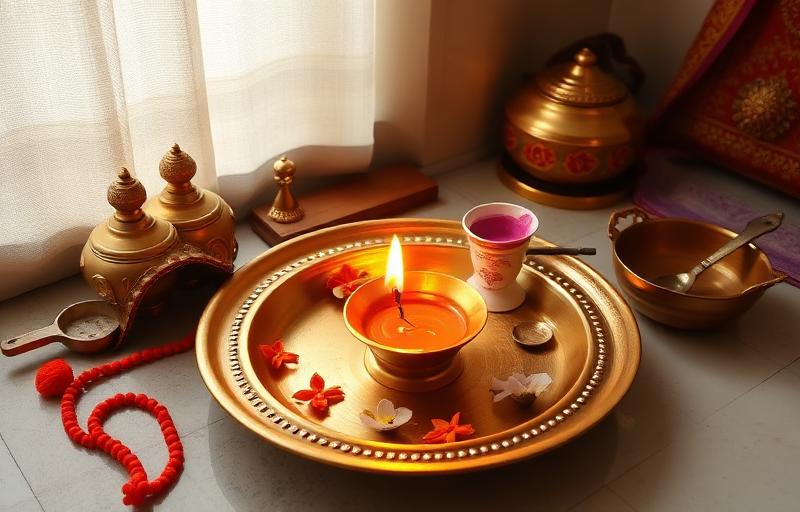
The single most sustainable Gita habit is one shloka a day. The method is simple. 1. Fix a slot - five to ten minutes, ideally morning after bathing or at night before sleep, the same time daily. 2. Read the shloka thrice - once in Sanskrit or transliteration, once for word meanings, once for the full translation. 3. Sit with one question - where does this verse touch my life today? A single honest sentence in a notebook is enough. 4. Carry it - repeat the verse or its meaning mentally during a commute or a chore; the shloka starts working on you between readings. At this pace the full Gita takes about two years, and that is its strength, not its weakness: you are not racing through a text, you are letting 700 verses slowly re-tune how you respond to anger, anxiety, duty and loss. Devotees who have done this practice describe the same surprise - the day's shloka keeps matching the day's situation.
Gita Reading Niyam - Simple Rules of Respect
The Gita is revered as the words of Bhagwan himself, so tradition surrounds its reading with a gentle discipline - niyam - that any beginner can follow. 1. A clean place and person - wash hands and face at minimum; a bath before morning reading is ideal. 2. A fixed, respectful spot - keep the Gita on a chauki, shelf or book stand, never directly on the floor or under other objects; wrap it in a clean cloth. 3. Begin with remembrance - a moment of pranam to Shri Krishna and your guru or elders, or the simple invocation Om Shri Krishnaya Namah. 4. Read seated and unhurried - not while lying down or eating. 5. Close gracefully - finish the verse or section you began, offer a short prayer, and place the book back with care. These niyam are not hurdles but frames: they signal to your own mind that something sacred is happening, which is half of what makes the reading transformative.
Apps and Resources - Let Technology Serve Your Sadhana
Used wisely, a phone can be a pocket gurukul. The Vandnaa app brings daily devotional reading into one place, and the Vandnaa blog's Gita-on-life series takes individual shlokas - like the famous karmanye vadhikaraste verse 2.47 - and unpacks them for modern situations such as exam stress, career setbacks and family duty, which is exactly the bridge a beginner needs between the Sanskrit and the workday. Beyond that, look for resources that offer: verse-by-verse audio so you can hear correct pronunciation, word-by-word meanings, and a daily-shloka reminder to protect your streak. Listening to a chapter being chanted during a commute counts as real contact with the text - shravana, hearing, is itself a classical mode of study. One caution: do not let scrolling replace sitting. Use the app to feed a fixed offline practice, with the physical Gita at its centre, rather than as one more feed to skim.
Common Beginner Mistakes to Avoid

Most people who abandon the Gita stumble on the same few stones. 1. Starting at chapter 1 and quitting - begin with chapter 2, 12 or 15 instead. 2. Reading too much too fast - a chapter a night for a week, then nothing for a year; one shloka daily beats both. 3. Collecting commentaries before reading the text - five interpretations of a verse you have never sat with creates noise, not knowledge. 4. Treating it as a quotation mine - pulling motivational lines while skipping the discomforting teachings on ego and attachment misses the medicine. 5. Waiting to become worthy - postponing until your Sanskrit, discipline or life is in order; the Gita was spoken to a man at his lowest. 6. Reading without applying - the Gita is a manual for action; each verse should eventually meet a real decision, a real anger, a real fear in your day.
Frequently Asked Questions
Do I need to know Sanskrit to read the Bhagavad Gita?+
No. Excellent Hindi and English translations carry the full meaning, and most editions print the Sanskrit with transliteration so you can slowly befriend the original sounds. Many lifelong Gita readers never formally learn Sanskrit; understanding and living the teaching matters far more than the language of access.
Which chapter should a complete beginner read first?+
Chapter 2 is the classic recommendation because it summarises the whole Gita - the soul's immortality, karma yoga and the steady-minded ideal. If you prefer something shorter and softer, chapter 12 on devotion or chapter 15, each only 20 verses, are equally honoured starting points.
Can I read the Gita at night or without bathing?+
Yes. The Gita may be read at any hour; many devotees read at night before sleep. Cleanliness is a mark of respect, so wash your hands and face if a full bath is not possible. Tradition values a clean heart and attentive mind above ritual perfection - do not let a missed bath cancel a day's reading.
Which Gita edition is good for Hindi readers?+
The Gita Press, Gorakhpur edition with Hindi translation (and the Tattvavivechani for deeper study) has been the trusted choice of Indian households for generations - accurate, inexpensive and respectful in presentation. Start with its plain translation edition; move to a fuller commentary after your first complete reading.
Should I chant the shlokas aloud or just read the meaning?+
Do both if you can. Chanting aloud, even imperfectly, engages breath and memory and is honoured as path; reading the meaning engages understanding, honoured as svadhyaya. A practical rhythm for beginners: chant the shloka twice, read its meaning once, and sit quietly for a few breaths before closing.
What if I miss a day of my Gita practice?+
Simply resume the next day without guilt or double quotas. The Gita itself teaches in verse 2.40 that on this path no effort is ever lost and even a little practice protects from great fear. A missed day is a comma, not a full stop; consistency over months matters more than an unbroken streak.
About the author
Pandit Ravindra Sharma · Vedic Rituals & Bhakti, 22+ years
Pandit Ravindra is the Vandnaa editorial team's resident specialist on aarti, chalisa, and daily devotion. He has performed home and temple pujas across Varanasi and Delhi for over two decades and contributes the bhakti-focused articles on this site.
Meet the Vandnaa editorial team →