Who Is Annapurna Devi
Annapurna's name breaks down simply: anna means food or grain, and purna means full or complete. She is the goddess of nourishment, worshipped as the one who ensures no kitchen, and no devotee, ever goes without. In tradition she is understood as a form of Parvati, Shiva's consort, and is worshipped with particular devotion in Kashi (Varanasi), where the Annapurna Temple stands beside the Kashi Vishwanath Temple itself.
The legend most closely tied to her is a striking one. In one well-known Puranic story, Shiva, in his ascetic aspect, once dismissed the material world, including food, as maya, illusion, unworthy of real attention. To correct this, Parvati is said to have withdrawn all food from the three worlds, causing widespread hunger and suffering, including to Shiva himself. When Shiva realized that even divine consciousness cannot dismiss the body's need for nourishment, he came before her, alms bowl in hand, to beg for food. Parvati fed him with her own hands, and from that act she became known as Annapurna, the goddess who teaches that nourishing life is not a lesser concern beside spiritual pursuit, but inseparable from it.
This story matters because it directly addresses a tension many spiritual seekers feel: is caring for the body's needs, cooking, eating, feeding others, a distraction from devotion, or a form of it? Annapurna's tradition answers clearly. Even Shiva, the great ascetic, needed to eat, and needed a goddess to remind him of it. Feeding is not lesser work.
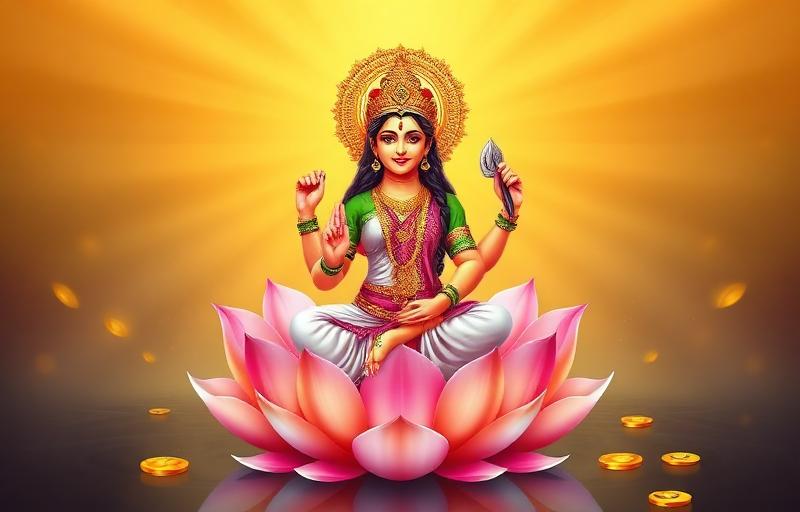
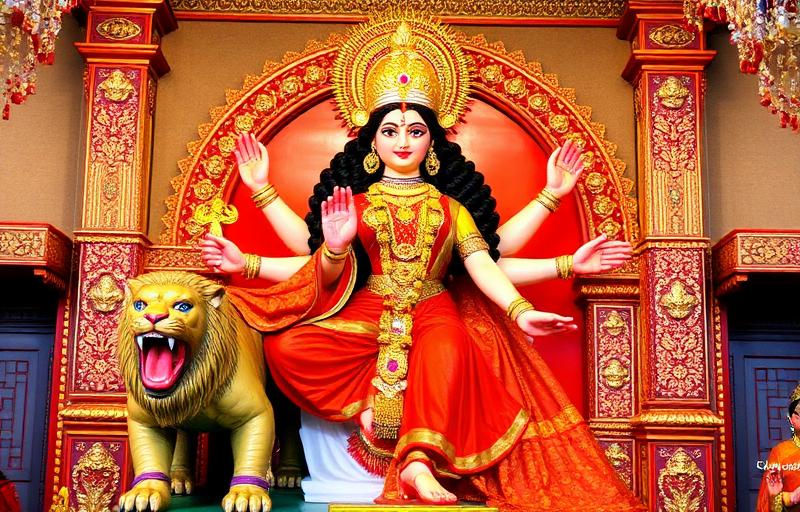
Her iconography typically shows her seated, holding a golden ladle in one hand and a bowl of rice or khichdi in the other, often in the act of feeding a devotee, sometimes depicted as Shiva himself with his begging bowl. This image, of a goddess mid-gesture, giving rather than simply receiving, is central to why she occupies such an intimate, everyday place in Hindu households.
Why Her Image Belongs in the Kitchen
Most Hindu deities are worshipped at a central altar or mandir, but Annapurna has a distinct, additional tradition: a small image or plate bearing her likeness kept directly in the kitchen, often above the stove or near the grain storage, separate from the household's main puja space.
This placement is deliberate, not incidental. The kitchen (rasoi) in traditional Hindu households is treated as a semi-sacred space in its own right, the place where raw ingredients are transformed into nourishment that sustains the entire family, a daily, unglamorous act of creation that tradition takes seriously enough to give its own presiding deity. Keeping Annapurna there is a way of consecrating the labor of cooking itself, treating the person at the stove, historically most often a woman, as engaged in devotional work, not merely domestic chores.
This tradition also carries a practical, almost protective dimension. Many households believe that keeping Annapurna's image in the kitchen ensures the family never faces scarcity of food, an assurance that mattered enormously in agrarian societies where a bad harvest could mean real hardship. Even today, the symbolism persists strongly: an Annapurna image in the kitchen is less a superstition about supply and more a daily, visible commitment to gratitude and non-wastage of food, values increasingly relevant in a world of significant food waste.
Several regional customs reflect this same instinct in different forms. In Bengali households, Annapurna Puja is a significant annual event. Kashmiri Pandit families traditionally keep a similar image tied to grain stores. Across much of North India, a simple printed image near the chulha or modern stove remains common even in small urban kitchens, a quiet thread connecting a contemporary apartment to a much older agrarian reverence for food.
A Simple Daily Gratitude Practice Before Cooking
You do not need a formal puja to bring Annapurna's spirit into a modern kitchen. The tradition, at its heart, is about pausing before an act repeated multiple times a day, cooking, and treating it as worth a moment's attention rather than pure autopilot.
A simple version anyone can adopt:
- Before you turn on the stove, touch the edge of the cooking vessel or the grain container lightly and say, silently or aloud, "Om Annapurnayai Namah," a simple line acknowledging that what is about to happen, raw ingredients becoming nourishment, is not something to take for granted.
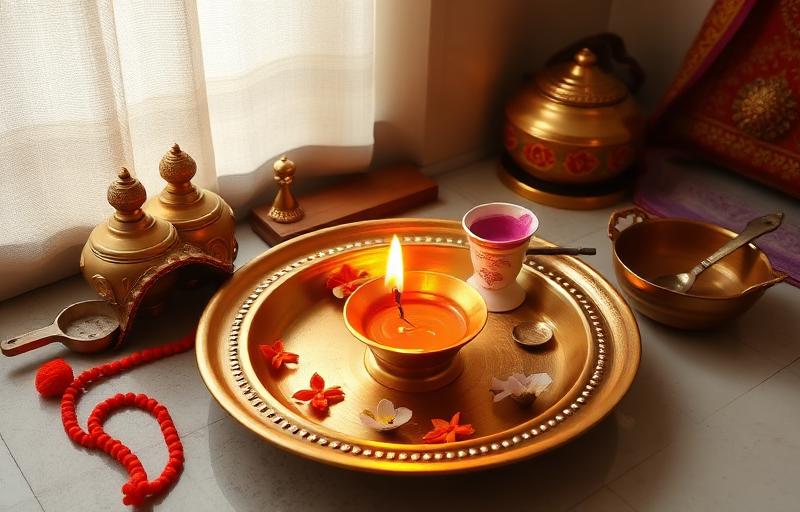
- Light a small diya near the kitchen on days that feel significant, festivals, a new job, a family gathering, if your household observes this custom.
- Offer the first roti or the first portion of any dish to the diya, the deity image, or simply set it aside for a moment before eating, a very old custom sometimes called pehli roti that treats the first output of cooking as a small offering rather than simply another serving.
- Avoid wasting food deliberately, cooking only what will realistically be eaten, and treating leftovers with the same care as fresh food, since Annapurna's blessing is traditionally understood to be about sufficiency, not excess.
- Close the meal with a brief, genuine thank-you, even a silent one, for having food at all, something a large part of the world still cannot take for granted.
This practice takes under a minute and requires no special items, yet it does something valuable: it turns a repetitive, easily unconscious task into a small daily devotional moment, exactly the tradition Annapurna represents. Families with children often find this an easy, tangible way to teach gratitude for food without a lecture, just a small, repeated gesture.
Annapurna in the Festival Calendar
While Annapurna's daily presence is quiet and domestic, she also has a clear place in the annual festival calendar, most prominently through Annapurna Jayanti, celebrated on the full moon (Purnima) of the Margashirsha month, usually falling in late November or December.
On this day, devotees, particularly in Varanasi, undertake special worship at the Annapurna Temple, and many households cook an elaborate, generous meal as an act of devotion, sharing food with neighbors, extended family or those in need. Feeding others on this day is considered especially meritorious, a direct extension of Annapurna's own defining act of feeding Shiva.
She is also closely linked to Akshaya Tritiya, a day associated with abundance and new beginnings, when many households specifically pray to her for a home that never runs short of food or resources through the coming year. Govardhan Puja, following Diwali, carries a related thread through Annakut, literally "a mountain of food," where dozens of dishes are prepared and offered together, echoing Annapurna's core promise of abundance shared rather than hoarded.
In Varanasi specifically, a popular local tradition holds that even a glimpse (darshan) of the Annapurna Temple's deity, whose doors open to the public only briefly around Annapurna Jayanti in some accounts, though daily darshan is available through most of the year, is considered enough to ensure a household never experiences hunger. Pilgrims visiting Kashi Vishwanath frequently pair that visit with a stop at the adjacent Annapurna shrine, treating the two as a natural pairing, Shiva and the goddess who fed him, standing side by side.
These festival moments are less about a single grand ritual and more about the same daily theme, gratitude, sufficiency, sharing, scaled up once or twice a year into visible community practice.
Why This Tradition Still Matters Today
It would be easy to dismiss a kitchen deity as a quaint relic of an older, more agrarian time, but Annapurna's tradition maps onto very contemporary concerns with surprising precision.
Food waste is now a globally recognized problem; a significant share of food produced worldwide is discarded even as hunger persists elsewhere. Annapurna's core teaching, that food is sacred, sufficient rather than excessive, never to be treated carelessly, speaks directly to that modern tension, centuries before the term "food waste" existed. A household that genuinely internalizes this principle, cooking mindfully, portioning realistically, sharing surplus rather than discarding it, is living the tradition regardless of whether it ever uses the word "puja."
There is also a mental health dimension worth naming. Cooking, for many people, has become a rushed, resentful chore squeezed between other obligations. Annapurna's tradition offers a different frame: the person at the stove is not merely completing a task but participating in an act tradition considers sacred enough to deserve its own deity. This reframe, treating a mundane, repeated act as meaningful rather than beneath notice, is a genuinely useful psychological tool, independent of one's specific beliefs about the goddess herself.
Finally, in a period when many young, working professionals live far from family kitchens and eat out of convenience more than ritual, keeping even a small Annapurna image or observing the brief daily gesture described earlier is an accessible way to stay connected to a tradition that does not require temple visits, elaborate ingredients or large blocks of time. It fits inside a life that is already busy, which may be exactly why it has survived as long as it has.
🪔 The Vandnaa app's daily puja reminders make it easy to build small, consistent practices like this one into an ordinary morning.
A Short Mantra and Weekly Vidhi
For readers who want a slightly more structured practice beyond the daily one-line gratitude gesture, here is a simple weekly approach that stays well within reach of a busy household.
The mantra: "Om Annapurnayai Namah" is the simplest invocation, appropriate for daily use. Those wanting a fuller verse often use a line from the well-known Annapurna Stotra: "Annapurne sada purne, shankara prana vallabhe, gyana vairagya siddhyartham, bhiksham dehi cha Parvati," a request to the ever-full Annapurna, beloved of Shiva, for the alms of knowledge and true detachment. This is the same line traditionally chanted at the Kashi Vishwanath temple complex.
A simple weekly vidhi, best done on a day the household already treats as significant (many choose Thursday or Friday, though there is no strict rule):
1. Clean the kitchen area thoroughly, including the space around the stove and grain storage, as a physical act of respect. 2. Light a diya near the Annapurna image, if you keep one, or simply near the stove. 3. Cook one dish, even a simple one, with particular attention and care, rather than rushing. 4. Offer the first portion mentally to Annapurna before the family eats. 5. Chant the short mantra or the stotra line a few times, and consider setting aside a small amount of grain or a packaged food item that week for donation, extending the household's sufficiency to someone else's.
This structure requires no priest, no elaborate samagri list and no special day off. It simply asks for attention, once a week, to a practice most households already perform unconsciously every single day: turning ingredients into nourishment for people they love.
Frequently Asked Questions
Why do Hindu households keep Annapurna's image in the kitchen?+
The kitchen is treated as a semi-sacred space where raw food becomes nourishment, and Annapurna's image consecrates that daily labor. Tradition also holds that her presence ensures the household never faces a shortage of food.
What is the story behind Annapurna Devi?+
In a well-known legend, Shiva dismissed food as illusion, so Parvati withdrew all nourishment from the three worlds. When even Shiva went hungry and came to her with an alms bowl, she fed him herself, becoming known as Annapurna, the goddess of complete nourishment.
What is a simple daily practice for Annapurna worship?+
Before cooking, touch the vessel or grain container and silently say "Om Annapurnayai Namah," then set aside the first portion of food as a small offering before the meal is served, a practice sometimes called pehli roti.
When is Annapurna Jayanti celebrated?+
Annapurna Jayanti falls on the full moon (Purnima) of the Margashirsha month, usually in late November or December, and is marked with special worship at the Annapurna Temple in Varanasi and generous, shared meals in many households.
Is Annapurna the same as Parvati?+
Yes, Annapurna is worshipped as a form of Parvati, Shiva's consort, specifically representing her aspect as the giver of nourishment. She is especially revered in Kashi, where her temple stands beside the Kashi Vishwanath temple.
About the author
Acharya Vinaya Kapoor · M.A. Sanskrit, Mantra & Stotra Studies
Acharya Vinaya holds an M.A. in Sanskrit from Banaras Hindu University and writes the mantra and stotra commentary on Vandnaa. Her focus is on accurate pronunciation, traditional context, and helping modern readers connect with classical texts.
Meet the Vandnaa editorial team →