Ashoka: The Tree Without Sorrow
The name Ashoka comes from two simple parts, 'a' meaning without, and 'shoka' meaning sorrow or grief. Devotees have long held that this gentle tree, with its dense green canopy and clusters of orange-red blossoms, carries the power to ease sorrow for those who sit beneath it with a sincere heart.
The tree blooms most vividly in spring, around the season of Chaitra, when its bright flowers stand out against fresh green leaves, adding to its association with renewal and the quiet lifting of grief.
The Ashoka Vatika of the Ramayana
The ashoka tree holds one of its most treasured places in devotional memory through the Ramayana. Tradition holds that Sita was kept in Ravana's garden in Lanka, remembered ever since as the Ashoka Vatika, during the period before Rama's arrival.
Beneath these very ashoka trees, Sita is remembered for her unwavering devotion, patience and faith through great hardship. Because of this story, the ashoka tree is forever associated in devotional retelling with quiet endurance and steadfast love, even though the garden's own name means the opposite of sorrow.
Ashoka and the God of Love
In classical tradition, the ashoka flower is counted among the five flowers said to tip the arrows of Kamadeva, the deity associated with love and desire. This connection has given the tree a gentle association with the arrival of spring and the blossoming of affection.
Because of this dual identity, tender and romantic on one hand, deeply patient and devotional on the other, the ashoka is regarded as a tree of emotional depth rather than one meaning alone.
How the Ashoka Tree Is Honoured
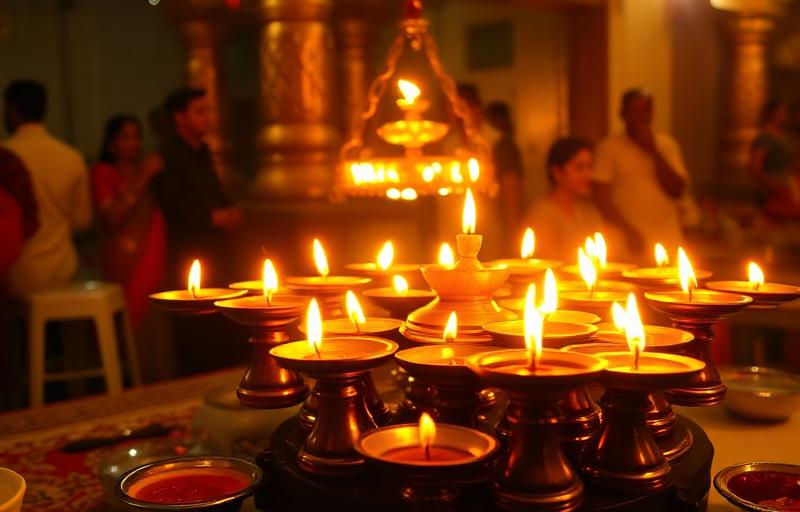
In many regions, the ashoka tree is planted within temple courtyards and household gardens for its beauty as well as its devotional associations. Its flowers are sometimes offered in worship, particularly around spring festivities.
- Planting the tree near temples and homes as a mark of auspiciousness
- Offering its flowers during Chaitra and spring worship in some regions
- Associating the tree with prayers for peace of mind and relief from grief
- Preserving old ashoka trees found in temple gardens as living heritage
As with other sacred trees, devotees approach the ashoka with quiet reverence rather than elaborate ceremony.
What the Ashoka Tree Teaches
The ashoka tree carries a gentle but powerful lesson for devotees: that grace and patience can flourish even in the most difficult circumstances, just as Sita's devotion did not waver within the very garden that bore this tree's hopeful name.
For many, sitting near an ashoka tree becomes a quiet reminder that sorrow is not permanent, and that steady faith, like the tree's own resilient bloom each spring, can carry a person through hardship. As with all devotion, this belief is held as an act of faith, not a promise of instant relief.
Frequently Asked Questions
Why is the ashoka tree called the 'tree without sorrow'?+
The name Ashoka literally means 'without sorrow', and tradition holds that sitting beneath this tree with a sincere heart can bring comfort and ease grief, giving it this gentle, hopeful name.
What is the connection between the ashoka tree and Sita?+
According to the Ramayana, Sita was kept in Ravana's garden in Lanka, remembered as the Ashoka Vatika because of the many ashoka trees there, making the tree forever linked with her devotion and patience.
Is the ashoka tree linked to any Hindu festival or deity?+
The ashoka flower is traditionally counted among the five flowers of Kamadeva's arrows, and in several regions its flowers are offered during Chaitra and spring worship.
About the author
Anjali Mehta · Editor, M.A. Religious Studies
Anjali is the managing editor for Vandnaa and oversees the festival and vrat coverage. She holds an M.A. in Religious Studies and reviews every published article for accuracy, accessibility, and tradition-fidelity.
Meet the Vandnaa editorial team →