The Banyan: India's Tree of Eternal Life
The banyan tree, called vat vriksha in Sanskrit, is one of the most majestic trees found across India. What makes it remarkable is the way its branches send down aerial roots that grow into new trunks, allowing a single tree to spread outward for generations and cover enormous ground.
Devotees see in this natural quality a living symbol of eternity. A tree that keeps expanding and renewing itself, without ever truly ending, is understood in tradition as a reflection of the boundless, unending nature of the divine.
Shiva as Dakshinamurthy Beneath the Banyan
According to tradition, Lord Shiva once took the form of Dakshinamurthy, the silent teacher, and sat beneath a banyan tree facing south. Four aged rishis approached him seeking answers to their deepest questions about existence, and it is said that Shiva answered them not through words but through silence itself.
This legend is why the banyan is closely associated with deep wisdom and meditation in Hindu tradition. Many temples still maintain a banyan tree in their courtyard as a quiet space set aside for reflection, echoing this ancient image of the tree as a seat of learning.
The Akshaya Vat and Other Sacred Banyans
Among the most celebrated banyan trees in devotional memory is the Akshaya Vat at the Triveni Sangam in Prayagraj, believed by tradition to be an indestructible tree that has withstood the passage of centuries. Local legend holds that Lord Rama himself once rested in its shade during his years of exile.
Across India, many temples and pilgrimage sites hold a similarly revered banyan within their grounds, each carrying its own local legend of divine presence. Such trees are treated not as botanical curiosities but as living witnesses to centuries of devotion.
How the Banyan Tree Is Worshipped
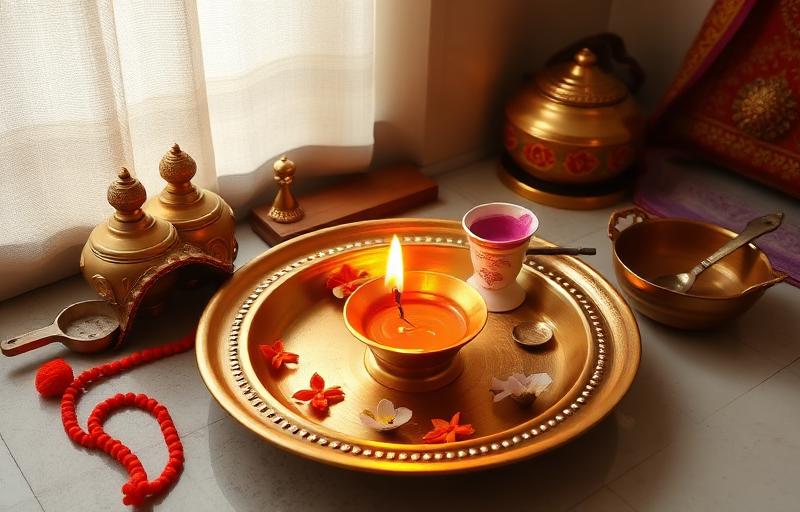
Devotion to the banyan tree follows customs that have continued largely unchanged for generations:
- Tying a sacred thread (mauli) around the trunk while offering prayers
- Applying vermilion or turmeric at the base of the tree
- Walking around the tree in pradakshina, particularly during the Vat Savitri Vrat observed by married women
- Offering water, flowers and incense at its roots
- Treating old banyan trees in villages and temple courtyards with the same respect shown to a temple deity
Cutting down an old, sacred banyan is traditionally avoided, and many communities protect such trees as shared heritage.
What the Banyan Tree Teaches
Beyond its religious associations, the banyan carries lessons devotees hold dear. Its vast, shaded canopy has historically offered shelter to weary travellers, grazing cattle and village gatherings alike, making it a natural symbol of generosity and community.
Its patient, generational growth also mirrors the values of steady faith, continuity across families, and enduring presence, as per tradition. Sitting beneath an old banyan, many devotees are reminded that true strength often lies in quiet endurance rather than sudden display.
What People Ask Most
Why is the banyan tree associated with Lord Shiva?+
Tradition holds that Shiva took the silent, teaching form of Dakshinamurthy and sat beneath a banyan tree to answer the deepest questions of four aged sages, making the tree a symbol of wisdom in Hindu belief.
What is the Akshaya Vat?+
The Akshaya Vat is a revered banyan tree at the Triveni Sangam in Prayagraj, believed by tradition to be indestructible and linked in local legend to Lord Rama's period of exile.
Why do villages traditionally hold gatherings under banyan trees?+
The wide, shaded canopy of the banyan naturally offered shelter and a cool gathering space, so many villages traditionally used the tree as a community meeting point, adding to its symbolism of shelter and togetherness.
About the author
Anjali Mehta · Editor, M.A. Religious Studies
Anjali is the managing editor for Vandnaa and oversees the festival and vrat coverage. She holds an M.A. in Religious Studies and reviews every published article for accuracy, accessibility, and tradition-fidelity.
Meet the Vandnaa editorial team →