The Temple on the Gomti
Baijnath stands on the bank of the Gomti river in Bageshwar district, Uttarakhand, at about 1,130 metres, in the Katyur valley.
What is there:
- A group of stone temples, of which the principal one is dedicated to Shiva as Vaidyanath
- A superb stone image of Parvati in the main sanctum, which is the site's most important object
- Numerous subsidiary shrines in the compound, in varying states
- The Gomti immediately below, with a large population of protected fish
- Under the Archaeological Survey of India
A note on the name. There are two well known Baijnaths and they should be distinguished.
- Baijnath, Uttarakhand, this one, on the Gomti in Bageshwar district, Katyuri period
- Baijnath, Himachal Pradesh, near Palampur in Kangra district, a thirteenth century temple mentioned in the Chamunda Devi entry
Both are Shiva temples named for Vaidyanath, the lord of physicians, and both are worth visiting, but they are 350 km apart in different states.
Kartikeyapura. This was the capital of the Katyuri dynasty, described at Katarmal.
- The Katyuris ruled Kumaon and parts of Garhwal from roughly the seventh to the eleventh centuries
- Their capital was here, at Kartikeyapura, in the Katyur valley
- The valley and the dynasty take their names from each other
- The temple group is what remains of the capital
The Parvati image. This deserves emphasis because it is the reason art historians come here.
- A standing stone image of Parvati, in the main sanctum
- Regarded as among the finest pieces of sculpture in Uttarakhand
- The modelling, the treatment of the face and the ornament are of a very high order
- It is installed and in worship, so it is seen in a temple rather than in a case
That last point is worth noticing. A sculpture of this quality in most countries would be in a national museum. This one is in the sanctum it was made for, receiving worship, in a small town in Bageshwar district.
The Marriage
Local tradition holds that Shiva and Parvati were married here, at the confluence of the Gomti and the Garur Ganga.
The katha of Parvati and Shiva. Since the site claims the marriage, the story should be told properly.
- After Sati gave up her body at Daksha's sacrifice, Shiva withdrew into austerity and grief
- Sati was reborn as Parvati, daughter of Himavan, the Himalaya, and Mena
- From childhood Parvati was determined to marry Shiva
- Shiva was in meditation and was not to be disturbed
- Kama, the god of desire, was sent to interrupt him at the devas' request, and was burned to ash by Shiva's third eye for it
- Parvati then undertook austerity herself, of extraordinary severity, standing on one leg, fasting, enduring heat and cold, in the practice for which she is called Aparna, she who gave up even leaves
- Shiva came to her disguised as an old brahmana and argued against her choice, listing everything wrong with Shiva
- She refused to hear it, and defended him
- He revealed himself and consented
- The marriage was held, with Himavan as her father and the whole assembly of gods and sages present
Why the story matters:
- It is a story about a woman who chose her husband and got him by her own effort, against advice
- The austerity is hers, not performed on her behalf
- The test is that she is offered every reason to change her mind and does not
- Shiva does not win her. She wins him
That is the standard telling and it is the basis of the Teej and Hartalika observances, in which women fast and perform vows modelled on Parvati's, for a husband or for a good marriage.
Where else the marriage is claimed:
- Triyuginarayan, in Rudraprayag district, is the most widely claimed site, where a fire is said to have burned continuously since the wedding
- Baijnath, here
- Several other Himalayan sites
Triyuginarayan deserves a note. The temple keeps a dhuni, a fire, said to have burned since the marriage was performed, and couples come there to be married before it. That is an unusually specific claim and the fire is certainly there.
The confluence. Baijnath's claim rests partly on its position at a confluence, and confluences are marriage sites in the same way they are sacred generally, as set out at Kaleshwaram.
Two rivers meeting is the physical form of the idea the marriage rite is enacting.
Vaidyanath. The name of the deity here means lord of physicians, and the association is with healing.
- The name is shared with the Vaidyanath Jyotirlinga at Deoghar in Jharkhand, which is a different and much larger site
- And with Baijnath in Himachal
- Devotees petition for recovery from illness
- The association connects to the Mahamrityunjaya mantra and to Shiva's role as the conqueror of death, described at Kaleshwaram
So the temple is both where a marriage happened and where people come when somebody is ill, which is a reasonable combination for a place to be.
The Fish
The Gomti at Baijnath holds a very large population of fish, and they are protected by custom rather than by law.
What happens:
- Fish congregate below the temple in large numbers
- They are fed by visitors and by the temple
- They are not caught, by long standing local prohibition
- They are consequently unafraid and will come close, in some cases to the hand
Why:
- The stretch of river below a temple is regarded as belonging to the deity
- Killing there is prohibited
- The prohibition is enforced by the community rather than by any authority
- Over a long period this produces an unfished population that behaves quite differently from a fished one
Where else this happens:
- Baijnath, here
- Bageshwar, further along the same valley, at the Saryu and Gomti confluence
- Ram Kund and other pools along Himalayan rivers where temple prohibitions apply
- The fish sanctuaries along the Ganga and its tributaries at various shrines
- The mahseer conservation stretches, some of which are managed on this basis
The mahseer. This deserves a section because it is one of the more interesting conservation stories in India.
- The golden mahseer, Tor putitora, is a large river fish of the Himalayan rivers
- Growing to considerable size, historically to over 50 kg
- Once abundant, now endangered, from dam construction blocking migration, from habitat loss, from pollution and from illegal fishing including with dynamite and poison
- A famous sport fish, described extensively in colonial angling literature
Temple stretches and conservation. This is the interesting part.
A number of the healthiest remaining mahseer populations in India are in stretches of river below temples, where the customary prohibition on killing has been in force for generations.
- The temple prohibition is older than any conservation law
- It is enforced socially, which is more effective in a village setting than a distant regulation
- It creates a refuge from which fish can restock adjacent water
- Conservation organisations have explicitly worked with temple managements to formalise and extend these arrangements
The general point about sacred prohibition and conservation:
- Sacred groves protect forest, as set out at Haat Kalika
- Temple tanks protect water bodies
- Temple stretches protect fish
- Sacred hills are not quarried
- Species associated with deities receive protection: the peacock, the langur, the cobra, the cow, the rat at Karni Mata
And the honest qualification. Sacred protection is not a conservation policy and it should not be romanticised.
- It is patchy. It protects what is associated with a deity and nothing else
- It can be abandoned when the community changes or when economic pressure is sufficient
- It does not address the causes of decline, which for mahseer are dams and pollution across the whole catchment
- A protected stretch below a temple does not help a fish that cannot migrate past a barrage downstream
What it does provide is a refuge, a precedent and a community with an existing commitment, and conservation work that builds on it is considerably more likely to succeed than work that ignores it.
At Baijnath specifically. Feeding the fish is part of a visit and is done by almost everybody.
- Feed them atta or the grain sold at the temple, not packaged food
- Do not feed them bread, biscuits or anything processed
- Do not put plastic in the river
- Do not attempt to touch or catch them
The Parvati Image and Katyuri Sculpture
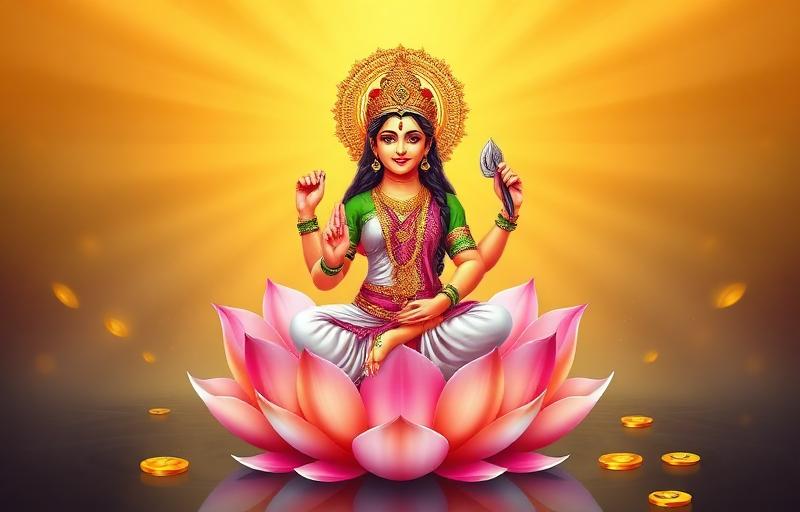
The Parvati at Baijnath is the reason this site matters to art history, and it is worth knowing how to look at it.
What to look at:
- The posture, a slight tribhanga, the three bend stance, which gives the figure its life
- The face, and the treatment of the eyes and mouth
- The hands, and their gesture
- The ornament, jewellery and girdle, rendered in detail without overwhelming the figure
- The proportions, and how the body is understood as a whole rather than assembled from parts
- The surface, and how much of it is polished
Where it sits stylistically:
- Katyuri sculpture draws on post Gupta north Indian traditions
- With influence from Kashmir, which was the artistic centre of the western Himalaya, as described at Chaurasi
- And with a distinct local character
- The Baijnath Parvati is generally regarded as the finest surviving example
How to look at Indian sculpture generally. Since this comes up throughout this series, it is worth setting out.
Identify the deity:
- Count the arms and note what is in each hand
- Look for the vahana, the vehicle, usually at the base
- Note the posture: standing, seated, dancing, reclining
- Note the companions and attendants
- Read the crown and ornament, which differ by deity and by period
Assess the work:
- Look at whether the figure has volume or is a flat relief
- Look at the transitions, from arm to shoulder, from neck to jaw. Good work handles them; poor work does not
- Look at the hands and feet, which are difficult and where quality shows
- Look at whether the ornament competes with the figure or supports it
- Look at the back if you can. Work made to be seen from one side only tells you about its setting
Date it roughly:
- Very early work is massive and frontal
- Gupta period work is balanced, restrained and has a characteristic serenity
- Medieval work becomes more ornate, more attenuated and more elaborate in ornament
- Late medieval work is frequently very densely decorated with the figure almost lost in it
That is a crude sequence and there are enormous regional variations, but it is enough to place most things within a few centuries.
Why this matters for a temple visit. Most people photograph the outside of a temple and glance at the deity.
The deity is the reason the building exists and is frequently the best thing in it. Spending five minutes actually looking at an image, rather than at the architecture around it, changes the visit.
The condition question at Baijnath. The temple group is under the Archaeological Survey and several structures are in a poor state.
- Some shrines are ruinous
- Sculptural fragments are gathered in the compound
- Conservation has been carried out at intervals and more is needed
- The main temple is in worship and is maintained
What is in the compound. Look at the loose sculpture as well as the temples.
Fragments gathered from collapsed shrines are usually placed together somewhere in an ASI compound, and they frequently include the best carving on the site, because the pieces that survived are the ones that were protected by falling face down.
The Katyur Valley
Baijnath sits in the Katyur valley, which is worth understanding as a piece of geography.
The valley:
- A broad, flat bottomed valley in Bageshwar district, unusual in the Kumaon hills where valleys are generally narrow
- The Gomti runs through it
- It is fertile, terraced and densely cultivated
- The flat floor is the reason it was a capital, since it can support agriculture at scale
Why the geography mattered:
- Most Kumaoni valleys are V shaped and steep, with limited cultivable land
- Katyur is comparatively open, with a wide floor
- That supports a larger population and a surplus
- A surplus supports a court, an administration and temple building
That is why the Katyuri capital was here and not elsewhere, and it is a good illustration of how physical geography determines political history in mountains.
Bageshwar. The district town, about 20 km away, is worth a stop.
- At the confluence of the Saryu and the Gomti
- The Bagnath temple, a Shiva temple at the confluence, of Katyuri and later date
- The Uttarayani mela, held at Makar Sankranti in January, which is one of the largest fairs in Kumaon
- Historically the trading point where goods from Tibet met goods from the plains
The Uttarayani mela. It deserves a note because of its history.
- Held at Makar Sankranti, in mid January
- Historically the meeting point of the Bhotiya traders from the Tibet border and traders from the plains
- Goods exchanged included salt, borax and wool from Tibet against grain, cloth and jaggery from the south
- A very large fair, running for days
- Also a significant site in the region's political history, including the 1921 Coolie Begar movement, when the practice of forced unpaid labour was renounced at the fair and the registers were thrown into the Saryu
The Coolie Begar movement deserves telling. It is one of the more striking episodes in the region's history.
- Begar was the customary obligation on villagers to carry loads and provide labour without payment for officials travelling in the hills
- It was a genuine burden and was widely resented
- At the Uttarayani mela in January 1921, a large gathering under the leadership of Badri Datt Pandey and others resolved to end it
- The begar registers were thrown into the Saryu at the confluence
- The practice collapsed and did not resume
That happened at a religious fair, at a river confluence, at a temple, and it is a good example of what such gatherings were actually for. A fair is where a region assembles, and a region that assembles can decide things.
The Bhotiya trade. Since it comes up, it should be explained.
- Communities of the high border valleys, including Johar, Darma, Byans and Niti and Mana, conducted trade across the passes into Tibet for centuries
- They took grain, cloth, sugar and manufactured goods up and brought salt, borax, wool and livestock down
- They had recognised trading relationships with specific Tibetan counterparts, inherited across generations
- The trade ended with the closure of the border after 1962
- The communities that depended on it had to remake their economy entirely, and many migrated down
That is a significant and relatively recent disruption in the Uttarakhand hills and it explains a great deal about the emptying of the high valleys.
Visiting the Katyur valley. It is agricultural, quiet and green, and it holds the Katyuri temples.
Most people drive through it on the way from Almora to Bageshwar without knowing that they are in the middle of what was, for four centuries, the political centre of the region.
Visiting Baijnath
Getting there
- Baijnath, Bageshwar district, Uttarakhand, at about 1,130 metres on the Gomti
- About 20 km from Bageshwar and roughly 70 km from Almora
- On the road between Almora, Kausani and Bageshwar
- Kathgodam is the nearest railhead, about 150 km
- Pantnagar is the nearest airport
- Buses and shared vehicles run from Almora, Kausani and Bageshwar
Timings
- The site is under the Archaeological Survey and is generally open through the day
- The main temple is in worship
When to go
- March to June and September to November for the best weather
- Maha Shivaratri, the principal festival
- Winter is cold but accessible, and this is at only 1,130 metres
- Avoid the peak monsoon for road conditions
What to look at
- The Parvati image in the main sanctum, which is the reason to come, and give it time
- The temple group, including the ruinous shrines
- The loose sculpture gathered in the compound
- The river and the fish below
- The stonework, and how the temples are built
Feeding the fish
- Grain is sold at the temple. Use that
- Do not feed bread, biscuits or packaged food
- Do not put anything else in the river
Practicalities
- Baijnath is a small place with limited facilities
- Kausani and Bageshwar have accommodation
- Cash
- Traditional dress is appropriate at the main temple
Combining the visit
- Bageshwar, about 20 km, with the Bagnath temple at the confluence
- Kausani, about 20 km, with one of the best Himalayan panoramas in Kumaon and the Anasakti Ashram where Gandhi stayed and wrote
- Katarmal, the sun temple, on the way toward Almora
- Almora, Jageshwar and Chitai
- Gwaldam and the road toward Karanprayag and Garhwal
- Pindari and Sunderdhunga glacier treks, from Bageshwar district
Kausani. Worth a paragraph since it is right there.
- A ridge at about 1,890 metres with an uninterrupted view of Trishul, Nanda Devi and Panchachuli across a valley
- Gandhi stayed here in 1929 and wrote his commentary on the Bhagavad Gita, the Anasakti Yoga, from which the ashram takes its name
- Sumitranandan Pant, the Hindi poet, was born here and there is a museum
- Tea gardens nearby
The view from Kausani on a clear morning is among the best accessible Himalayan panoramas in India, and it is twenty kilometres from Baijnath.
The Pindari trek. From Bageshwar district, the trek to Pindari glacier via Loharkhet, Dhakuri, Khati and Dwali is one of the classic Kumaon treks, at moderate difficulty, and the Sunderdhunga and Kafni glaciers are alternatives from the same base.
A closing thought. This was a capital. There was a court here, an administration, a treasury and everything that goes with them, for four hundred years.
What is left is a group of stone temples by a river, some of them fallen, with a sculpture in one of them that somebody made in the tenth or eleventh century and that is still, on any reasonable assessment, one of the finest things anybody has made in that part of the world.
And fish that come to your hand, because nobody has caught one there since before the dynasty fell.
Common Questions From Devotees
Where is Baijnath in Uttarakhand?+
On the Gomti in Bageshwar district at about 1,130 metres in the Katyur valley, about 20 km from Bageshwar and roughly 70 km from Almora, on the road between Almora, Kausani and Bageshwar. Kathgodam is the nearest railhead about 150 km away and Pantnagar the nearest airport.
Is this the same as Baijnath in Himachal?+
No. This Baijnath is in Bageshwar district, Uttarakhand, and is a Katyuri period site. The Himachal Baijnath is near Palampur in Kangra district and is a thirteenth century temple. Both are Shiva temples named for Vaidyanath, the lord of physicians, and both are worth visiting, but they are 350 km apart in different states.
What is the Parvati image?+
A standing stone image of Parvati in the main sanctum, regarded as among the finest pieces of sculpture in Uttarakhand, with modelling, treatment of the face and ornament of a very high order. It is installed and in worship, so unlike a comparable sculpture in most countries it is seen in the sanctum it was made for rather than in a museum case.
Why are the fish protected here?+
The stretch of river below a temple is regarded as belonging to the deity and killing there is prohibited by long standing local custom, enforced by the community rather than any authority. Over generations this produces an unfished population that is unafraid and will come close. Some of the healthiest remaining golden mahseer populations in India are in such temple stretches.
Was Shiva and Parvati's marriage really here?+
Local tradition holds that it was, at the confluence of the Gomti and Garur Ganga. Triyuginarayan in Rudraprayag district is the more widely claimed site, where a fire is said to have burned continuously since the wedding and couples come to be married before it, and several other Himalayan sites also claim it. Confluences are marriage sites because two rivers meeting is the physical form of what the rite enacts.
What was Kartikeyapura?+
The capital of the Katyuri dynasty, who ruled Kumaon and parts of Garhwal from roughly the seventh to the eleventh centuries. It was here in the Katyur valley, and the valley and the dynasty take their names from each other. The valley is broad and flat bottomed, unusual in the Kumaon hills, which is why it could support a capital.
About the author
Pandit Ravindra Sharma · Vedic Rituals & Bhakti, 22+ years
Pandit Ravindra is the Vandnaa editorial team's resident specialist on aarti, chalisa, and daily devotion. He has performed home and temple pujas across Varanasi and Delhi for over two decades and contributes the bhakti-focused articles on this site.
Meet the Vandnaa editorial team →