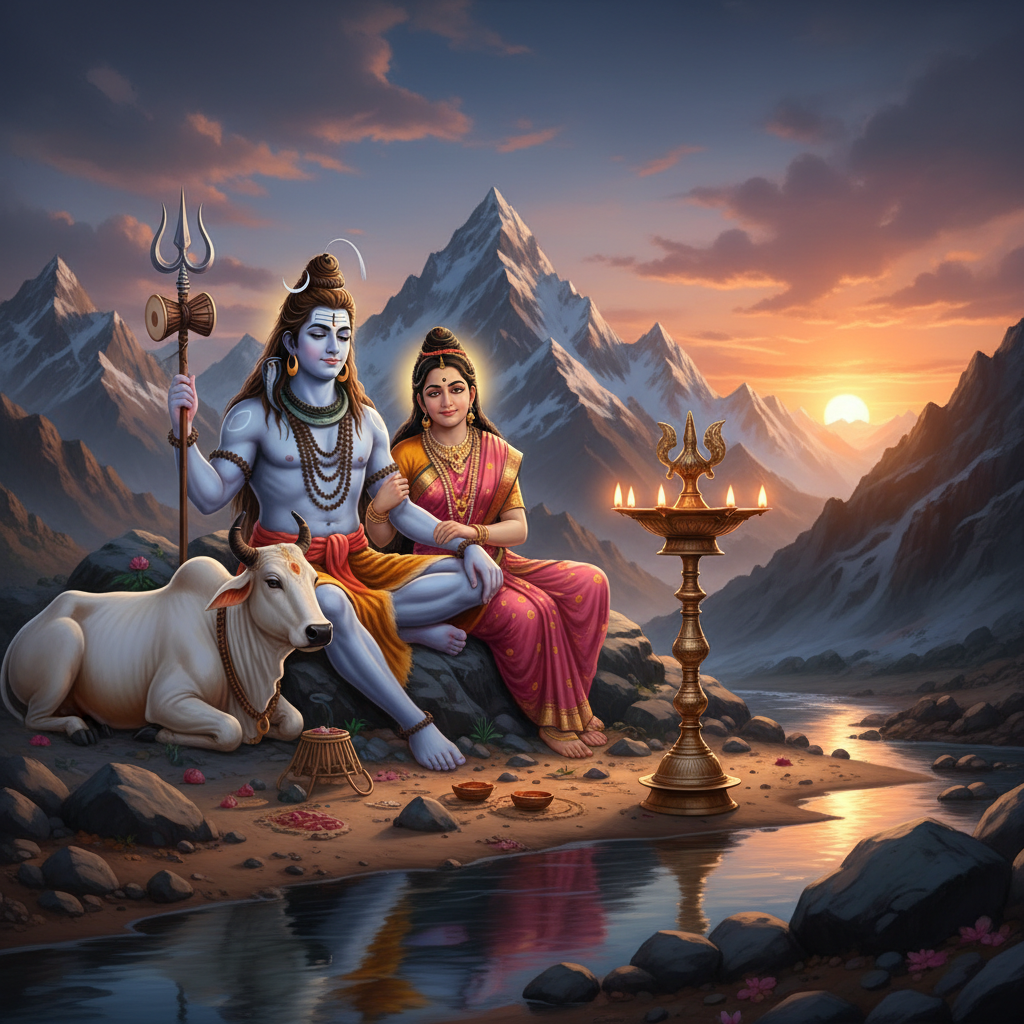
The Temple at Basukinath
Basukinath stands in Dumka district of Jharkhand, about forty kilometres from Deoghar, and it is one of the busiest Shiva temples in eastern India during the monsoon.
What is there:
- The Basukinath temple, with the Shiva linga in the sanctum
- The Parvati temple directly facing it, which is central to the local custom
- A complex of subsidiary shrines within the compound
- The town, small for most of the year and enormous during Shravan
The temple's identity is tied to Baba Baidyanath at Deoghar, one of the twelve Jyotirlingas. The kanwar pilgrimage that fills Deoghar in Shravan continues on to Basukinath, and the two are treated as parts of a single yatra rather than as separate destinations.
What makes the place distinctive is not the structure, which is modest, but the customs that have grown around it, and in particular the way devotees describe the relationship between the two temples in the language of a courtroom.
The Petition and the Judgment
The saying that defines the pilgrimage is simple and universally repeated in the region.
Baidyanath is where the case is filed. Basukinath is where it is decided.
What the tradition holds:
- At Deoghar, the devotee presents the petition to Baba Baidyanath, pouring water on the linga and stating the request
- At Basukinath, the matter is heard and settled, and the devotee returns having received the judgment
- Because of this, the yatra is held to be incomplete if the pilgrim goes to Deoghar and does not continue to Basukinath
- The forty kilometres between them are walked by very large numbers of kanwariyas in Shravan
The metaphor is worth pausing on. Devotional traditions across India describe the deity as king, as parent, as beloved, as friend. Here the description is administrative: Shiva as a magistrate holding court, with a filing office and a bench.
That framing tells you something about how ordinary people relate to power in the region and what they wish for from it. The petition will be heard. The judgment will come. The system, at least this one, works.
Worship and Customs
Worship at Basukinath follows the eastern Shiva pattern with local particulars.
- Jalabhishek with Ganga water carried by kanwariyas from Sultanganj, which is the defining act of the whole yatra
- Bel patra, dhatura, flowers and akshat offered on the linga
- Milk and curd in abhishek
- A custom of not stopping between the Shiva and Parvati temples, with devotees taking darshan of both in a particular sequence
- Devotees avoid meeting eyes or speaking while moving between the two sanctums, according to a local practice explained in terms of the deities' privacy
The Shravani Mela is the temple's defining season:
- Runs through Shravan, roughly a month, in parallel with Deoghar
- Kanwariyas arrive in continuous streams, walking the route from Sultanganj to Deoghar and then on here
- The town's administration runs medical camps, water points, rest areas and crowd management across the period
- Queues can run for hours, and the arrangements are managed in phases
Outside Shravan, the temple returns to a quiet district shrine with steady local worship, and darshan takes minutes rather than hours.
The Kanwar Route
Understanding Basukinath means understanding the route that brings people to it.
The Sultanganj to Deoghar kanwar yatra:
- Pilgrims fill vessels with Ganga water at Sultanganj in Bhagalpur district, Bihar
- They carry them on a kanwar, a shoulder pole, walking roughly 105 km to Deoghar
- The vessels must not touch the ground, so the kanwar is set on stands at rest halts
- Pilgrims walk barefoot, wearing saffron, and many complete the route in a few days
- At Deoghar they perform jalabhishek at Baba Baidyanath
- Very many continue the further 40 km to Basukinath
What the route produces during Shravan is one of the largest annual pedestrian movements anywhere in the world, with millions walking the corridor over the month.
The dak bam variant is walked without stopping, at a run, and is undertaken by those who have made a particular resolve.
Practical advice for anyone considering it:
- Train for the distance, since the walk is long and barefoot
- Take the medical camps seriously, since heat, dehydration and foot injuries are the common problems
- Follow route discipline and the administration's phasing
- Devotion runs alongside medical care, never in place of it, and anyone unwell should use the camps
The Shiva Circuit of the East
Basukinath sits within a dense cluster of Shiva sites across Jharkhand, Bihar and Bengal.
The principal ones:
- Baba Baidyanath at Deoghar, the Jyotirlinga, the anchor of the whole region's Shaiva practice
- Basukinath in Dumka, the second station of the yatra
- Tarapith in Birbhum, across the Bengal border, a Shakti site of the same devotional region
- Rajrappa, where Chinnamasta is worshipped at the confluence
- Maluti in Dumka district, with its terracotta temples
- Shiva shrines through Santhal Pargana, many of them very old and locally maintained
What characterises devotion in this region is the walking. The kanwar yatra, the padyatra to Tarapith, the local processions in Shravan. Distance covered on foot is the currency of devotion here in a way that is less pronounced elsewhere.
It is also a region where the boundary between Shaiva and Shakta practice is thin. Deoghar itself is counted in some traditions among the Shakti Peethas as well as the Jyotirlingas, and the Devi shrines and Shiva shrines of the area are visited by the same families in the same trips.
For a visitor planning a circuit, Deoghar, Basukinath, Maluti, Rajrappa and Tarapith can be covered over four or five days, and together they give a fuller picture of eastern devotion than any one of them alone.
Visiting Basukinath
Practical notes.
Getting there
- Basukinath is in Dumka district, Jharkhand, about 40 km from Deoghar by road
- Jasidih Junction near Deoghar is the main railhead, on the Delhi to Kolkata line
- Deoghar airport serves the region
- Buses, shared vehicles and taxis run continuously between Deoghar and Basukinath
When to go
- Shravan, for the Shravani Mela, when the temple is at its fullest and the whole corridor is walking
- Mahashivratri, the other major occasion
- Any other month for a quiet darshan taking a few minutes
- Winter is the most comfortable season for a general visit
At the temple
- Offerings are water, bel patra, dhatura, flowers and milk, available outside
- Follow the queue arrangements strictly during the mela
- Observe the local custom regarding movement between the Shiva and Parvati temples
- Remove footwear at the designated place and dress modestly
During Shravani Mela
- Expect very long queues, heat and continuous crowds
- Use the medical camps if unwell, and take heat and dehydration seriously
- Accommodation should be booked well ahead, or arranged in Deoghar
- Keep valuables secure and stay with your group
One suggestion. If you have never seen the Shravani Mela, go once, even as an observer. A month long procession of millions of people walking barefoot with water on their shoulders is not something you understand from a description.
Frequently Asked Questions
Where is Basukinath?+
In Dumka district of Jharkhand, about 40 km from Deoghar by road. Jasidih Junction near Deoghar is the main railhead, and buses, shared vehicles and taxis run continuously between the two towns.
Why do pilgrims go to Basukinath after Deoghar?+
The regional saying holds that the case is filed at Baba Baidyanath in Deoghar and decided at Basukinath. Because of this the yatra is held to be incomplete if a pilgrim visits Deoghar and does not continue the further 40 km.
What is the Shravani Mela?+
The month long gathering through Shravan when kanwariyas carry Ganga water from Sultanganj, walk roughly 105 km to Deoghar for jalabhishek at Baba Baidyanath, and very many continue the further 40 km to Basukinath. It is among the largest annual pedestrian movements in the world.
What is the custom between the Shiva and Parvati temples?+
The Parvati temple faces the Shiva temple directly, and devotees take darshan of both in a particular sequence. Local practice has devotees avoid meeting eyes or speaking while moving between the two sanctums, explained in terms of the deities' privacy.
What should kanwar pilgrims take care of?+
Train for the distance since the walk is long and barefoot, use the medical camps seriously, and treat heat, dehydration and foot injuries as the common problems they are. Devotion runs alongside medical care, never in place of it.
What else can be combined with a Basukinath trip?+
Deoghar for Baba Baidyanath, Maluti in Dumka district for its terracotta temples, Rajrappa where Chinnamasta is worshipped at the confluence, and Tarapith across the Bengal border. The circuit takes four or five days.
About the author
Pandit Ravindra Sharma · Vedic Rituals & Bhakti, 22+ years
Pandit Ravindra is the Vandnaa editorial team's resident specialist on aarti, chalisa, and daily devotion. He has performed home and temple pujas across Varanasi and Delhi for over two decades and contributes the bhakti-focused articles on this site.
Meet the Vandnaa editorial team →Explore on Vandnaa
Related Articles
Maluti: The Jharkhand Village With Seventy Temples and One Goddess
8 min read

Tarapith Tara Maa Temple: The Tantra Peeth of Bengal
7 min read
Bihula Bishahari: The Anga Katha of a Bride Who Argued With the Gods
9 min read

Harihar Nath of Sonepur: The Rare Shrine Where Vishnu and Shiva Are One Deity
8 min read