
Who Betal Is
Betal, spelt Vetal in Sanskritised usage, is a fierce guardian deity worshipped across Goa, coastal Maharashtra and parts of Karnataka's Konkan belt. In Goan tradition he is understood as a form of Shiva in his Bhairav aspect, the guardian who takes charge of the boundary, the night and everything that ordinary daylight worship does not cover.
His form is unmistakable and unlike any other deity in a Goan temple:
- A tall standing figure, usually unclothed, carved in black stone
- A dagger or sword in one hand and a bowl in the other
- A garland at the chest, and a stern expression rather than a benign one
- Placed in a separate shrine, often at the edge of the temple complex rather than at its centre
Devotees do not approach him for prosperity or family blessings, which belong to the Devi and to the household deities. Betal is approached for protection, for matters involving fear, theft, boundary disputes and threats to the village, and by families who keep him as their guardian deity.
The Sandals: Goa's Most Distinctive Offering
The best known custom associated with Betal is the offering of footwear, usually a pair of silver sandals or wooden padukas placed at his shrine.
The reasoning behind it is simple and entirely local. Betal is believed to leave the temple at night and walk the boundaries of the village, checking that all is well. Devotees offer sandals so that the deity who walks for them does not walk unshod.
How the custom is kept:
- Silver sandals are commissioned by families completing a vow, and are placed before the murti
- At some shrines the older sandals are said to show signs of wear, which devotees take as confirmation that the deity walks
- Oil, sindoor, coconut and flowers are offered alongside
- Worship is often performed at night, since that is understood as his time
This single custom explains the character of the deity better than a description can. Betal is not worshipped as a distant power. He is treated as a guardian on duty, doing rounds at night on behalf of the village, and the offering is a practical courtesy extended to him.
Betal in the Goan Temple Family
Goan Hindu worship is organised around a village temple system in which several deities share one complex, each with a defined role. Betal is part of that family rather than a standalone deity.
A typical Goan temple complex holds:
- The gram devata or kul devata at the centre, such as Shantadurga, Mangesh, Mahalasa Narayani, Nagesh, Ramnath or Damodar
- Santeri, the Devi worshipped in the form of an anthill, one of the oldest layers of worship in the region
- Ravalnath, a guardian deity closely linked to Betal, often worshipped alongside him
- Betal, the fierce guardian, in his own shrine
- Bhumika or Bhumi Purush, deities of the land itself
- A Dwarpal and Sateri Kalika group of subsidiary shrines depending on the village
What holds this together is the Goan idea of the kul devata. Families across Goa and among Goan communities settled in Mumbai, Bengaluru and abroad identify themselves by the village temple their lineage belongs to, and return there for weddings, thread ceremonies and annual visits. Betal's shrine is part of that homecoming, visited after the main deity.
Where Betal Is Worshipped
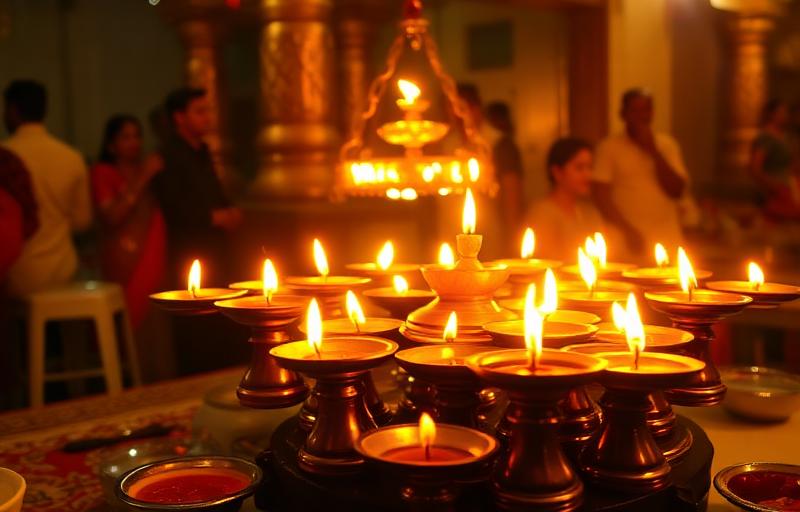
Betal shrines are spread across Goa, both as independent temples and as shrines within larger complexes.
- Amona, Bicholim - one of the best known Betal temples in Goa, with a tall stone murti
- Priol and the Ponda belt - several temple complexes here keep Betal shrines, since Ponda became the centre of Goan temple life when many temples were relocated across the river during the Portuguese period
- Sanguem and Quepem talukas - village Betal shrines with strong local followings
- Vetal shrines in Konkan Maharashtra, continuing the same tradition northward
Festivals follow the Goan pattern. Zatra, the annual temple festival, is the largest occasion, when palanquins are taken in procession and the whole village participates. Shigmo in Phalgun, Goa's spring festival, brings folk performances, and Navratri fills the Devi shrines in the same complexes.
Some Betal shrines observe night rituals during their festival, when worship is performed after dark in keeping with the deity's character. Visitors should treat these as community observances and follow whatever the temple committee permits.
How Goa's Deities Survived Relocation
Any discussion of Goan deities has to include how their temples came to stand where they do.
During the sixteenth and seventeenth centuries, temples in the areas of Tiswadi, Bardez and Salcete were destroyed under Portuguese rule. Communities responded by moving the murtis themselves. Deities were carried across the Zuari and Mandovi rivers into Ponda and other territories then outside Portuguese control, and rebuilt there.
This is why:
- Many of Goa's most important temples, including Mangeshi, Mahalasa, Shantadurga, Nagesh and Ramnathi, stand in Ponda taluka rather than in the villages whose names they carry
- Families still identify with the original village, even generations after the move, and temple records preserve those links
- The guardian deities travelled with the main deity, which is why Betal and Ravalnath shrines are found in the relocated complexes
For devotees, this history is not a museum note. It explains why a Goan family in Mumbai will say their kul devata is from a village they may have never lived in, and why the annual visit to that temple carries the weight it does.
Visiting a Betal Shrine
For visitors who want to understand Goa beyond its churches and beaches, the village temple circuit is the way, and Betal shrines are part of it.
- Where to go - the Ponda temple belt is the easiest introduction, with Mangeshi, Mahalasa at Mardol, Shantadurga at Kavlem, Nagesh and Ramnathi within a short radius. Amona in Bicholim is worth the drive for the Betal temple itself.
- Dress - Goan temples are strict about modest clothing. Shorts and sleeveless tops are usually not permitted, and many temples provide a covering at the entrance.
- Etiquette - remove footwear, do not photograph the sanctum, and do not touch the murti or the offerings. At Betal shrines in particular, do not handle the sandals placed by devotees.
- Timings - most temples close for a few hours in the afternoon. Evening aarti at a Goan temple, with the deepstambha lit, is worth planning for.
- Festivals - Zatra dates vary by temple, Shigmo falls in Phalgun, and Navratri fills the Devi shrines
One suggestion: ask at the temple which shrines belong to the complex and in what order they are visited. Goan temples have a customary sequence, and following it is the simplest way to show respect in a tradition that has kept its structure for centuries.
Frequently Asked Questions
Who is Betal in Goan tradition?+
Betal, or Vetal, is a fierce guardian deity worshipped across Goa and the Konkan, understood as a form of Shiva in his Bhairav aspect. He guards the village boundary and is approached for protection rather than for prosperity.
Why are sandals offered to Betal?+
Because he is believed to leave the shrine at night and walk the boundaries of the village. Devotees offer silver sandals or wooden padukas so that the deity who walks for the village is not unshod.
Which are the main Betal temples in Goa?+
Amona in Bicholim is among the best known, and Betal shrines are also found in the Ponda temple belt including Priol, and in villages of Sanguem and Quepem talukas.
How is Betal related to Ravalnath?+
Both are guardian deities of the Goan village temple system and are often worshipped in the same complex. Ravalnath is the more commonly enshrined guardian, and Betal is the fiercer form associated with the night and the boundary.
Why are most old Goan temples located in Ponda?+
Because temples in Tiswadi, Bardez and Salcete were destroyed under Portuguese rule, and communities carried the murtis across the rivers to Ponda and nearby areas then outside Portuguese control, where they were rebuilt.
What should visitors keep in mind at a Betal shrine?+
Dress modestly as Goan temples require, remove footwear, avoid photographing the sanctum, and do not handle the sandals or offerings placed by devotees. Ask the temple about the customary order in which the shrines are visited.
About the author
Anjali Mehta · Editor, M.A. Religious Studies
Anjali is the managing editor for Vandnaa and oversees the festival and vrat coverage. She holds an M.A. in Religious Studies and reviews every published article for accuracy, accessibility, and tradition-fidelity.
Meet the Vandnaa editorial team →