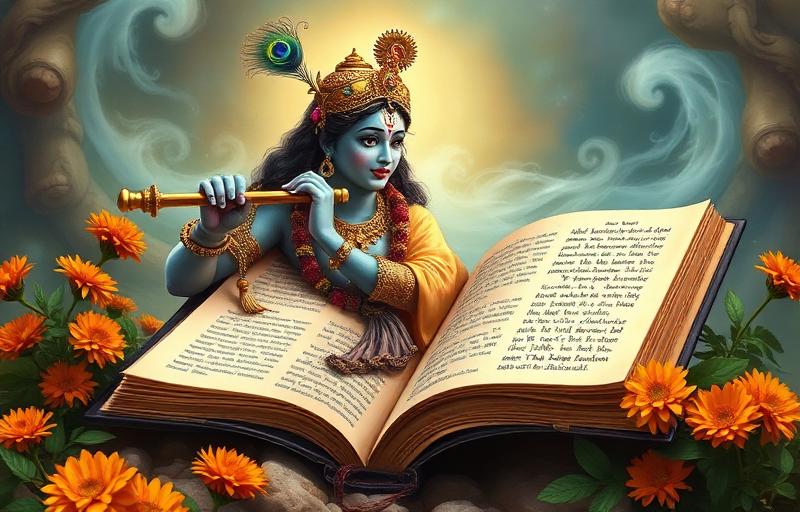
The Setting: A Direct Question on the Better Path
After the overwhelming vision of the universal form in the previous chapter, Arjuna asks Krishna a practical question, who are better versed in yoga, those who worship a personal, manifest form of God with steady devotion, or those who meditate upon the unmanifest, formless absolute?
This question reflects a debate that has long existed within Hindu spiritual thought, the relative value of saguna worship, devotion to God with attributes and form, versus nirguna meditation, contemplation of the formless absolute. Krishna's answer in this short but significant chapter settles the matter with clarity and compassion.
The Core Theme: The Accessible Path of Loving Devotion
Krishna answers that those who fix their minds on him with steady faith and devotion are considered most perfect in yoga. While he acknowledges that those who pursue the formless absolute also reach him, he notes this path is far more difficult for embodied beings, whose minds naturally cling to form.
The chapter's core theme is therefore compassionate practicality, bhakti, loving devotion to a personal God, is presented as the most natural, accessible path for most people, without dismissing the validity of other approaches for those suited to them.
Key Teachings Explained Simply
- Krishna teaches that if one cannot fix the mind steadily on him, one should try to reach him through regular spiritual practice (abhyasa yoga), and if even that is difficult, through selfless work dedicated to him.
- A graded path is offered for different capacities, meditation, then practice, then selfless action, then finally simply renouncing the fruits of all action with a peaceful mind, showing Krishna's compassion for seekers at every level.
- Krishna describes the qualities of a devotee dear to him at length, free from malice, friendly and compassionate, without egoism, equal in pleasure and pain, forgiving, contented and steady in devotion.
- The chapter closes by listing further qualities, one who neither disturbs the world nor is disturbed by it, free from anxiety, pure, skillful, impartial and full of devotion, such a devotee, Krishna says, is exceedingly dear to him.
How This Chapter Answers Arjuna's Dilemma

Arjuna, as a warrior deeply engaged in the world rather than a renunciate meditating in solitude, needed reassurance that his form of engaged, active life could still lead to the divine. Chapter 12 gives him exactly that, confirming that devotion combined with dutiful action is not a lesser path, but one especially suited to those living amid worldly responsibility.
The list of qualities of a beloved devotee also gives Arjuna a clear character to aspire toward even while fighting, showing that inner virtues like compassion, patience and equanimity can be cultivated on the battlefield itself, not only in retreat from it.
Practical Relevance Today
Chapter 12 speaks kindly to devotees who find abstract meditation on the formless difficult, offering the reassurance that heartfelt devotion to a personal deity, through prayer, chanting or simple worship at home, is a complete and valid spiritual path, not a lesser substitute.
The graded path Krishna offers, from meditation down to simply doing good work with a peaceful heart, meets people wherever they are, a gentle reminder that spiritual growth need not begin from the hardest starting point.
The Takeaway
Bhakti Yoga teaches that loving, steady devotion to a personal God is a complete and accessible path, especially suited for those engaged fully in worldly duties. The qualities of a true devotee, compassion, patience, equanimity and freedom from malice, describe a life of devotion in action, and such worship remains an act of faith and love, not a transaction.
Reader Questions Answered
What is Bhakti Yoga according to Chapter 12?+
Bhakti Yoga is the path of loving, steady devotion to a personal form of God. Krishna teaches in this chapter that this path is the most accessible and complete for most seekers, especially those engaged in active worldly life.
Which is better, worshipping a form of God or meditating on the formless?+
Krishna says both paths reach him, but worship of his personal form through steady devotion is easier for most embodied beings, since the mind naturally clings to form. He offers a graded path for those who struggle with either approach.
What qualities make a devotee dear to Krishna?+
Krishna lists qualities such as freedom from malice, friendliness, compassion, absence of egoism, equanimity in pleasure and pain, forgiveness, contentment and steady devotion as marks of a devotee who is exceedingly dear to him.
About the author
Pandit Ravindra Sharma · Vedic Rituals & Bhakti, 22+ years
Pandit Ravindra is the Vandnaa editorial team's resident specialist on aarti, chalisa, and daily devotion. He has performed home and temple pujas across Varanasi and Delhi for over two decades and contributes the bhakti-focused articles on this site.
Meet the Vandnaa editorial team →