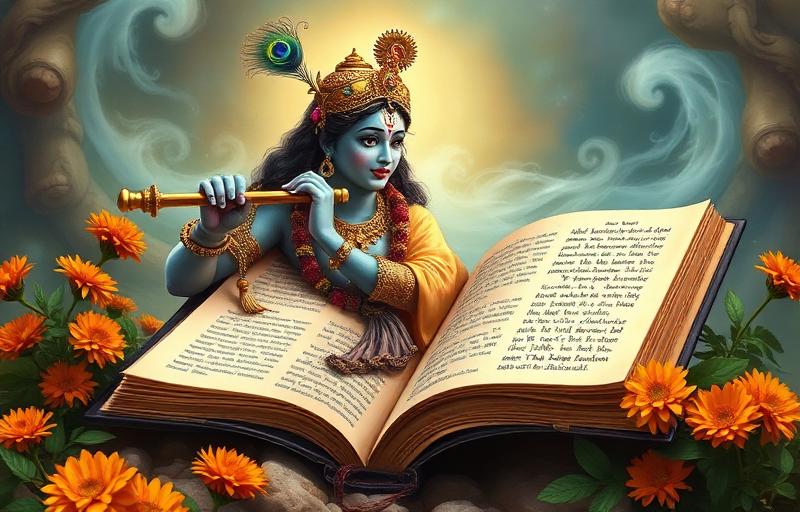
The Setting: The Most Confidential Teaching
Krishna tells Arjuna that because he has not questioned in envy or doubt, he will now share the most confidential knowledge, one that grants direct experiential wisdom and frees a person from the bondage of worldly existence. This introduction signals the importance of what follows.
Unlike some earlier chapters focused on philosophy or discipline, Chapter 9 turns toward the intimate relationship between the devotee and the divine, describing how easily accessible Krishna is to those who approach him with sincere love, regardless of their scholarly learning or ritual complexity.
The Core Theme: Devotion Over Ritual Complexity
The central theme of this chapter is that sincere devotion, however simple, reaches Krishna more surely than elaborate but heartless ritual. Krishna states that he accepts even a leaf, flower, fruit or water offered with love, showing that devotion's value lies in the heart's intention, not material grandeur.
Krishna also affirms his impartiality, stating he has no favorites and no one he hates, yet those who worship him with love dwell in him, and he dwells in them, a relationship of mutual closeness open to anyone regardless of background, provided their devotion is sincere.
Key Teachings Explained Simply
- Patram pushpam phalam toyam yo me bhaktya prayacchati - whoever offers me a leaf, a flower, a fruit or even water with devotion, I accept that offering of love, a verse devotees cherish as proof that simplicity and sincerity matter most.
- Krishna describes himself as the father, mother, sustainer and grandsire of the universe, the goal, refuge, friend and origin, painting an image of the divine as intimately involved in every aspect of existence.
- Even those who worship other deities, Krishna says, are in truth worshipping him, though not according to the correct understanding, showing his generous view of the many paths devotees take.
- Krishna promises that he personally carries the welfare of those who worship him with single-minded devotion, ensuring what they lack and preserving what they already have.
How This Chapter Answers Arjuna's Dilemma

Arjuna's dilemma involved feeling trapped between duty and devotion, wondering if the harsh demands of dharma left room for a personal, loving relationship with the divine. Chapter 9 answers that devotion is not separate from duty, it can accompany and sanctify every action, however difficult.
By showing that Krishna values sincerity over grandeur, this chapter also relieves Arjuna of any worry that his imperfect circumstances, fighting a terrible war, disqualify him from divine closeness. Even amid conflict, a devoted heart remains within reach of grace.
Practical Relevance Today
For devotees who feel they lack the time, resources or scholarly knowledge for elaborate worship, this chapter is deeply reassuring, teaching that a simple offering made with sincere love holds full spiritual value.
Its vision of a personal, universally accessible divine encourages devotees from all walks of life, regardless of wealth or status, to approach worship with confidence rather than anxiety about doing it perfectly.
The Takeaway
Raja Vidya Yoga reveals that the most royal, secret knowledge is also the simplest, that Krishna is reached not through grandeur but through sincere devotion. A single leaf offered with love matters more than empty ritual, and worship in this spirit remains an act of faith and love, not a transaction.
What People Ask Most
Why is Chapter 9 called Raja Vidya Raja Guhya Yoga?+
It means 'the royal knowledge, the royal secret', so named because Krishna describes the teaching in this chapter, on devotion and his all-pervading nature, as the most exalted and confidential wisdom he shares with a sincere seeker.
What does the verse about the leaf and flower mean?+
The verse Patram Pushpam Phalam Toyam teaches that Krishna accepts any offering, however small, a leaf, flower, fruit or water, if given with genuine devotion. It shows that love and sincerity matter more than the material value of an offering.
Does Krishna favor some devotees over others in this chapter?+
Krishna states he has no one he hates and no favorites among beings, treating all impartially. However, he says those who worship him with love dwell close to him, a closeness earned through devotion, not granted through partiality.
About the author
Pandit Ravindra Sharma · Vedic Rituals & Bhakti, 22+ years
Pandit Ravindra is the Vandnaa editorial team's resident specialist on aarti, chalisa, and daily devotion. He has performed home and temple pujas across Varanasi and Delhi for over two decades and contributes the bhakti-focused articles on this site.
Meet the Vandnaa editorial team →