Hiranyakashipu's Boon - The Loopholes of a Tyrant
The story of Bhakt Prahlad unfolds in the seventh Skandha of the Bhagavata Purana. The asura king Hiranyakashipu burned with hatred for Lord Vishnu, who had slain his brother Hiranyaksha in the Varaha avatar. Determined to become unkillable, he performed terrifying austerities until Brahma appeared. Denied literal immortality, Hiranyakashipu crafted a boon of loopholes: he could be killed by neither man nor beast, neither inside nor outside a dwelling, neither by day nor by night, neither on the ground nor in the sky, and by no weapon. Armoured in these conditions, he conquered the three worlds, banned the worship of Vishnu and demanded that all prayers be offered to himself alone. The Purana sets up the great question of the tale: what happens when absolute worldly power collides with the absolute faith of a small child? The answer would be born in his own palace, as his own son.
The Child Devotee - Bhakti Learned in the Womb
While Hiranyakashipu was away performing austerities, the devas attacked his kingdom and his pregnant queen Kayadhu was taken into the care of the sage Narada. In the sage's ashram, Narada spoke ceaselessly of Vishnu's glories, and the child in the womb absorbed every word. Thus Prahlad was born with Narayana bhakti woven into his very being. As a boy he was gentle, truthful and radiant, beloved by everyone, except in one matter: sent to the gurukula of Shanda and Amarka to learn statecraft and asura values, he instead taught his classmates to chant the name of Hari. When his father lovingly asked what was the best thing he had learned, Prahlad replied that the highest good is to give up the dream of worldly life and take refuge in Vishnu. The king's affection curdled. He tried persuasion, then threats. The boy simply kept repeating, with a smile, the name his heart already lived in: Narayana.
Tortures Survived - When the Whole World Attacks Faith
Enraged that his own son worshipped his enemy, Hiranyakashipu ordered what no father should imagine. The Bhagavata lists the assaults with unflinching detail: 1. Soldiers struck Prahlad with weapons, but the blades would not bite. 2. He was thrown beneath mad elephants, who became calm at his touch. 3. Venomous serpents were set upon him; their poison failed. 4. He was hurled from a cliff, and the earth received him like a mother. 5. Poison was mixed into his food; it turned harmless. 6. He was bound and cast into the ocean with boulders, and the waters bore him up. Through every trial the child neither cursed his tormentors nor doubted his Lord. He simply continued his inner japa, seeing Narayana everywhere, even in those trying to kill him. This is the detail the saints treasure most: Prahlad's bhakti had no bitterness in it. His survival was not magic he performed; it was the natural shelter that surrounds a heart with no refuge except God.
The Holika Episode - Fire That Chose the Devotee
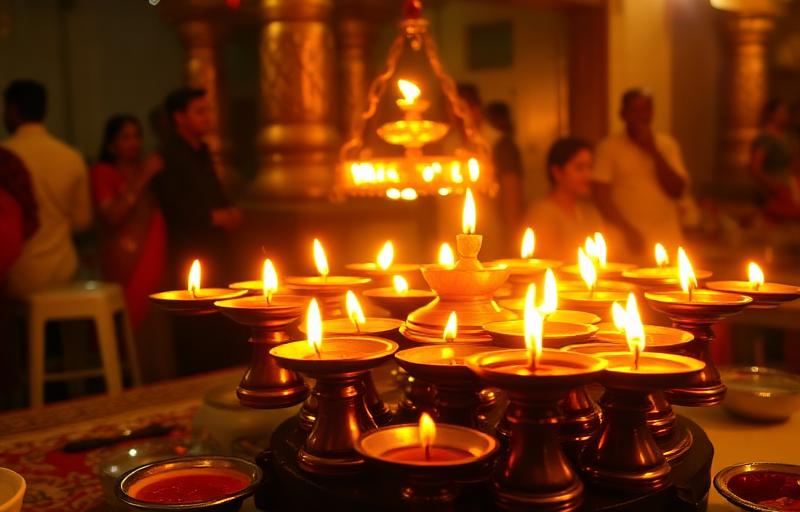
Among all the attempts on Prahlad's life, one became a festival. Hiranyakashipu's sister Holika possessed a boon: fire could not harm her, by most accounts so long as she entered it alone, through a celestial shawl. She sat in a blazing pyre with little Prahlad on her lap, certain the flames would spare her and consume him. But as the fire roared, the protection abandoned its misuse. The shawl, lifted by the wind of grace, settled over the chanting child; Holika burned, and Prahlad walked out untouched, the name of Narayana still on his lips. This victory of devotion over cruelty is celebrated every year as Holika Dahan, the bonfire on the eve of Holi. We have explored that festival in depth in our Holika post; here it is enough to note what the flames taught: a boon used against the innocent withdraws itself, while faith is fireproof.
Narasimha at the Pillar - The Lord Who Is Everywhere
Finally Hiranyakashipu dragged his son before the court at twilight. "Where is this Vishnu of yours?" he thundered. "Is he in this pillar?" Prahlad answered calmly, "He is in the pillar, he is in the smallest twig, he is everywhere." The king struck the pillar with his mace, and the universe split with a roar. From the shattered stone burst Narasimha, the man-lion avatar, neither man nor beast. The Lord seized the tyrant and, honouring every clause of Brahma's boon, destroyed him: at twilight, neither day nor night; on the threshold of the hall, neither inside nor outside; placing him on his own lap, neither earth nor sky; tearing him with his nails, no weapon at all. Even after the deed, Narasimha's fury blazed until little Prahlad approached without fear and offered a prayer of pure love. The avatar softened, placed his hand on the child's head, and granted him the kingdom and, greater still, undying remembrance of the Lord. The event is honoured each year as Narasimha Jayanti.
Lessons for Devotees - Bhakti Under Pressure
Prahlad is called the crown jewel of devotees because his bhakti was tested as no one else's and never bent. His story leaves devotees a practical charter: 1. Faith does not need permission: Prahlad worshipped in a kingdom where worship was banned. Circumstances hostile to your practice cannot actually stop it, because bhakti lives within. 2. Devotion without hatred: he never cursed his father or Holika. Holding love for God while holding no venom for opponents is the rarest discipline. 3. God honours his devotee's word: Narasimha emerged from the pillar so Prahlad's statement would be true. The Lord protects the dignity of those who trust him publicly. 4. Begin early, begin anywhere: Prahlad received bhakti in the womb, proving no one is too young, and a palace of demons is not too unholy a place to chant. 5. The fearless are tender: the boy who stood before mad elephants pleaded mercy for his father's soul. True courage in devotion ends in compassion, not triumph.
Mantra and Prayer Connection - Chanting Like Prahlad

Prahlad's whole sadhana was the constant remembrance of one name, and tradition preserves several ways to walk his path. The simplest is japa of Om Namo Narayanaya, the eight-syllable mantra of refuge that the child carried through fire and ocean, or Om Namo Bhagavate Vasudevaya, which Narada gives to devotees in the same spirit. For protection from fear, injustice and powerful adversaries, devotees recite the Narasimha Kavacha or the swift prayer "Ugram Viram Maha Vishnum", remembering the Lord who breaks out of pillars for his bhakta. On Narasimha Jayanti (Vaishakha Shukla Chaturdashi), reading Prahlad's story and offering evening prayers at twilight, the hour of the Lord's appearance, is considered especially powerful. A beautiful family practice is to tell this story to children at Holika Dahan, lighting the bonfire as a vow that faith in the house will outlast every flame. The Vandnaa app's Vishnu prayers and Narasimha Jayanti guide can anchor this remembrance year-round.
Quick Answers
Who was Bhakt Prahlad?+
Prahlad was the son of the asura king Hiranyakashipu and queen Kayadhu, described in the seventh Skandha of the Bhagavata Purana. Though born in a demon dynasty, he became Vishnu's supreme child devotee, having absorbed Narayana bhakti from sage Narada while still in his mother's womb.
What boon did Hiranyakashipu receive from Brahma?+
Hiranyakashipu received a boon that he could be killed by neither man nor animal, neither indoors nor outdoors, neither during day nor night, neither on the ground nor in the sky, and by no weapon. Narasimha, the man-lion avatar, fulfilled every condition by slaying him at twilight, on a threshold, on his lap, with his nails.
How did Prahlad survive all the tortures?+
Prahlad survived weapons, mad elephants, serpents, poison, fire and drowning because of his complete absorption in Narayana. The Bhagavata presents his survival not as magic but as divine protection that naturally surrounds a devotee whose only refuge is God. His heart held constant japa and no fear, so no force could find a hold.
What is the connection between Prahlad and Holi?+
Holika, Hiranyakashipu's sister, had a boon of protection from fire and sat in a pyre with Prahlad on her lap to burn him. The boon failed when misused; Holika perished while the chanting child emerged unharmed. This victory of devotion is celebrated as Holika Dahan, the bonfire lit on the eve of Holi every year.
Why did Vishnu take the Narasimha avatar?+
Vishnu took the half-man, half-lion form to honour Brahma's boon while ending Hiranyakashipu's tyranny, and to prove Prahlad's declaration that the Lord is present everywhere, even in a pillar. Narasimha shows that God will bend the laws of creation itself, but never the word of a true devotee.
What can devotees today learn from Prahlad's bhakti?+
Prahlad teaches that devotion needs no favourable circumstances: he worshipped where worship was forbidden, stayed free of hatred toward his persecutors, and trusted God completely under deadly pressure. For modern devotees this means steady daily practice, refusing bitterness in conflict, and remembering the divine name in every difficulty.
About the author
Pandit Ravindra Sharma · Vedic Rituals & Bhakti, 22+ years
Pandit Ravindra is the Vandnaa editorial team's resident specialist on aarti, chalisa, and daily devotion. He has performed home and temple pujas across Varanasi and Delhi for over two decades and contributes the bhakti-focused articles on this site.
Meet the Vandnaa editorial team →