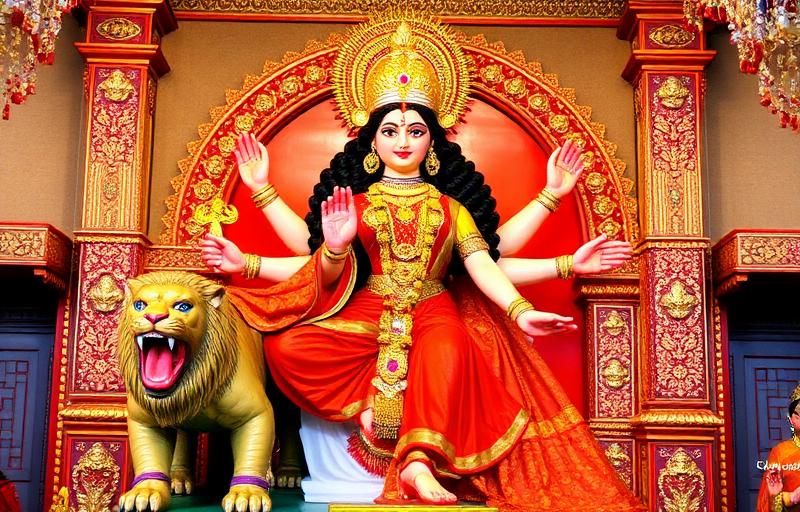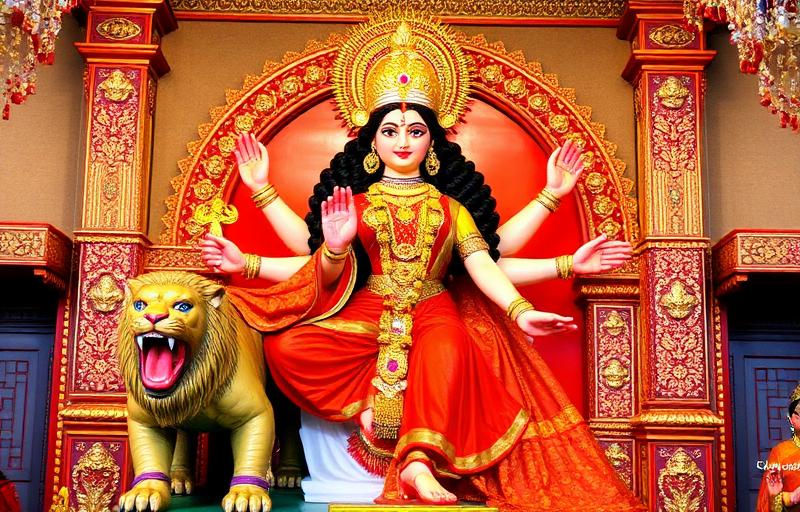
What Is the Bhavani Ashtakam?
The Bhavani Ashtakam is an eight-verse hymn (ashtaka) to Goddess Bhavani, a benign form of Parvati or Durga, composed by Adi Shankaracharya. Bhavani is the consort of Bhava (Shiva) and the giver of existence and grace.
Unlike the thundering Mahishasura Mardini Stotram, the Bhavani Ashtakam is a tender song of total surrender (sharanagati). In it the devotee confesses that he has no mother, no father, no friend, no wealth, no knowledge of rituals or scriptures that can save him - the Goddess alone is his refuge. Each verse ends with the moving refrain 'Gatis tvam gatis tvam tvam eka Bhavani' - 'You are my refuge, you alone, O Bhavani.'
The Opening Verse
The hymn begins with the devotee's complete helplessness and surrender:
Devanagari: न तातो न माता न बन्धुर्न दाता न पुत्रो न पुत्री न भृत्यो न भर्ता। न जाया न विद्या न वृत्तिर्ममैव गतिस्त्वं गतिस्त्वं त्वमेका भवानि॥
Transliteration: Na tato na mata na bandhur na data Na putro na putri na bhrityo na bharta Na jaya na vidya na vrittir mamaiva Gatis tvam gatis tvam tvam eka bhavani
Meaning: Neither father nor mother, neither relative nor benefactor, neither son nor daughter, neither servant nor husband, neither wife nor knowledge, nor any livelihood is truly mine. You are my refuge, you alone are my refuge, O Bhavani.
In these few words the saint sets aside every worldly support and rests his whole being in the Divine Mother. The refrain 'Gatis tvam' ('You are the refuge') closes each of the eight verses.
Benefits & Inner Meaning
The Bhavani Ashtakam is cherished as a hymn of refuge and peace:
- Peace in distress: Reciting it in times of grief, fear or loss brings comfort and the feeling of being held by the Mother.
- Letting go of ego: It teaches that no worldly support is finally ours, dissolving pride and attachment.
- Deepening surrender (sharanagati): It is one of the simplest and purest expressions of taking refuge in the Divine.
- Freedom from anxiety: Resting the whole burden in the Goddess eases worry and restlessness.
- Devotional sweetness: Its gentle words and refrain naturally turn the heart toward bhakti.
The inner meaning is profound: when every external prop is seen as impermanent, the soul finds its only lasting refuge in the Divine Mother, who never abandons the one who surrenders.
How to Chant the Bhavani Ashtakam
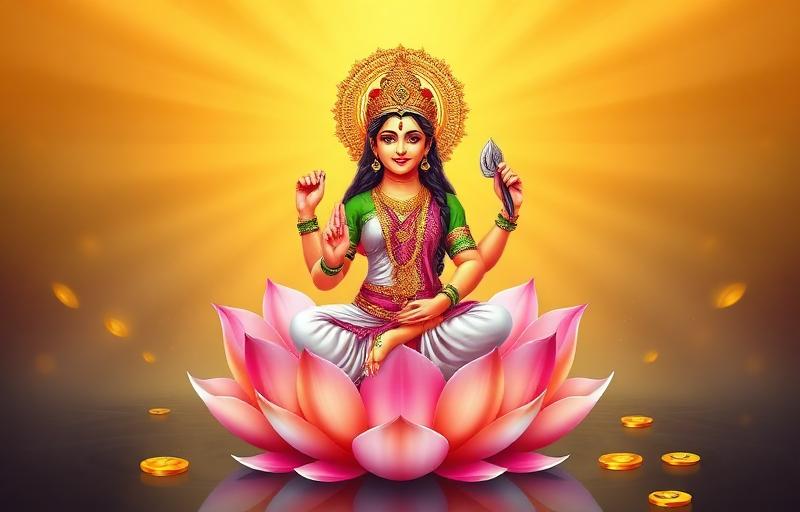
1. Best time: Early morning or evening, especially on Fridays and during Navratri. It is also a beautiful prayer in moments of distress or before sleep. 2. Preparation: Bathe, sit before an image of the Goddess, and light a lamp and incense if possible. 3. Attitude: This is a hymn of surrender, so chant it slowly with feeling rather than haste. Let the meaning sink in. 4. Recitation: Sing all eight verses, allowing the refrain 'Gatis tvam gatis tvam tvam eka Bhavani' to deepen the sense of refuge each time. 5. Daily practice: Even reciting it once a day with devotion brings peace and steadiness of mind. 6. Close: Sit quietly for a moment, offer your worries to the Mother, and conclude with a simple bow and prayer.
Common Questions From Devotees
Who composed the Bhavani Ashtakam?+
The Bhavani Ashtakam is traditionally attributed to Adi Shankaracharya, the great saint and Advaita philosopher. It is one of his most beloved devotional hymns of surrender.
What does 'Gatis tvam gatis tvam tvam eka Bhavani' mean?+
It means 'You are my refuge, you alone are my refuge, O Bhavani.' This refrain ends each of the eight verses, expressing complete surrender to the Goddess as the devotee's only support.
Who is Goddess Bhavani?+
Bhavani is a gracious form of Goddess Parvati or Durga, the consort of Bhava (Shiva) and the giver of life and grace. She is widely revered, especially as Tulja Bhavani in Maharashtra.
When should the Bhavani Ashtakam be recited?+
It can be recited daily, but is especially fitting on Fridays, during Navratri, and in moments of distress or worry, when its message of surrender brings deep peace and comfort.
About the author
Acharya Vinaya Kapoor · M.A. Sanskrit, Mantra & Stotra Studies
Acharya Vinaya holds an M.A. in Sanskrit from Banaras Hindu University and writes the mantra and stotra commentary on Vandnaa. Her focus is on accurate pronunciation, traditional context, and helping modern readers connect with classical texts.
Meet the Vandnaa editorial team →