The Farmer
Bhoja Bhagat, 1785 to 1850, of Saurashtra, and the master of the Gujarati chabkha.
Where he came from
Devkigalol, in the Jetpur country of Saurashtra, into a Leuva Patel cultivating family, and later settled at Fatehpur near Amreli, where his jagya stands.
He was a farmer.
Not a farmer who became a renunciant. A farmer. He worked the land, he kept cattle, he had a household, and he wrote in the hours a working agriculturist has, which are the hours nobody else wants.
Which matters for two reasons.
One. It is a different social position from every Gujarati poet before him in this batch.
Akho was a Nagar brahmana goldsmith who studied Vedanta at Kashi. Premanand was a brahmana professional performer in a city. Dayaram was a Nagar brahmana with a sampradaya behind him.
Bhoja Bhagat was a Patel with a field.
Two. It is audible in the poetry.
His images are agricultural. Ploughing, sowing, the crop that does not come, cattle, water, the field left untended, the seed spent. He is writing to people who know what happens if you do not weed.
His initiation
Reported variously, and the honest position is that the accounts differ.
He belongs to the Saurashtra sant world, the nirguna stream of that region, which has its own lineages, its own vocabulary and a large body of shared repertoire, and which the third section describes.
And that world was substantially not brahmana.
Saurashtra's sant tradition includes Patels, Ahirs, Rabaris, Kolis, Kathis and Dalits, and one of its greatest figures, Dasi Jivan, was from a community the society placed at the bottom. The bhajans are sung together and nobody at a bhajan asks whose verse it is by caste.
What he wrote
Chabkhas, principally.
And the word is the whole of the description. Chabkho means a whip, a lash, and the form is a short stinging verse aimed at somebody, usually at religious pretension.
He also wrote ordinary bhajans and pado, and the softer material exists, and it is not what he is known for.
The line
And here is the one everybody knows.
Jyan lagi atam tatva chinyo nahi, tyan lagi sadhana sarve juthi.
Until you have recognised the truth of the self, all your practice is false.
Which is the hardest sentence in Gujarati devotional literature, and it is sung, at night, by large groups of ordinary people, most of whom have been doing a practice for many years.
The Chabkha
What the form does
It accuses.
A chabkha is short, direct, addressed in the second person, and constructed so that the last line lands on the listener rather than on a third party.
Which is the technical difference from most satire. Akho's chhappa describes a fool. Bhoja Bhagat's chabkha tells you that you are the fool, and the audience singing it at midnight is singing it about themselves.
What he attacks
One. The gap between what a person says and what they do.
This is the central subject and everything else is a case of it.
The man who has taken vows and does not keep them. The one who talks about renunciation and is counting money. The one who is scrupulous about food and dishonest in a transaction. The one who does the ritual and does not pay the labourer.
Two. Gurus and mahants who have made a business of it.
Standard for the nirguna tradition and delivered with the specific contempt of a man who has watched them come to a village and be fed.
Three. Caste pride.
Which he attacks from below, and the position has a different weight coming from a Patel farmer than it does from the brahmana satirists.
Four. Accumulation.
The agricultural imagery is heaviest here. What you have stored, what you are holding, the granary, the field you would not share, and the fact that none of it travels.
Five. Time.
The chabkhas are full of the crop that is running out. The season passing, the sowing not done, the day gone. A farmer's sense of a deadline that does not negotiate is the metre of the whole body of work.
The line, unpacked
Jyan lagi atam tatva chinyo nahi, tyan lagi sadhana sarve juthi.
Until the truth of the self is recognised, all practice is false.
And this needs handling carefully, because it can be read two ways and one of them is destructive.
The destructive reading
That practice is pointless until you have already arrived, which produces either despair or an excuse, and both are common.
A person who reads it that way concludes that their japa, their fast, their reading and their temple visits are worthless, and stops.
That is not what it says.
The reading it actually supports
That practice pointed at anything other than that is false, and practice pointed at that is not.
Juthi means false, and the sense is closer to counterfeit than to useless. A counterfeit note is worthless not because notes are worthless but because that one is not what it claims to be.
And what makes a practice counterfeit, in the chabkhas, is always the same thing: it is being done for something else. For standing, for a result, for the family's approval, for the feeling, for the reputation of being a person who does it.
So the line is a sorting instruction rather than a demolition.
And the correct response to it is not to stop practising. It is to ask what the practice is aimed at, and if the answer is a result, to keep practising while knowing that, which is what everybody is doing anyway and what the chabkha exists to make undeniable.
Bhoja Bhagat next to Akho
Worth putting side by side because they are doing the same job in different registers a century apart.
Akho: Nagar brahmana, goldsmith, urban, Kashi trained, writing six line satires with a joke in the last line, aiming at the reader's stupidity.
Bhoja Bhagat: Patel, cultivator, rural, self taught in a village lineage, writing whips with an accusation in the last line, aiming at the reader's dishonesty.
Different castes, different educations, different centuries, different literary forms, and the same target, which is what happens when the target is real.
The All Night Bhajan
And this is the part that is alive.
What it is
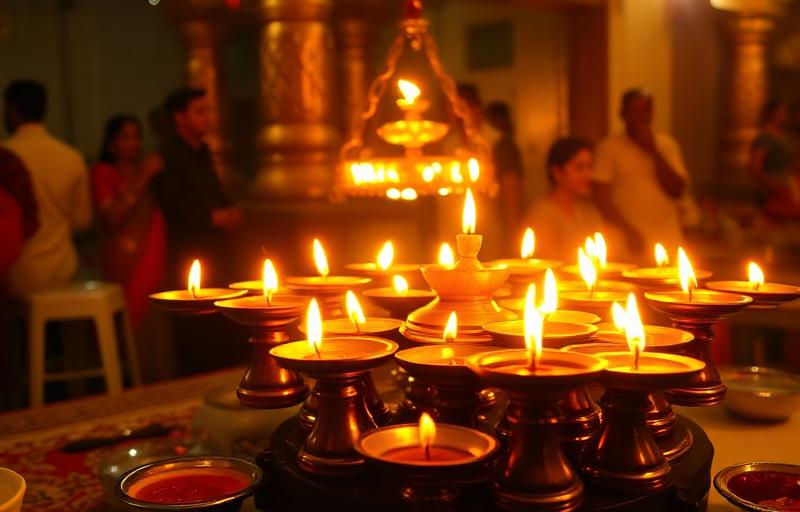
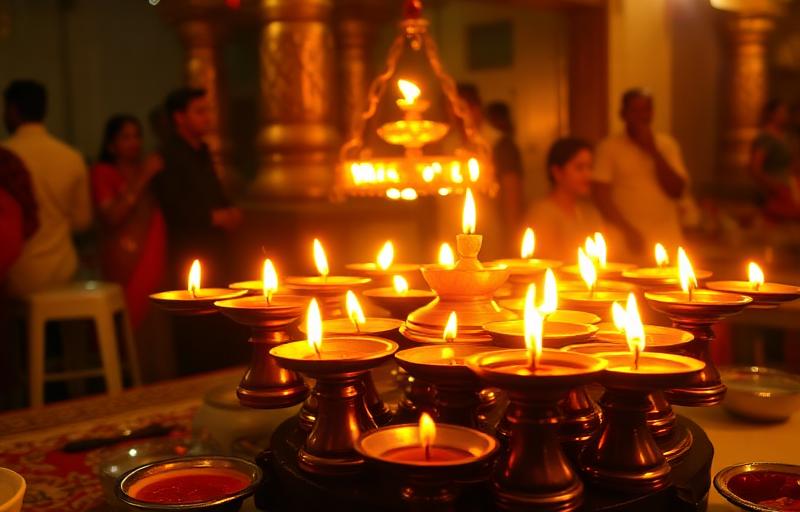
Saurashtra has a living tradition of the night long bhajan, called variously bhajan, santvani or a bhajan ni ramat, and it happens continuously, in villages and small towns, at jagyas, at homes, at gatherings and at commemorations.
How it works
People gather after dark. Instruments are the ravan hattho or the jantar, the manjira, the tabla or dholak, and the ektaro.
And it goes until morning.
Not as an endurance feat. It goes until morning because that is how long the repertoire takes and because nobody has anywhere to be.
The repertoire
Shared, regional, and largely nirguna.
Bhoja Bhagat. Dasi Jivan. Gangasati, whom the next entry covers. Devayat Pandit. Ravi Saheb, Bhan Saheb, Morar Saheb and the Ravi Bhan lineage. Narsinh Mehta. Mira. Kabir in Gujarati.
And nobody sorts them by caste or sampradaya during the night, which is the socially remarkable feature: a Dalit sant's verse and a brahmana sant's verse follow each other in the same session, sung by the same people, and this has been true for a very long time.
Why this form survived when the manbhatt did not
And the previous entry sets up the question.
Premanand's akhyana died because it required a specialist. One trained professional performing to a passive audience is a fragile arrangement, and when the professional's income disappears the form disappears.
A bhajan session has no audience.
Everybody sings. There are better and worse singers and there is usually somebody leading, but the form does not require a specialist and produces no unemployed profession when the money moves.
Which is the general rule and it is worth extracting: participatory forms outlive performed ones. The thing everybody does together survives; the thing one expert does for everybody else does not.
How to attend one
They are not ticketed and are generally open, and a visitor who behaves properly is welcome.
- Ask. At a jagya, at a temple in Saurashtra, or through anybody local. They are announced by word of mouth rather than posters
- Arrive at the start and stay a long time. Leaving after twenty minutes is the visible mark of somebody treating it as a spectacle
- Sit where you are put. There is a seating order and it is not yours to arrange
- Do not film without asking, and if you are told no, that is the answer
- Eat what is served, which will happen at some point in the night
- Sing. You will not know the words and it does not matter, and joining badly is far better received than sitting silently observing
The practical cautions
One. It really does go all night.
Do not commit unless you can lose the night, and do not plan to drive afterwards. Driving home at five in the morning after no sleep is how people die on Gujarat's highways, and fatigue impairment is comparable to alcohol impairment at the levels involved.
Arrange to sleep somewhere, or arrange a driver who has slept.
Two. Cold.
Saurashtra nights in winter get genuinely cold and these are usually outdoors or in an open structure. Take a shawl and take one for whoever you brought.
Three. Older people.
If you are bringing an elderly relative, bring their medication, bring water, and know that a full night sitting on the floor in the cold is a real physical demand. People with cardiac conditions, diabetes on a fixed schedule, or mobility problems should attend for part of it rather than all of it, and there is no shame in that and nobody will comment.
Four. Do not treat it as folk tourism.
It is a religious occasion for the people holding it, often connected to a death anniversary or a vow, and a visitor who arrives with a camera and leaves at midnight has taken something and given nothing.
Where to go
- Fatehpur, near Amreli, where Bhoja Bhagat's jagya is
- Devkigalol, Jetpur taluka, his birthplace
- Ghoghavadar, near Gondal, for Dasi Jivan
- Virpur, for Jalaram Bapu, whose kitchen has fed people continuously and takes no donations
- Junagadh for Narsinh Mehta, and Girnar
A daily practice from this entry
- Any name your household uses, once, in the field or its equivalent
- And the Bhoja Bhagat question, which is the whip and should be taken once and not daily: is there a gap between what I say I am and what I did this week, and can I name it out loud
The Short Version
Who: Bhoja Bhagat, 1785 to 1850, of Saurashtra, master of the Gujarati chabkha. He was born at Devkigalol in the Jetpur country into a Leuva Patel cultivating family and later settled at Fatehpur near Amreli, where his jagya stands. He was a farmer, not a farmer who became a renunciant: he worked the land, kept cattle, had a household, and wrote in the hours a working agriculturist has. That matters because it is a different social position from every Gujarati poet before him in this batch, since Akho was a Nagar brahmana goldsmith trained at Kashi, Premanand a brahmana professional performer in a city, and Dayaram a Nagar brahmana with a sampradaya behind him, while Bhoja Bhagat was a Patel with a field. And it is audible in the poetry, which is full of ploughing, sowing, the crop that does not come, cattle, water and the field left untended.
His world: the Saurashtra sant tradition, the nirguna stream of that region, which was substantially not brahmana and includes Patels, Ahirs, Rabaris, Kolis, Kathis and Dalits, with one of its greatest figures, Dasi Jivan, from a community the society placed at the bottom. His own initiation is reported variously and the accounts differ.
The form: chabkho means a whip, and the chabkha is a short stinging verse aimed at somebody, usually at religious pretension. The technical difference from most satire is the direction: Akho's chhappa describes a fool, while Bhoja Bhagat's chabkha tells you that you are the fool, so the audience singing it at midnight is singing it about themselves. He attacks the gap between what a person says and what they do, which is the central subject; gurus and mahants who have made a business of it; caste pride, which he attacks from below; accumulation, where the agricultural imagery is heaviest; and time, since the chabkhas are full of the crop that is running out and a farmer's sense of a deadline that does not negotiate is the metre of the whole body of work.
The line: jyan lagi atam tatva chinyo nahi, tyan lagi sadhana sarve juthi, until you have recognised the truth of the self, all your practice is false. It can be read two ways and one is destructive. The destructive reading is that practice is pointless until you have already arrived, which produces either despair or an excuse, and leads a person to conclude that their japa, fast, reading and temple visits are worthless and to stop. That is not what it says. Juthi means false in the sense of counterfeit rather than useless, and a counterfeit note is worthless not because notes are worthless but because that one is not what it claims to be. What makes a practice counterfeit in the chabkhas is always the same thing: it is being done for something else, for standing, for a result, for the family's approval, for the feeling, or for the reputation of being a person who does it. So the line is a sorting instruction rather than a demolition, and the correct response is not to stop practising but to ask what the practice is aimed at.
Next to Akho: a Nagar brahmana urban goldsmith trained at Kashi writing six line satires with a joke in the last line aimed at the reader's stupidity, and a Patel rural cultivator self taught in a village lineage writing whips with an accusation in the last line aimed at the reader's dishonesty. Different castes, educations, centuries and forms, and the same target, which is what happens when the target is real.
The all night bhajan: Saurashtra has a living tradition of the night long bhajan, called bhajan, santvani or a bhajan ni ramat, held in villages and small towns at jagyas, homes and commemorations. People gather after dark with the ravan hattho or jantar, manjira, tabla or dholak and ektaro, and it goes until morning, not as an endurance feat but because that is how long the repertoire takes. The repertoire is shared, regional and largely nirguna: Bhoja Bhagat, Dasi Jivan, Gangasati, Devayat Pandit, the Ravi Bhan lineage, Narsinh Mehta, Mira and Kabir in Gujarati, and nobody sorts them by caste or sampradaya during the night. It survived where the manbhatt akhyana did not, because the akhyana required a specialist performing to a passive audience, which is a fragile arrangement, while at a bhajan everybody sings and there is no unemployed profession when the money moves. Participatory forms outlive performed ones.
Attending: they are open and unticketed. Ask locally since they are announced by word of mouth, arrive at the start and stay a long time, sit where you are put, do not film without asking, eat what is served, and sing even badly, which is far better received than observing silently. Practical cautions: it really does go all night, so do not plan to drive afterwards, since driving at five in the morning after no sleep is how people die on Gujarat's highways and fatigue impairment is comparable to alcohol. Saurashtra winter nights are genuinely cold and these are usually outdoors, so take shawls. If bringing an elderly relative, bring medication and water and know that a full night on the floor in the cold is a real physical demand, and attending part of it is fine. And do not treat it as folk tourism, since it is a religious occasion often connected to a death anniversary or a vow.
What People Ask Most
Who was Bhoja Bhagat?+
A Gujarati sant poet of 1785 to 1850 from Saurashtra, and the master of the chabkha form. He was born at Devkigalol in the Jetpur country into a Leuva Patel cultivating family and later settled at Fatehpur near Amreli, where his jagya stands. He was a working farmer rather than a farmer who became a renunciant: he worked the land, kept cattle, had a household and wrote in the hours a working agriculturist has, and the agricultural imagery runs right through the poetry. He belongs to the Saurashtra sant world, the nirguna stream of that region, which was substantially not brahmana and includes Patels, Ahirs, Rabaris, Kolis, Kathis and Dalits.
What is a chabkha?+
Chabkho means a whip or a lash, and the chabkha is a short, direct, stinging verse aimed at somebody, usually at religious pretension. The technical difference from most satire is the direction it points: Akho's chhappa describes a fool, while Bhoja Bhagat's chabkha is addressed in the second person and constructed so that the last line lands on the listener rather than on a third party, which means the people singing it at midnight are singing it about themselves. He attacks the gap between what a person says and what they do, which is the central subject and everything else is a case of it; gurus and mahants who have made a business of it; caste pride, which he attacks from below; accumulation; and time, since a farmer's sense of a deadline that does not negotiate is the metre of the whole body of work.
What does his most famous line mean?+
Jyan lagi atam tatva chinyo nahi, tyan lagi sadhana sarve juthi: until you have recognised the truth of the self, all your practice is false. It can be read two ways and one is destructive. The destructive reading is that practice is pointless until you have already arrived, which produces either despair or an excuse, and leads people to conclude that their japa, fast, reading and temple visits are worthless and to stop. That is not what it says. Juthi means false in the sense of counterfeit rather than useless, and a counterfeit note is worthless not because notes are worthless but because that one is not what it claims to be. What makes a practice counterfeit in the chabkhas is always the same thing: it is being done for something else, for standing, for a result, for the family's approval, for the feeling, or for the reputation of being a person who does it. So the line is a sorting instruction rather than a demolition, and the correct response is not to stop practising but to ask what the practice is aimed at.
What is a Saurashtra all night bhajan?+
A living tradition of night long collective singing, called bhajan, santvani or a bhajan ni ramat, held continuously in villages and small towns at jagyas, homes, gatherings and commemorations. People gather after dark with the ravan hattho or jantar, the manjira, tabla or dholak and the ektaro, and it goes until morning, not as an endurance feat but because that is how long the repertoire takes and because nobody has anywhere to be. The repertoire is shared, regional and largely nirguna: Bhoja Bhagat, Dasi Jivan, Gangasati, Devayat Pandit, the Ravi Bhan lineage, Narsinh Mehta, Mira and Kabir in Gujarati, and nobody sorts them by caste or sampradaya during the night, so a Dalit sant's verse and a brahmana sant's verse follow each other in the same session sung by the same people.
Why did the bhajan tradition survive when the akhyana did not?+
Because one requires a specialist and the other does not. Premanand's akhyana died because it needed one trained professional performing to a passive audience, which is a fragile arrangement, and when the professional's income disappeared the form disappeared. A bhajan session has no audience: everybody sings, there are better and worse singers and usually somebody leading, but the form does not require a specialist and produces no unemployed profession when the money moves. That is the general rule and it is worth extracting: participatory forms outlive performed ones, since the thing everybody does together survives while the thing one expert does for everybody else does not.
How should I attend an all night bhajan?+
They are open and unticketed and a visitor who behaves properly is welcome. Ask locally, at a jagya or a temple in Saurashtra or through anybody local, since they are announced by word of mouth rather than posters. Arrive at the start and stay a long time, since leaving after twenty minutes is the visible mark of somebody treating it as a spectacle. Sit where you are put, do not film without asking, eat what is served, and sing even though you will not know the words, because joining badly is far better received than sitting silently observing. Practical cautions: it really does go all night, so do not plan to drive afterwards, since driving home at five in the morning after no sleep is how people die on Gujarat's highways and fatigue impairment is comparable to alcohol impairment at those levels, so arrange to sleep somewhere or arrange a driver who has slept. Saurashtra winter nights get genuinely cold and these are usually outdoors, so take shawls. If you are bringing an elderly relative, bring their medication and water, and know that a full night sitting on the floor in the cold is a real physical demand, so attending part of it is fine and nobody will comment. And do not treat it as folk tourism, since it is a religious occasion often connected to a death anniversary or a vow.
About the author
Acharya Vinaya Kapoor · M.A. Sanskrit, Mantra & Stotra Studies
Acharya Vinaya holds an M.A. in Sanskrit from Banaras Hindu University and writes the mantra and stotra commentary on Vandnaa. Her focus is on accurate pronunciation, traditional context, and helping modern readers connect with classical texts.
Meet the Vandnaa editorial team →