Bishahari: The Goddess Who Takes Poison Away
Bishahari is the name given in the Anga region of Bihar, covering Bhagalpur, Banka, Munger and the surrounding districts, to the serpent goddess worshipped elsewhere in eastern India as Manasa.
The name is a description. Vish is poison and hari is the one who removes it, so Bishahari is the goddess who takes away poison. In a region of river islands, flooded fields and monsoon months when snakes move into homes, that function needed a deity, and she has one of the strongest followings in the area.
What defines her worship here:
- She is worshipped in household and village pujas rather than mainly at large temples
- Her worship peaks in Shravan and Bhadrapada, the monsoon months when snakebite risk is highest
- Her katha is sung as Bihula Bishahari geet, a long narrative performance
- The katha is painted in Manjusha Kala, a folk art form of Bhagalpur that exists mainly to tell this one story
- She is approached for protection from snakes, for children and for the safety of the household
What makes the Anga tradition distinctive is not the goddess but the story attached to her, and specifically the woman at the centre of it. In most deity kathas the devotee submits. In this one, the devotee argues.
The Katha of Bihula and Bala Lakhendra
The story is sung across the Anga region and every household knows it.
The refusal. Chand Saudagar, a wealthy merchant, was a devotee of Shiva and refused to worship Bishahari. His refusal was not casual. He held his position through every consequence, and the katha does not treat him as a fool.
The losses. The goddess struck at his fortune and his family. His ships were lost, his wealth went, and his sons died one after another.
The iron chamber. One son remained, Bala Lakhendra. When his marriage was arranged to Bihula, Chand Saudagar had an iron chamber built with no opening for the wedding night.
The snake. A gap the width of a needle remained, and through it the serpent came. Lakhendra died on his wedding night.
The raft. Bihula refused to let the body be cremated. She placed it on a raft and floated down the river, day after day, for months, with the body decaying beside her, refusing every attempt to stop her.
The court of the gods. She reached the assembly of the gods. There, in the telling, she danced before them, and her devotion and refusal to accept the death were such that her husband's life was returned.
The condition. The gods restored the family's fortune and the dead sons, on the condition that Chand Saudagar worship Bishahari. He agreed, but the katha is precise about how. He offered her flowers with his left hand, without turning to look at her.
That detail is why this story has survived for centuries.
Why the Left Hand Matters
The ending of this katha is unusual in Indian devotional literature, and it is worth sitting with.
Chand Saudagar does not become a devotee. He is defeated, not converted. He worships because the price of not worshipping was his children, and he makes the minimum offering the situation demands, with the wrong hand, refusing to look.
The goddess accepts it.
What this establishes:
- The goddess wins, but not completely. She gets the worship and not the heart, and the katha lets that stand.
- The devotee's dignity survives. Chand Saudagar is not humiliated in the telling. His constancy is described with something close to respect.
- Bihula is the actual hero. The resolution comes from her refusal, her journey and her argument before the gods, not from her father in law's submission and not from divine mercy.
- Devotion is shown as work. Bihula floats a decaying body down a river for months. Nothing about her devotion is comfortable or decorative.
This is why the story has such a hold in Anga. It is a story about a young woman who would not accept a verdict, told in a region where women marry into households they did not choose and are expected to accept a great deal.
The songs sung at Bishahari puja are her songs. The art painted for it shows her raft. The goddess is worshipped, and the story belongs to the bride.
Manjusha Kala: The Art That Exists to Tell This Story
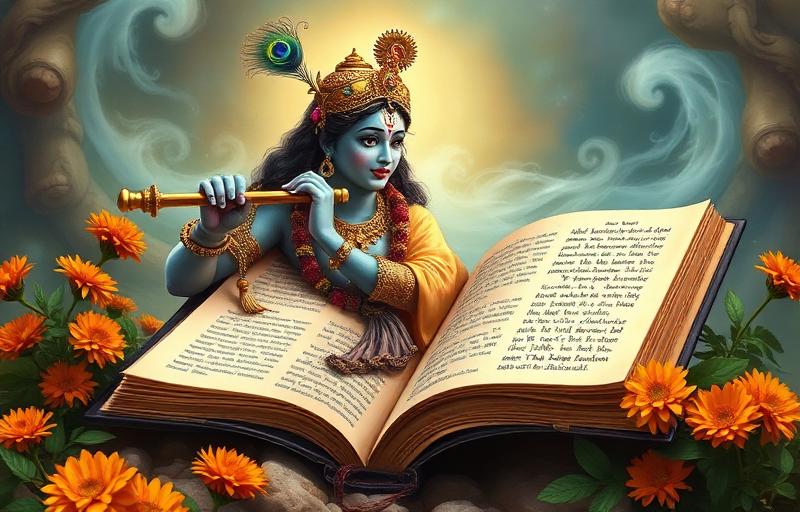
Manjusha Kala is the folk art of Bhagalpur, and it is unusual among Indian folk arts in being tied almost entirely to a single narrative.
What it is:
- Painting done on manjusha, boxes traditionally made of bamboo and paper, and now also on cloth, paper and other surfaces
- A restricted palette, traditionally pink, green and yellow, which gives the form its immediate recognisability
- Figures drawn in a distinctive style with elongated bodies, prominent eyes in profile and a characteristic X shaped torso convention
- Borders filled with snakes, waves, lotus and geometric motifs
- Scenes drawn in sequence, so a single piece can carry the whole Bihula narrative
The boxes were not decorative objects. They were made for the Bishahari puja, filled with offerings and materials for the ritual, carried in procession and immersed at the conclusion of the worship. The art existed to serve the ritual.
Manjusha has been the subject of considerable revival effort in recent decades, with artists in Bhagalpur adapting the form to cloth, saris and larger works, and it has received a geographical indication registration.
For a devotee or a visitor, the useful thing to understand is the order of things. The katha came first, the puja carried it, the art was made for the puja, and the market came last. Buying a Manjusha painting means buying a scene from Bihula's journey, and artists in Bhagalpur will explain exactly which part of the story you are holding.
How the Puja Is Kept
Bishahari puja is a household and neighbourhood observance, kept mainly in the monsoon months.
- The main worship falls in Shravan and Bhadrapada, with the puja held on days fixed locally, and Nag Panchami is closely associated
- Families install the goddess in the form of a clay image, a pot, or a snake figure in clay, and worship at home or at the neighbourhood shrine
- Manjusha boxes are prepared, filled with offerings, and immersed at the end of the puja in the older practice
- Milk, khir, batasha, flowers and fruit are offered, along with the seasonal produce of the household
- Women sing the Bihula Bishahari geet through the nights of the puja, in Angika and the local dialects
- Groups perform the full katha, which takes many hours
Alongside the household observance, larger community pujas are held in Bhagalpur and the surrounding towns, and the immersion procession is a public event.
As with all snakebite related worship, the tradition here should be stated alongside the practical point. Snakebite is a medical emergency, and the vow does not replace treatment. Families in the region keep the puja for protection through the season, and take anyone bitten to a hospital immediately. Elders in Anga make that distinction themselves and are clear about it.
Bishahari and Manasa Across Eastern India
The serpent goddess is worshipped across eastern India under different names and with different narratives, and Anga's version is one of several.
- Manasa in Bengal, with the Manasamangal kavya, one of the great mangalkavya traditions, telling a version of the same Chand Saudagar and Behula story
- Bishahari in Anga, with the Bihula Bishahari geet and Manjusha art
- Manasa in Assam, with her own local traditions and performance forms
- Nag Panchami across north India, when serpents are worshipped and milk offered at anthills and shrines
- Naga worship in Kerala and the Konkan, with sarpa kavus and family serpent groves
The Bengal and Anga versions of the story are close, with local variations in names and detail, and both belong to a shared eastern Indian narrative tradition that crossed the modern state boundary long before it existed.
What is worth noticing is how these traditions handle danger. A serpent goddess is not a benign figure. She strikes, and the katha does not soften it. What the tradition offers is not the removal of the danger but a relationship with it, kept through a puja in the season when the danger is greatest.
That is a very old way of dealing with what cannot be controlled, and it is why the serpent goddess remains one of the most worshipped deities in rural eastern India.
What People Ask Most
Who is Bishahari?+
Bishahari is the serpent goddess worshipped in the Anga region of Bihar, covering Bhagalpur, Banka and Munger. The name means the one who removes poison, and she is worshipped elsewhere in eastern India as Manasa.
What is the Bihula Bishahari katha?+
Chand Saudagar refused to worship Bishahari and lost his wealth and sons. His last son Bala Lakhendra died of snakebite on his wedding night despite an iron chamber. His bride Bihula floated the body down the river for months to the court of the gods, and won his life back.
Why did Chand Saudagar worship with his left hand?+
The gods restored his family on condition that he worship Bishahari. He agreed, but offered flowers with his left hand without turning to look at her. The katha lets that stand, so the goddess receives the worship but not his devotion.
What is Manjusha Kala?+
Manjusha Kala is the folk art of Bhagalpur, painted traditionally on bamboo and paper boxes in pink, green and yellow, depicting the Bihula Bishahari story. The boxes were made for the puja, filled with offerings and immersed at its conclusion.
When is Bishahari puja held?+
Mainly in Shravan and Bhadrapada, the monsoon months when snakebite risk is highest, with days fixed locally and Nag Panchami closely associated. Women sing the Bihula Bishahari geet through the nights of the puja.
Is this worship a substitute for snakebite treatment?+
No. Snakebite is a medical emergency and the vow does not replace treatment. Families in Anga keep the puja for protection through the season and take anyone bitten to a hospital immediately, and elders in the region make that distinction themselves.
About the author
Anjali Mehta · Editor, M.A. Religious Studies
Anjali is the managing editor for Vandnaa and oversees the festival and vrat coverage. She holds an M.A. in Religious Studies and reviews every published article for accuracy, accessibility, and tradition-fidelity.
Meet the Vandnaa editorial team →Explore on Vandnaa
Related Articles

Manasa Devi: Bengal's Serpent Goddess and Her Worship Tradition
7 min read

Naga Worship: The Significance of the Sacred Snake in Hinduism
7 min read
Gogaji Jaharveer: The Serpent Deity of Rajasthan Worshipped From Churu to Punjab
9 min read
Raja Salhes: The Mithila Hero Worshipped in Open Air Gahvars
8 min read