Tithi Birthday vs Date of Birth - When Is Your Real Janamdin?
In Hindu tradition, your janamdin is reckoned by the tithi - the lunar day of the Hindu month on which you were born - rather than the English calendar date. If you were born on Bhadrapada Shukla Chaturthi, that tithi is your traditional birthday every year, even though it falls on a different English date each time. In many South Indian families the janma nakshatra, the birth star, is honoured instead. Why does this matter? Because the tithi connects your birth to the same cosmic rhythm of the moon under which you arrived, and all birthday puja, homam and daan are traditionally performed on it. Most families today happily observe both: the English date for cake and friends, and the tithi for puja and blessings. A panchang or a priest can tell you your janma tithi from your date and time of birth in moments.
Morning Rituals - Charan Sparsh, Aarti, Tilak and New Clothes
The Hindu birthday morning begins not with gifts but with blessings. After an early bath, the birthday person wears new or freshly washed clothes and goes straight to the elders of the house for charan sparsh - touching their feet. The blessing that follows, Ayushman bhava (may you live long), is considered the most precious gift of the day. The mother or grandmother then performs a small aarti: a diya on a thali is circled before the birthday child, a tilak of kumkum and rice (akshat) is applied to the forehead, and something sweet, often dahi-shakkar or a laddoo, is offered. This simple sequence has deep meaning: the elders' blessing shields the year ahead, the tilak marks the ajna point between the brows as a sign of grace, and the sweet sets the tone for a sweet year.
Why a Temple Visit Comes First on a Birthday
Before parties and phone calls, tradition sends the birthday person to the temple. The logic is beautiful: a birthday is the anniversary of receiving this human life, so the first thank-you of the day belongs to the One who gave it. Devotees offer flowers, a coconut or simple naivedya to their ishta devata - the family or personal deity - and pray for a year of dharma, health and devotion. Many families also offer a donation equal to the new age, light a ghee diya at the temple, or sponsor that day's aarti. If a temple visit is not possible, the same bhakti works at the home mandir: bathe, light a diya, offer a flower and fruit, and sit for a few minutes of japa. The point is not the building but the direction of the heart on the first morning of your new year.
Daan on Your Birthday - Giving Before Receiving

Hindu tradition turns the birthday inside out: the day you receive the most is the day you should give the most. Daan (charitable giving) done on one's janamdin is considered many times more meritorious. Lovely customs exist around this: 1. Feed someone before you feast - offer food to a cow, give a meal to someone hungry, or send groceries to a needy family before cutting any cake. 2. Donate by your age - give as many fruits, laddoos, books or rupees-multiples as the years you are turning; turning 30 means 30 of something given away. 3. Anna daan - sponsoring food at a temple or gurudwara-style community meal is held to be the highest gift. 4. Vastra daan - new clothes for yourself feel sweeter when paired with clothes given to someone who has none. The inner teaching: gratitude that does not flow outward turns stale; daan keeps the birthday's joy in motion.
Longevity Prayers and the Ayushya Homam Tradition
Since a birthday celebrates life itself, its traditional prayers centre on ayushya - long life and vitality. The fullest form is the Ayushya Homam, a fire ritual performed especially for a child's first birthday and on milestone years, in which oblations are offered to Ayur Devata, the presiding deity of lifespan, along with the Maha Mrityunjaya Mantra of Lord Shiva. Families who keep it simpler invoke the same grace at home: parents place their palms on the child's head and recite Ayushman bhava, eleven or twenty-one repetitions of the Maha Mrityunjaya Mantra are chanted, and a ghee diya burns through the puja. There is no rule that a homam is compulsory; it is an offering of love, not an obligation. What matters is that someone, on your birthday, consciously prays that your years be long, healthy and turned toward dharma.
Light a Diya, Do Not Blow One Out - The Hindu Way
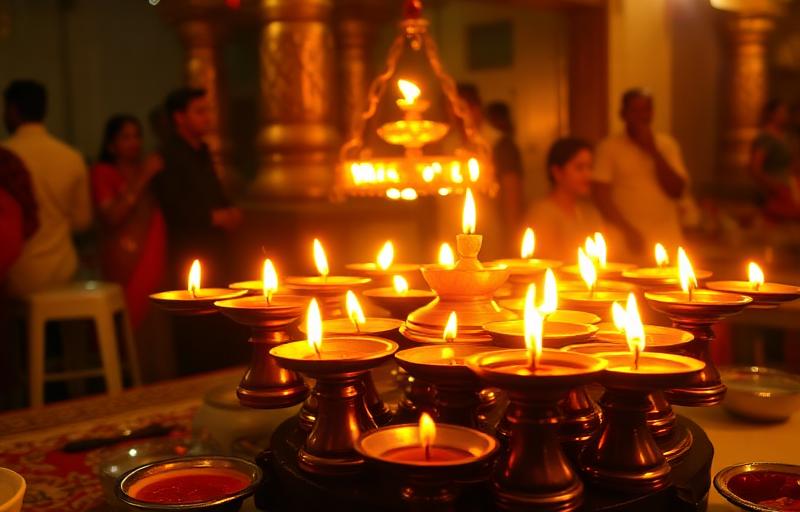
Blowing out candles on a cake is a Western import, and there is no harm in enjoying it with friends. But it is worth knowing that it points exactly opposite to the Hindu instinct. In our tradition, fire is Agni Dev, light is knowledge, and a flame is never extinguished by human breath - blowing on a deepak is considered disrespectful to Agni even in daily puja. A Hindu birthday therefore adds light rather than removing it: the birthday person lights diyas equal to their new age plus one - the extra diya for the year ahead - or simply lights one ghee lamp with a prayer. Many families now do both, gently: cake for the party, and a quiet moment at the mandir lighting a diya before it. If you keep just one custom this year, let it be this one - begin your new year by kindling a flame, not silencing one.
Birthday Mantras for a Blessed Year Ahead

A few mantras carry special weight on a janamdin. Chant any of these 11, 21 or 108 times at the home mandir: 1. Maha Mrityunjaya Mantra - Om Tryambakam Yajamahe... - the great prayer for health and protection from untimely harm; the classic birthday mantra. 2. Gayatri Mantra - Om Bhur Bhuvah Svaha... - for wisdom and a mind turned toward light in the new year. 3. Om Namo Bhagavate Vasudevaya - surrendering the year ahead to Lord Vishnu, the sustainer. 4. Ganesh Mantra - Om Gan Ganapataye Namah - so the new year begins free of obstacles. 5. Ishta devata mantra - whichever name your heart naturally calls; on your birthday, that name is the truest. End with a simple sankalp: "May this year of my life be of use to my family, my dharma and those who need me." That one sentence turns a birthday into a vrat of gratitude.
Common Questions From Devotees
What is a tithi birthday and how do I find mine?+
A tithi birthday is your birth anniversary by the Hindu lunar calendar - the same tithi of the same Hindu month each year, such as Chaitra Shukla Navami. Any panchang app or a priest can derive it from your date, time and place of birth. Traditional puja, homam and daan are done on the tithi, while the English date can still be kept for celebrations.
Which mantra should I chant on my birthday?+
The Maha Mrityunjaya Mantra is the classic birthday mantra, chanted 11, 21 or 108 times for health and protection. The Gayatri Mantra, Om Namo Bhagavate Vasudevaya and your ishta devata's mantra are equally beautiful choices. What matters most is chanting with a sankalp of gratitude for the year received and the year ahead.
What should I donate on my birthday?+
Anna daan (food) is held highest - feed a hungry person, a cow, or sponsor a temple meal before your own feast. A lovely custom is donating by your age: as many fruits, laddoos, books or rupee-multiples as the years you are turning. Clothes, blankets in winter, and study material for children are also excellent birthday daan.
Is it wrong to cut a cake and blow out candles?+
It is not a sin, and there is no need for guilt - enjoying cake with loved ones is harmless joy. Hindu tradition simply offers a more meaningful symbol: since blowing on a flame is avoided in puja, light a diya instead of extinguishing candles. Many families happily do both - cake at the party, and a quiet diya at the mandir.
What is Ayushya homam and is it necessary every year?+
Ayushya homam is a fire ritual for longevity, traditionally performed on a child's first tithi birthday and on milestone years, with oblations to Ayur Devata and the Maha Mrityunjaya Mantra. It is not compulsory every year. A home alternative - parents' blessings, 21 Maha Mrityunjaya chants and a ghee diya - carries the same loving intent.
Why do we touch elders' feet on a birthday?+
Charan sparsh is the first ritual of a Hindu birthday because elders' blessings - Ayushman bhava, may you live long - are considered the day's truest gift. Bowing low expresses that whatever we are began with those who raised us. Tradition holds that the blessing given from a moved heart on a janamdin protects the entire year ahead.
About the author
Acharya Vinaya Kapoor · M.A. Sanskrit, Mantra & Stotra Studies
Acharya Vinaya holds an M.A. in Sanskrit from Banaras Hindu University and writes the mantra and stotra commentary on Vandnaa. Her focus is on accurate pronunciation, traditional context, and helping modern readers connect with classical texts.
Meet the Vandnaa editorial team →