The Devi of the Kavu
Chakkulathukavu is a Devi temple at Neerattupuram, on the border of Alappuzha and Pathanamthitta districts in Kerala, near Thiruvalla.
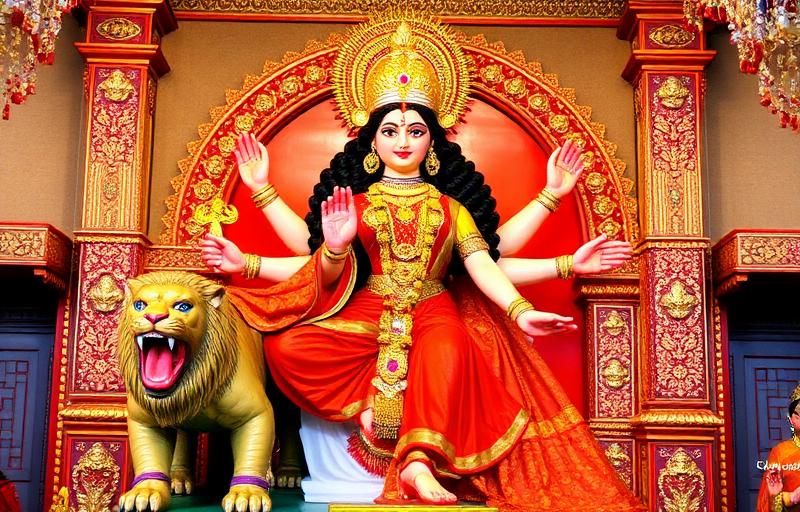
The Devi here is worshipped as Bhagavathy, in the Durga form, and is addressed affectionately as Chakkulathamma, the mother of Chakkulathu.
The word kavu in the name is important. A kavu is a sacred grove, the form in which a great many Kerala shrines began, before temples were built at them. The name tells you that worship here started in a grove, which is the oldest layer of devotional practice on this coast.
What the temple is known for:
- The Pongala, the great annual offering made by women, which draws enormous numbers
- The Naari Puja, in which the chief priest washes the feet of women devotees, a ritual found nowhere else in this form
- The twelve day vratham kept by devotees before the Pongala
- A devotional culture in which women are the principal participants rather than one section of the congregation
Kerala has many Bhagavathy temples, and several are far older or more architecturally significant. Chakkulathukavu's importance is of a different kind, and it rests almost entirely on what happens on one day of the year.
Naari Puja: The Priest at the Devotee's Feet
The Naari Puja is the ritual that has made this temple known across India, and it is worth describing precisely.
On the day of the Pongala, after the offering is complete:
- Women devotees who have kept the twelve day vratham are seated
- The melsanthi, the chief priest of the temple, washes their feet
- The washing is done with due ritual, and it is offered as worship, with the women in the position the deity would ordinarily occupy
- The ritual is understood as the honouring of womanhood itself, with the devotees treated as forms of the Devi
What makes this striking is the reversal. In the ordinary structure of temple worship, the priest serves the deity and the devotee receives prasad. Here the priest performs puja to the devotees, and the devotees are the object of worship.
The practice is relatively recent as temple rituals go, having been instituted in the modern period, and it has drawn attention well beyond Kerala.
What the temple states about its meaning is simple: the Devi is present in women, and the ritual makes that explicit rather than leaving it as a sentiment.
For a tradition often discussed in terms of what it denies women, this ritual is worth knowing about. It is not offered here as a counterargument to anything, since Hindu practice contains a great deal that is inconsistent on this subject. It is worth knowing because it exists, it is large, and it happens every year in front of lakhs of people.
The Pongala and the Vratham
The Pongala at Chakkulathukavu is among the largest gatherings of women at any temple in India, and it takes place on the first Friday of the Malayalam month of Dhanu, which falls in December.
How the observance works:
- Devotees keep a vratham of twelve days before the Pongala, with dietary restriction, discipline and daily observance
- On the day, women arrive in enormous numbers and set up hearths in the temple grounds and along the roads and open spaces around it
- The offering is cooked in earthen pots, over fires lit at an appointed time, with rice, jaggery and coconut
- When the Pongala boils over, the offering is complete, and it is then presented to the Devi
- The Naari Puja follows
The scale is difficult to convey. Roads for a considerable distance around the temple are occupied by cooking fires, and the entire area is given over to the offering for the day.
This form of offering is characteristic of Kerala and Tamil Nadu, where the Pongala or Pongal offering, cooked by the devotee themselves in the open and offered directly, is one of the most widespread devotional practices. The Attukal Pongala in Thiruvananthapuram is the largest of them and has appeared in records of the world's biggest gatherings of women.
What these offerings share is that no priest cooks them. The devotee cooks, in her own pot, on her own fire, and offers what she made.
The Katha of the Grove

The origin katha of Chakkulathukavu, as told locally, is about an unnamed devotee rather than about a king or a sage.
In the account, an old woman of the area, of no standing and no means, was a devotee of the Devi. She worshipped at a spot in the forest grove, without a temple, without a priest and without any of the apparatus that formal worship requires.
The Devi's presence at that spot was recognised through her devotion, and worship at the site began from there.
What the katha establishes is the same thing the temple's ritual life establishes:
- The devotion that mattered came from someone outside the structures of formal worship
- The Devi was already present in the grove, and the recognition came through a devotee rather than through an institution
- The person at the centre of the founding story is an old woman with nothing, which is a specific choice
This pattern recurs across Kerala's kavu traditions. Groves are the oldest devotional sites on this coast, worship at them predates the temple system, and the founding stories of many of them involve ordinary people who noticed something.
At Chakkulathukavu the connection between that origin katha and the Naari Puja is not accidental, and devotees make it explicitly. A temple founded through the devotion of an old woman is a temple where, once a year, the priest washes women's feet.
Women and Kerala's Devi Temples
Chakkulathukavu belongs to a distinctive feature of Kerala's devotional life, in which several of the largest observances in the state are made by women.
- Attukal Pongala, Thiruvananthapuram, where the gathering of women is among the largest recorded anywhere
- Chakkulathukavu Pongala, with its twelve day vratham and Naari Puja
- Kodungallur Bharani, with its own distinctive and much older traditions
- Chottanikkara, visited particularly for mental distress, with women prominent among devotees
- Village kavus across Kerala, where the Bhagavathy is the deity of the immediate community
What the Pongala form does structurally is worth noticing. It requires no temple entry, no priest, no ritual expertise and no expense beyond a pot and rice. A woman cooks in the open, offers what she made, and the offering is complete.
That form has allowed these observances to reach a scale that temple based rituals cannot, since a sanctum has a capacity and a road does not.
Kerala's religious life includes a great deal of debate about women, access and tradition, as anyone following the discussion around Sabarimala over the past years will know. This article is not the place to settle any of that.
What is worth stating is that the same state, in the same tradition, produces the Pongala and the Naari Puja, and that both are very large, very old in form and entirely mainstream.
Visiting Chakkulathukavu
The temple is straightforward to reach and is very different on Pongala day from the rest of the year.
- Location - Neerattupuram, on the Alappuzha and Pathanamthitta district border, near Thiruvalla in central Kerala
- Access - Thiruvalla and Chengannur are the nearest rail heads, with Kochi and Thiruvananthapuram the nearest airports
- Best time - the Pongala, on the first Friday of Dhanu in December, for the full observance. Any other time for a quiet darshan.
- On Pongala day - expect extraordinary crowds, road closures, and the entire area given over to cooking fires. Plan travel and accommodation well in advance.
- Dress code - Kerala temples follow a traditional dress code, with men generally expected to wear a mundu and remove upper garments and women in saree, set mundu or salwar
- Nearby - Thiruvalla and the temples of central Kerala, and the backwaters of Alappuzha
If you are visiting on Pongala day as an observer rather than a participant, be aware of what is around you. Women who have kept a twelve day vratham are cooking an offering on a public road, and the area is not a viewing gallery. Do not step over hearths or offerings, do not photograph devotees without asking, and stay out of the way of the flow.
On an ordinary day the temple is quiet, the kavu setting is visible, and it takes very little time to visit, which is the better way to see the place itself if the Pongala is not what you have come for.
Frequently Asked Questions
What is the Naari Puja at Chakkulathukavu?+
It is a ritual held on Pongala day in which the melsanthi, the chief priest, washes the feet of women devotees who have kept the twelve day vratham. The washing is offered as worship, with the women treated as forms of the Devi.
When is the Chakkulathukavu Pongala held?+
On the first Friday of the Malayalam month of Dhanu, which falls in December. Devotees keep a twelve day vratham before it, and on the day women cook the offering in earthen pots on hearths set up around the temple and along the surrounding roads.
Who is the Devi at Chakkulathukavu?+
She is worshipped as Bhagavathy in the Durga form and addressed affectionately as Chakkulathamma. The word kavu in the name means sacred grove, indicating that worship here began in a grove before a temple was built.
What is the origin katha of the temple?+
Local tradition says an old woman of the area, with no standing and no means, worshipped the Devi at a spot in the forest grove. The Devi's presence there was recognised through her devotion, and worship at the site began from that.
How is the Pongala offering made?+
Each devotee cooks it herself, in an earthen pot on a fire lit at an appointed time, with rice, jaggery and coconut. When the Pongala boils over the offering is complete and is presented to the Devi. No priest cooks it.
What should visitors keep in mind on Pongala day?+
Expect extraordinary crowds and road closures, and remember that women who have kept a twelve day vratham are cooking offerings on public roads. Do not step over hearths or offerings, do not photograph devotees without asking, and follow the Kerala temple dress code.
About the author
Pandit Mahesh Trivedi · Festival Traditions & Panchang
Pandit Mahesh leads the festival-date and Panchang content on Vandnaa. He cross-references multiple regional panchangs (Drik, Vaishnava, Bengali, Marathi) for every festival date published on the site.
Meet the Vandnaa editorial team →