Who Is Maa Chinnamasta?
Chinnamasta is worshipped as one of the Dus Mahavidyas, shown offering her own severed head on her palm, from which streams of energy flow. Tradition explains this striking form as a symbol of supreme self-sacrifice, the transcendence of body-consciousness, and mastery over one's own life force and desires, not literal violence.
Her worship belongs to an advanced tantric tradition, and devotees who feel drawn to her deeper sadhana are guided by an experienced guru. The worship described here is the simple, reverent form through which ordinary devotees honour her.
Samagri for Simple Home Worship
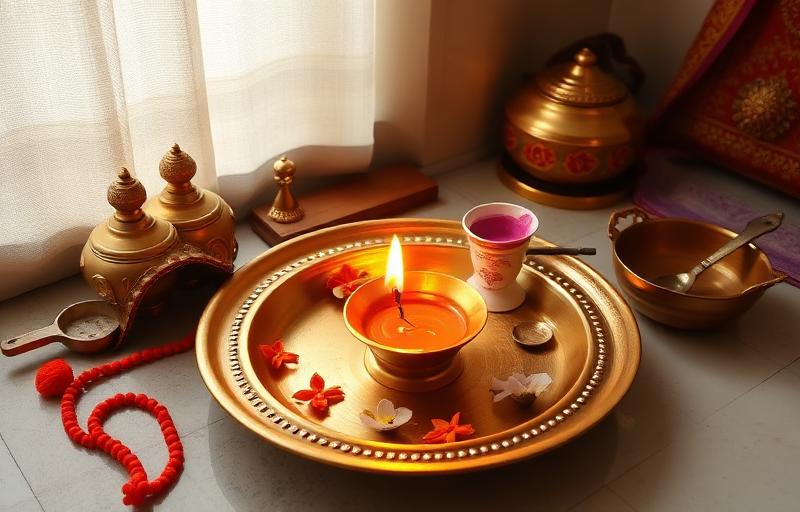
For a simple, respectful worship at home, gather:
- A picture of Maa Chinnamasta
- Red cloth or asana to sit on
- Red flowers such as hibiscus
- Kumkum and red chandan
- A diya and incense
- Coconut and a simple sweet as prasad
- Akshat and a bell
As with any Mahavidya worship at the household level, simplicity is preferred over elaborate arrangements.
Step-by-Step Puja Vidhi
1. Snan and asana: Bathe, wear clean clothes, and sit facing east on the red asana. 2. Ganesh vandana: Begin with a short prayer to Lord Ganesha. 3. Dhyana: Light the diya and incense, and quietly reflect on the idea of surrender and letting go that Chinnamasta represents. 4. Offerings: Offer akshat, red flowers, kumkum and the prasad with folded hands. 5. Mantra japa: Chant her name or a simple mantra such as Om Hleem Chinnamastayai Namah softly, 11 or 21 times. 6. Aarti and prasad: Perform a short aarti, bow with gratitude, and share the prasad.
The tone throughout is calm and reflective rather than intense.
Best Time and Rules to Keep in Mind
Tuesdays and Ashtami tithi are commonly considered suitable for this worship, and some families include her among the Mahavidyas honoured during Gupt Navratri. Because her symbolism touches on surrender and detachment, this worship is best approached with a settled, reflective mind rather than in a hurry or during emotional turmoil.
Home worship is kept brief. Anyone wishing to explore her sadhana in greater depth is advised to do so only with a guru's guidance.
Common Mistakes to Avoid
- Trying to imitate advanced tantric visualisation without a guru's training
- Approaching her worship out of morbid curiosity rather than genuine devotion
- Reading her form literally rather than as a symbol of self-transcendence
- Skipping the calm, reflective mood the worship calls for
A simple, humble prayer is always considered more valuable than an elaborate ritual performed without understanding.
The Takeaway
Chinnamasta's form, however intense it may appear, is ultimately a teaching about letting go of ego and bodily attachment. Home devotees can honour this through simple, humble worship and quiet reflection, while her deeper tantric path remains a guided journey undertaken with a genuine teacher.
Frequently Asked Questions
Why is Chinnamasta shown holding her own severed head?+
Tradition explains this striking imagery as a symbol of ultimate self-sacrifice and the transcendence of body-consciousness, not literal violence. It teaches devotees about surrendering ego and mastering one's own life energy.
Can beginners perform Chinnamasta worship on their own?+
Simple, respectful worship such as offering flowers and chanting her name is open to all sincere devotees. Her deeper tantric sadhana, however, is traditionally learned only under a qualified guru.
What do devotees seek through Chinnamasta's worship?+
Devotees traditionally seek her blessings for overcoming excessive desire and attachment, and for inner strength during difficult transitions in life.
About the author
Pandit Mahesh Trivedi · Festival Traditions & Panchang
Pandit Mahesh leads the festival-date and Panchang content on Vandnaa. He cross-references multiple regional panchangs (Drik, Vaishnava, Bengali, Marathi) for every festival date published on the site.
Meet the Vandnaa editorial team →