Origin: Vasishtha's Prayer When Even Sages Faced Poverty
The Daridrya Dahan Stotram (literally 'The Hymn that Burns Poverty') is attributed to Sage Vasishtha, the royal preceptor of Lord Rama's lineage. The story behind it is unusual: even Vasishtha, a maharshi blessed by Brahma, faced a period of severe scarcity in his ashram. His wife Arundhati and the rishi-disciples had nothing to eat. Visiting kings had withdrawn their patronage during a regional famine. Vasishtha, who had refused to ever pray for wealth (considering it beneath a sage), finally accepted that hunger of disciples was his responsibility. He sat by the Saraswati river and composed this hymn - but addressed it not to Lakshmi but to Lord Shiva.
The reason is theological: Lakshmi grants wealth where karma is supportive. But where karma itself is blocked - where a person has the right kind of mind but a 'closed pipe' (past-life debt, ancestral curse, prolonged stagnation) - only Shiva's destructive grace can break the pipe so that Lakshmi can then flow in. Daridrya Dahan is therefore not a 'wealth prayer' but a 'remove-the-obstacle-to-wealth prayer'. It is recited when normal Lakshmi mantras have stopped producing results, when poverty feels generational, when you suspect a tantric block or pitru dosha, or when something irrational keeps draining money no matter what you do.
The stotra worked instantly for Vasishtha. Within days, three kings independently sent grain caravans to the ashram. The hymn entered the Skanda Purana and was preserved in temple manuscripts across South India. Today it is recited especially in Vaidyanatheswar (Tamil Nadu), Nageshwar (Gujarat) and Kashi Vishwanath temples as a remedy for chronic financial deadlock.
The 8 Verses - Each Ends with 'Daridrya Dahanaaya'
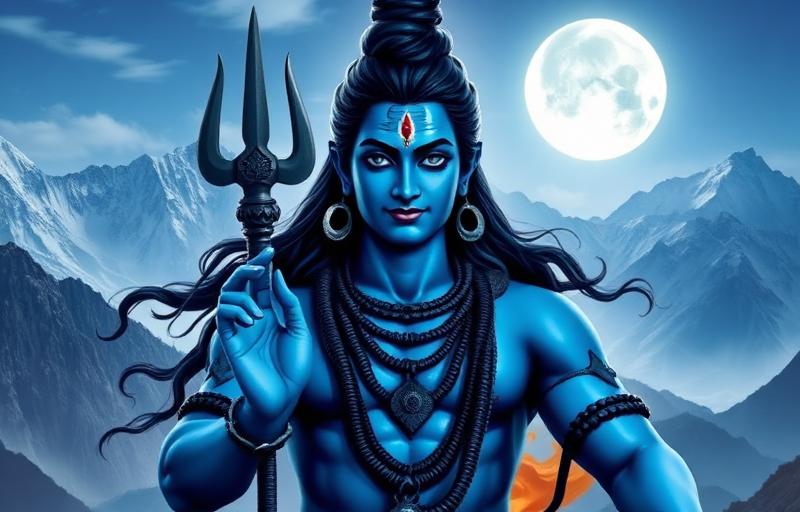
1. Vishweshwaraya Narakaarnava Taaranaaya Karnaamritaaya Shashishekhara Dhaaranaaya Karpoora Kanti Dhavalaaya Jatadharaaya Daaridrya Dukha Dahanaaya Namah Shivaaya To the Lord of the universe, who carries us across the ocean of hell, whose name is nectar to the ears, who wears the moon, white as camphor, who bears matted locks - salutations to Shiva who burns the pain of poverty.
2. Gauri Priyaaya Rajanisha Kala Dharaaya Kaalaantakaaya Bhujagaadhipa Kankanaaya Ganga Dharaaya Gaja Raja Vimardhanaaya Daaridrya Dukha Dahanaaya Namah Shivaaya To Gauri's beloved, wearer of the night-moon, destroyer of death, whose bracelets are king of serpents, who holds Ganga, conqueror of the demon-elephant - salutations to Shiva who burns the pain of poverty.
3. Bhaktipriyaya Bhava Roga Bhayaapahaaya Ugraaya Durga Bhava Saagara Taaranaaya Jyotirmayaaya Guna Naama Sunrityakaaya Daaridrya Dukha Dahanaaya Namah Shivaaya Beloved of devotion, remover of the fear of life-disease, the fierce one, who carries us across the difficult ocean of becoming, the luminous one, of beautiful dance and noble names - salutations to Shiva who burns the pain of poverty.
4. Charmaambaraaya Shava Bhasma Vilepanaaya Bhaalekshanaaya Mani Kundala Mandanaaya Manjeera Paadayugalaaya Jata Dharaaya Daaridrya Dukha Dahanaaya Namah Shivaaya Clad in deer-skin, smeared with funeral ash, three-eyed, adorned with jewelled earrings, ankleted feet, jata-bearing - salutations to Shiva who burns the pain of poverty.
5. Panchaananaya Phani Raja Vibhushanaaya Hemaamshukaaya Bhuvanatraya Mandanaaya Aanandabhuumi Varadaaya Tamomayaaya Daaridrya Dukha Dahanaaya Namah Shivaaya Five-faced one, ornamented with the king of serpents, golden-robed, ornament of the three worlds, granter of joy-land, destroyer of darkness - salutations to Shiva who burns the pain of poverty.
6. Bhaanu Priyaaya Bhava Saagara Taaranaaya Kaalaantakaaya Kamalaasana Pujitaaya Netra Trayaaya Shubha Lakshana Lakshitaaya Daaridrya Dukha Dahanaaya Namah Shivaaya Beloved of the sun, who carries us across the ocean of becoming, destroyer of death, worshipped by Brahma, three-eyed, marked with auspicious signs - salutations to Shiva who burns the pain of poverty.
7. Raamapriyaaya Raghunaatha Vara Pradaaya Naagapriyaaya Naraka Aarnava Taaranaaya Punyeshu Punya Bharitaaya Suraarchitaaya Daaridrya Dukha Dahanaaya Namah Shivaaya Beloved of Rama, granter of boons to Raghunatha, dear to serpents, savior across the ocean of hell, full of merit-of-merits, worshipped by gods - salutations to Shiva who burns the pain of poverty.
8. Vasishtena Krutam Stotram Yah Pathenmaanavah Sadaa Sarva Daaridrya Vinirmuktaha Lakshmi Sansthithi Maavapeth The man who continually recites this hymn composed by Vasishtha is freed from all poverty and attains the establishment of Lakshmi.
Recitation Vidhi: Time, Place, Count & Cautions
Best time: Monday or Saturday at pradosha-kal (1.5 hours before sunset to sunset). Shiva's most receptive time. Other days are acceptable but Monday-Saturday combination gives fastest results. Avoid recitation between midnight and 4 AM unless under guru's direction - Shiva's tamasic energies are active then and can intensify if approached incorrectly.
Place: In front of a Shivling at home OR a clean wooden platform with a Shiva photo. Outdoor recitation under a peepal or banyan tree is exceptionally powerful. NEVER recite in the bathroom, near non-veg food, or while wearing leather items.
Setup:
- Bathe and wear clean (preferably white, grey, or black) clothes.
- Place white flowers (no red - red is for Devi, not Shiva), bilva leaves (3-leaf clusters, never broken), white sweet (mishri or coconut), and dhatura fruit if available.
- Light a ghee diya - only ghee, not mustard oil for this stotra.
- Burn camphor before starting.
Counts by situation:
- Chronic poverty in family lasting 3+ years: 11 paths daily for 48 days (Shiva-mukut sankalpa).
- Sudden bankruptcy or business failure: 21 paths daily for 21 days.
- General prosperity prayer: 3 paths daily for 40 days.
- Suspected tantric block or pitru dosha: 11 paths on Monday + 11 paths on Saturday weekly for 11 weeks. This combination is among the most powerful obstacle-breakers in Sanatan tradition.
- One-time emergency (sudden loss): 108 paths in a single day with abhishek of Shivling by pure cow's milk.
Concluding action: After every session, do panchakshari mantra 'Om Namah Shivaaya' 11 times, take a sip of charanamrit (water from the Shivling), and donate something - even Rs 1 to a beggar, a piece of bread to a stray dog, or grain to an ant colony. This act of giving 'closes the loop' and signals to Shiva that the wealth coming in will not be hoarded.
Cautions: When to Pause, Why Some Get Sudden Losses
Daridrya Dahan Stotra is not gentle like a Lakshmi mantra. It is destructive - it BURNS poverty. Burning involves heat, smoke and intensity before the cooling rain of Lakshmi's wealth arrives. About 1 in 5 reciters experience a 'crisis of intensification' in the first 7-14 days: a sudden expense, a small loss, a quarrel about money, an unexpected bill. This is normal - Shiva is breaking the karmic encrustation, and the dust comes out before the inside becomes clean. Do NOT stop the stotra during this period. The next 14 days will be quieter, and the 21-40 day window typically delivers positive results.
When to pause the stotra:
- During a death in the family (15 days mourning).
- During major surgery or hospitalisation.
- During menstruation (women - pause active recitation, may mentally recite).
- During eclipse (solar or lunar) - Shiva mantras are exceptions to the 'do during eclipse' rule because eclipse intensifies both positive and negative; for a beginner this can be too much.
Who should NOT begin this stotra:
- People doing this with the expectation of harming a competitor's wealth - Shiva is fierce, and misuse of this stotra has been known to ruin the user instead.
- People who do not want to give up at least one bad habit - every successful Daridrya Dahan sadhana requires a tyaga (renunciation) of one item: tobacco, gambling, gossip, lying. Without giving up something, the stotra has nothing to 'burn' and the path stalls.
- Pregnant women in the first trimester - pause until 4th month.
Combining with other practices: Daridrya Dahan + weekly Lakshmi puja on Fridays is among the most powerful combinations - Shiva burns the obstacle, Lakshmi flows in. Daridrya Dahan + Vaibhav Lakshmi Vrat is acceptable. Daridrya Dahan + tantric mantras from non-Vedic sources is dangerous - never combine. Stick to scriptural mantras alongside.
Finally - the stotra works best when you do not tell anyone you are reciting it. Wealth-removing prayers reveal their power in private. If you must tell, tell only your spouse, mother or guru, never friends or social media.
Frequently Asked Questions
Can a non-Shiva devotee (e.g., Krishna or Devi bhakta) recite this stotra?+
Yes - Shiva is the universal obstacle-remover and accepts the prayer of any sincere devotee, even one whose ishta-devta is different. The hymn itself contains verse 7 'Raamapriyaya' (beloved of Rama) showing that Shiva blesses across sectarian lines. Krishna bhaktas often combine this with Govinda Damodara Madhaveti chanting; Devi bhaktas combine it with Lalita Sahasranama. Shiva does not demand exclusive devotion - only sincerity.
What if poverty is not lifted even after 48 days?+
Three possibilities to check: (1) Is the karma genuinely closed? If you do not work in this lifetime, no stotra will magically generate income. Verify your effort. (2) Is there an unresolved hurt or vow (you cheated someone, broke a promise to your parents)? Resolve it first; Shiva will not bless over unresolved adharma. (3) Have you given up at least one bad habit during the sadhana? If not, restart with explicit tyaga. If all three are addressed and still no result, escalate to Mahamrityunjaya Mantra 108 daily for 40 days alongside - this combination breaks even deep karmic encrustations.
Should I do abhishek of Shivling alongside this stotra?+
Yes - strongly recommended. Pure cow's milk abhishek before recitation amplifies effect 3-5x. Alternative: panchamrit (milk + curd + ghee + honey + sugar) on Mondays only; plain water on other days; never with hard tap water alone. After 11 paths, sip a small amount of the abhishek-water (charanamrit). For those without a Shivling at home, mentally visualise Mount Kailash with snow falling on a small Shivling - the visualisation alone delivers 60-70% of physical abhishek benefit.
Can I record my voice and listen to the stotra instead of reciting?+
Listening (shravana) has merit but is approximately 30% as effective as live recitation (pathana). Sound vibrations created by your own vocal cords during recitation cause subtle bio-energetic changes that recordings cannot replicate. Use recordings as supplements: listen while commuting or working to maintain stotra-consciousness, but the daily prescribed count (3, 11, 21) must be live recitation. Even mental recitation (silent in mind) is more effective than listening to a recording.
About the author
Acharya Vinaya Kapoor · M.A. Sanskrit, Mantra & Stotra Studies
Acharya Vinaya holds an M.A. in Sanskrit from Banaras Hindu University and writes the mantra and stotra commentary on Vandnaa. Her focus is on accurate pronunciation, traditional context, and helping modern readers connect with classical texts.
Meet the Vandnaa editorial team →