What Is the Devi Mahatmya
The Devi Mahatmya, also known as Durga Saptashati or Chandi Path, is one of the most revered texts in Devi worship, found within the Markandeya Purana. It is composed of seven hundred verses (hence Saptashati, meaning seven hundred) that glorify the Goddess in her many forms and deeds.
Devotees recite the Devi Mahatmya widely during Navratri, believing that its verses invoke the presence and protection of the Divine Mother. The text is not a single continuous story but is traditionally understood as being told in three connected episodes, or charitas, each with its own deity, demon and lesson.
The Three Charitas, Briefly
- Prathama Charita (the first episode) tells of the Goddess as Mahamaya, the cosmic power who helps Vishnu awaken to slay the demons Madhu and Kaitabha, and is the shortest of the three.
- Madhyama Charita (the middle episode) narrates the well-known katha of Durga's battle against Mahishasura, the buffalo demon, and her emergence from the combined light of all the gods.
- Uttama Charita (the final episode) tells of the Goddess in her forms as Kaushiki, Kali and Ambika defeating the demon brothers Shumbha and Nishumbha, and introduces the Navadurga and the Matrikas.
Each charita is traditionally recited with its own preliminary and closing verses, though together they form one unified glorification of Shakti.
Why Three Different Forms of the Goddess
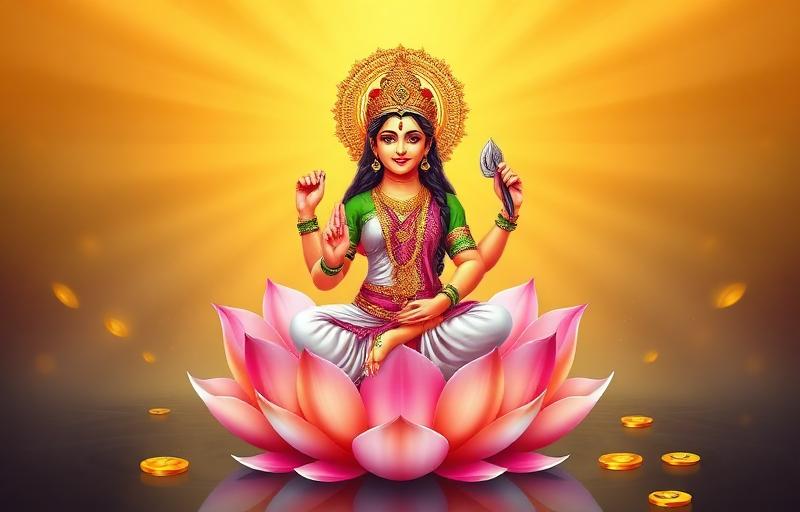
Tradition explains that each charita is presided over by a distinct aspect of the Devi, worshipped through separate dhyana (meditation verses): Mahakali in the first, Mahalakshmi in the second, and Mahasaraswati in the third. This threefold presence reflects the belief that Shakti embodies power, prosperity and wisdom all at once.
Devotees often connect this structure to the three nights of Navratri devoted to each aspect, understanding the nine-night festival as a journey through the same three energies that the Devi Mahatmya itself describes.
How the Text Is Recited
In many households and temples, the Devi Mahatmya is read across the nine nights of Navratri, sometimes completing all seven hundred verses over several sittings, and sometimes in a single dedicated day known as Saptashati Path. Some devotees undertake a Navavarna Path, combining the text with the Devi's mantra recitation.
Before beginning, devotees commonly chant the Kavach, Argala and Keelaka, auxiliary hymns believed to prepare the mind and remove obstacles to the recitation's benefit.
The Takeaway
Understanding the three charitas helps a devotee see the Devi Mahatmya not as one battle story but as a layered vision of the Goddess, as awakener, as destroyer of ego, and as bestower of wisdom. Reading it with this structure in mind deepens what is already a cherished devotional practice, an offering of faith rather than a transaction.
What People Ask Most
What are the three charitas of the Devi Mahatmya?+
They are the Prathama Charita (Madhu-Kaitabha), the Madhyama Charita (Mahishasura's defeat) and the Uttama Charita (Shumbha-Nishumbha), each showing a different aspect and deed of the Goddess.
Why is the Devi Mahatmya also called Durga Saptashati?+
Saptashati means seven hundred, referring to the seven hundred verses that make up the text. It is traditionally chanted, especially during Navratri, as a glorification of the Goddess.
Do all three charitas need to be read together?+
Tradition favours reading the complete text, but many devotees spread it across the nine nights of Navratri or read select chapters daily, according to their time and devotion.
About the author
Pandit Mahesh Trivedi · Festival Traditions & Panchang
Pandit Mahesh leads the festival-date and Panchang content on Vandnaa. He cross-references multiple regional panchangs (Drik, Vaishnava, Bengali, Marathi) for every festival date published on the site.
Meet the Vandnaa editorial team →