The Crisis That Called the Goddess
The Madhyama Charita, the middle and most widely known episode of the Devi Mahatmya, begins with the demon Mahishasura, a shape-shifting asura who could take the form of a buffalo, defeating the gods and seizing control of the heavens.
Driven from their own realm, the gods, led by Indra, sought refuge with Brahma, Vishnu and Shiva. Hearing of the injustice, the trimurti and all the assembled devas grew furious, and from their collective fury and radiance, a great light emerged.
The Birth of Durga
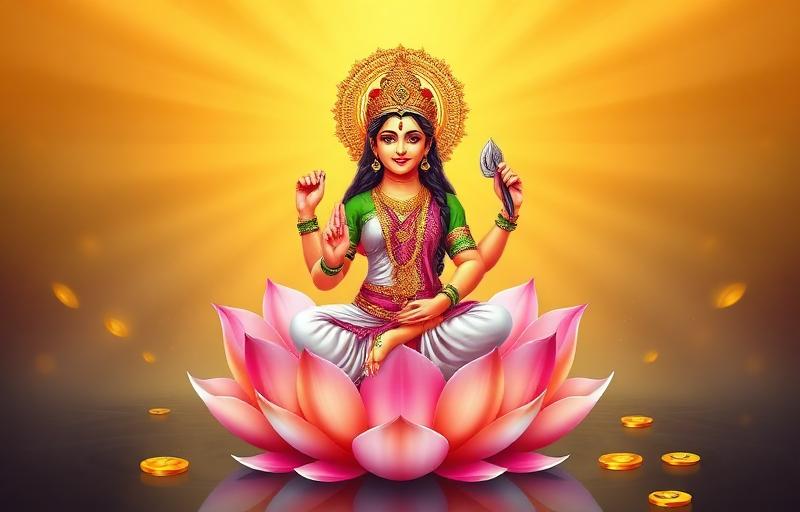
This combined light took the form of a radiant goddess, Durga, described as having many arms, each holding a weapon or symbol gifted by the assembled gods, Shiva's trishul, Vishnu's chakra, Indra's vajra, Varuna's shankha and Himavan's lion as her vahana, among many others.
Equipped by the very gods she had come to protect, Devi Durga rode forth to face Mahishasura and his vast asura army.
The Battle and Mahishasura's Defeat
The Devi Mahatmya describes a fierce battle in which Mahishasura repeatedly changed forms, from buffalo to lion to human to elephant, trying to escape or overpower the Goddess. Each time, Durga matched and overcame him.
Finally, as Mahishasura attempted to emerge half out of his buffalo form, the Devi struck him down, placing her foot upon the demon and ending the reign of terror he had imposed upon the three worlds. This victory is what devotees celebrate each year during Durga Puja and Navratri as Mahishasura Mardini, the slayer of Mahishasura.
Why This Charita Is Central

Mahalakshmi is traditionally invoked as the presiding deity of this charita, representing Shakti as valorous, protective and majestic power in active form. Devotees regard this episode as the heart of the Devi Mahatmya because it most vividly shows the Goddess as a warrior who rises when dharma is under threat and no other force can restore balance.
Mahishasura, born of a boon that he could not be killed by any man or god, could only be defeated by a being beyond that limitation, the Devi herself, a teaching devotees hold dear about the Goddess's supremacy over all divine power.
How Devotees Mark This Story
This is the most enacted and depicted episode of the Devi Mahatmya, seen in Durga Puja pandal idols across Bengal and beyond, where the Goddess is shown spearing Mahishasura at the moment of his defeat. During Navratri, this charita is read across the middle nights, and devotees chanting it often recite Om Dum Durgayai Namah in reverence to the warrior form of the Devi.
Many devotees see in this katha an invitation to call upon inner strength when facing what feels overpowering, trusting that righteous effort, backed by grace, ultimately prevails.
The Takeaway
The Madhyama Charita reminds devotees that when every other power falls short, the Divine Mother's strength does not. Her victory over Mahishasura is remembered not as violence for its own sake but as the restoration of balance, an offering of faith that worship of Shakti is worship of courage itself, not a transaction.
Frequently Asked Questions
How was Goddess Durga born according to the Devi Mahatmya?+
Durga is described as emerging from the combined radiance and fury of Brahma, Vishnu, Shiva and the other gods, who then armed her with their own weapons to face Mahishasura.
Why could only the Goddess defeat Mahishasura?+
Mahishasura had a boon that no man or god could kill him. As the Devi is beyond that classification, she alone could defeat him, a point devotees see as central to the Goddess's supremacy.
Which festival celebrates this episode?+
This victory is central to Durga Puja and Navratri celebrations, where the Goddess is worshipped as Mahishasura Mardini, and is depicted in idols and pandals across India.
About the author
Anjali Mehta · Editor, M.A. Religious Studies
Anjali is the managing editor for Vandnaa and oversees the festival and vrat coverage. She holds an M.A. in Religious Studies and reviews every published article for accuracy, accessibility, and tradition-fidelity.
Meet the Vandnaa editorial team →