Two Ways of Mapping the Devi
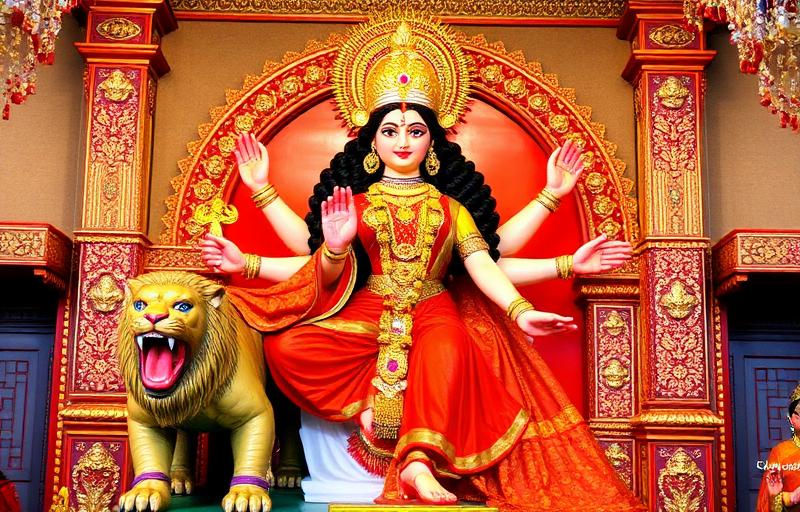
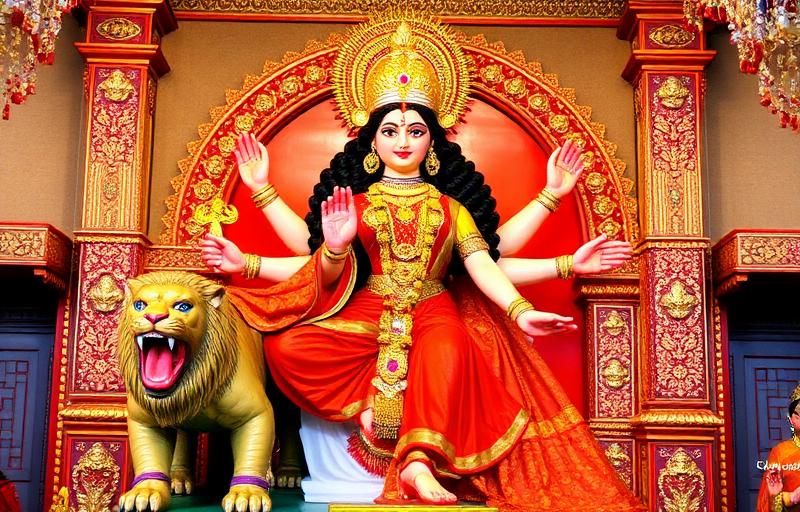
Hindu tradition offers devotees two distinct but related frameworks for approaching the vastness of the Divine Mother. The Navadurga are nine forms of the Goddess worshipped across the nine nights of Navratri, each representing a stage of her life and a particular quality, Shailaputri, Brahmacharini, Chandraghanta, Kushmanda, Skandamata, Katyayani, Kalaratri, Mahagauri and Siddhidatri.
The Shakti Peethas are, by contrast, a network of sacred sites, traditionally numbered around fifty-one, spread across the Indian subcontinent, each believed to mark a place connected to the Devi's presence, most famously linked to the katha of Sati.
The Katha Behind the Shakti Peethas
According to tradition, when Sati, Shiva's first consort, gave up her life at her father Daksha's yagna after he insulted Shiva, a grieving Shiva carried her body across the cosmos in unbearable sorrow. To calm his grief and restore cosmic balance, Vishnu's chakra is said to have cut her body into parts, which fell across the earth.
Each place where a part fell became a Shakti Peetha, a living site of the Devi's presence, later worshipped under a local name, such as Kamakhya, Vaishno Devi or Kalighat, each considered a direct connection to the one Adi Parashakti.
Where the Two Frameworks Meet
Though the Navadurga forms describe the Devi's qualities across time, and the Shakti Peethas describe her presence across geography, both frameworks express the same underlying belief, that the one Adi Parashakti is present everywhere, in every quality and every place, and can be approached through countless doorways.
Some Shakti Peethas are themselves associated with specific Navadurga qualities in local tradition, and many temples across India that are counted among the Shakti Peethas also hold grand Navratri celebrations honouring all nine Navadurga forms in sequence, showing how devotees naturally weave the two frameworks together in practice.
How Devotees Use Both in Practice

A devotee unable to travel to a distant Shakti Peetha can still connect with the same Adi Parashakti by worshipping the Navadurga forms at home during Navratri, understanding that the Devi present at Kamakhya or Vaishno Devi is the very same one present in the small home mandir.
Many families also undertake pilgrimages to a nearby Shakti Peetha specifically during Navratri, combining both frameworks, honouring a sequence of forms while standing at a place of the Devi's living presence.
The Takeaway
Whether approached through the nine nights of the Navadurga or through the sacred geography of the Shakti Peethas, devotees are always turning toward the same boundless Mother. Both are simply different maps drawn to help the heart find its way to her, an offering of faith, never a transaction.
Quick Answers
What is the difference between Navadurga and Shakti Peethas?+
Navadurga refers to nine forms of the Goddess worshipped over Navratri's nine nights, representing different qualities. Shakti Peethas are sacred sites across the subcontinent believed to mark the Devi's living presence, traditionally linked to the Sati katha.
How many Shakti Peethas are there?+
Tradition most commonly speaks of fifty-one Shakti Peethas, though various texts list slightly different numbers. Each is regarded as a sacred site connected to the Devi's presence.
Can worshipping the Navadurga at home replace visiting a Shakti Peetha?+
Devotees believe the same Devi present at a distant Shakti Peetha is present in the home mandir. Both forms of worship are valid expressions of the same devotion, according to one's means and circumstance.
About the author
Pandit Mahesh Trivedi · Festival Traditions & Panchang
Pandit Mahesh leads the festival-date and Panchang content on Vandnaa. He cross-references multiple regional panchangs (Drik, Vaishnava, Bengali, Marathi) for every festival date published on the site.
Meet the Vandnaa editorial team →