What Is Adi Parashakti
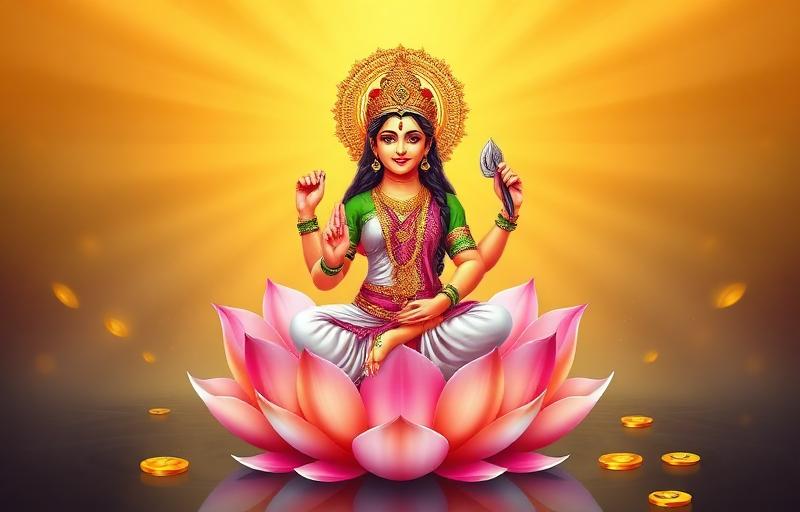
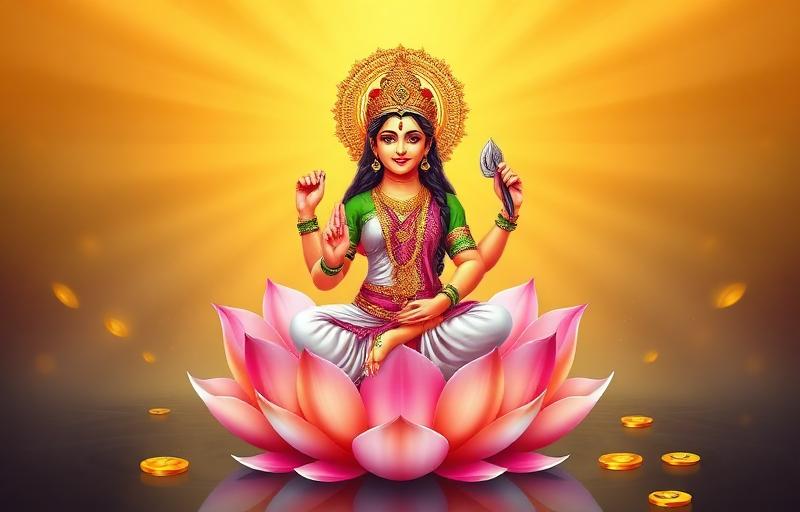
Adi Parashakti, often simply called Adi Shakti, refers in Devi worship to the primordial supreme power believed to exist before and beyond all creation, the source from which the entire universe, and every deity within it, is understood to have arisen.
While Brahma, Vishnu and Shiva are revered as the trimurti responsible for creation, preservation and dissolution, Shakta tradition holds that it is Adi Parashakti's energy that empowers even them to perform these roles, she is regarded as the womb of all divinity, formless yet the source of every form.
Scriptural Roots of the Concept
This idea finds strong expression in texts like the Devi Mahatmya, the Devi Bhagavata Purana and the Lalita Sahasranama, where the Goddess declares or is described as the source of Brahma, Vishnu and Shiva rather than their creation. The Devi Upanishad similarly proclaims her as Brahman itself, the ultimate reality.
In the Devi Mahatmya's Uttama Charita, the Goddess herself declares that all her emanations, Kali, the Matrikas and others, are never separate from her, they are one Adi Parashakti appearing in many forms for different purposes.
How Adi Parashakti Is Understood Through Her Forms
- As Mahakali, she embodies time and transformation, the power that dissolves.
- As Mahalakshmi, she embodies abundance, beauty and sustenance.
- As Mahasaraswati, she embodies knowledge, art and wisdom.
- As Durga, Kali, Parvati, Lalita and countless other names, she meets devotees in the form their heart calls out to.
Devotees hold that these are not separate goddesses competing for reverence, but a single Adi Parashakti expressing herself in the form most needed at a given moment.
How Devotees Approach This Idea in Worship

Understanding Adi Parashakti does not require abandoning one's favoured form of the Goddess. Rather, it deepens devotion, a devotee praying to Vaishno Devi, Kali of Kolkata or Meenakshi of Madurai is, in this understanding, praying to the same one Mother wearing a regional and personal name.
Many devotees begin their prayers with a simple remembrance, Ya Devi Sarvabhuteshu Shakti-rupena Samsthita, salutations to the Devi who resides in all beings in the form of power, a verse from the Devi Mahatmya that captures this all-pervading understanding beautifully.
The Takeaway
Adi Parashakti reminds devotees that behind every name and form of the Goddess lies one boundless power, ever-present, ever-creating, ever-protecting. Recognising this does not diminish any particular form of worship, it enriches it, an offering of faith to the one Mother behind every altar, never a transaction.
Frequently Asked Questions
What does Adi Parashakti mean?+
Adi Parashakti means the primordial supreme power, referring in Devi worship to the formless source from which all creation and all divine forms are believed to arise.
Is Adi Parashakti different from Durga or Kali?+
No, tradition holds that Durga, Kali and other goddess forms are all expressions of the same one Adi Parashakti, appearing in different forms for different purposes.
Where does the concept of Adi Parashakti appear in scripture?+
It appears prominently in the Devi Mahatmya, Devi Bhagavata Purana, Lalita Sahasranama and the Devi Upanishad, all of which describe the Goddess as the source of the trimurti and all creation.
About the author
Anjali Mehta · Editor, M.A. Religious Studies
Anjali is the managing editor for Vandnaa and oversees the festival and vrat coverage. She holds an M.A. in Religious Studies and reviews every published article for accuracy, accessibility, and tradition-fidelity.
Meet the Vandnaa editorial team →