What Prakriti and Purusha Mean
Prakriti and Purusha are two foundational concepts found in Hindu philosophy, particularly in the Sankhya school. Purusha refers to pure consciousness, the unchanging, silent witness, while Prakriti refers to nature, matter and all the dynamic energy that makes up the observable universe, thought, emotion, and physical creation alike.
In this framework, Purusha is passive awareness, and Prakriti is active manifestation. Nothing moves, grows or transforms without Prakriti, yet Prakriti's activity is understood to unfold in the presence of, and for the sake of, Purusha.
How This Relates to Devi Worship
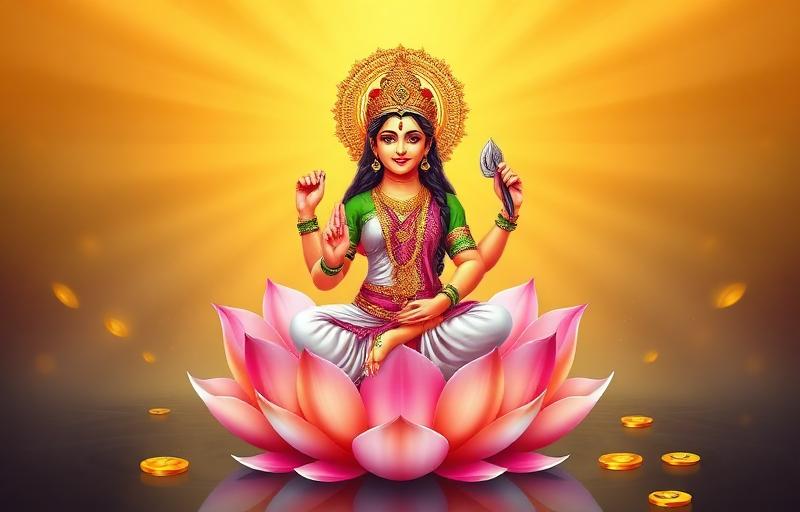
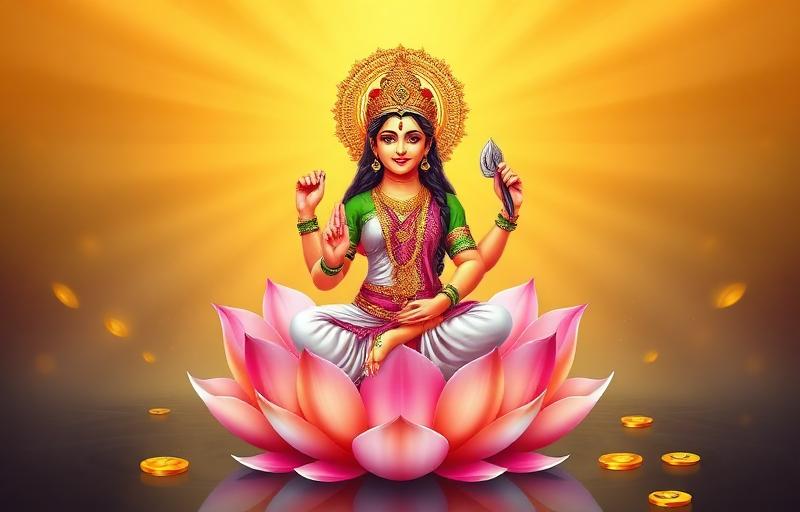
Shakta tradition closely identifies Prakriti with the Devi herself. The Goddess is worshipped as Prakriti in her fullest, most dynamic sense, the source of all creation, growth, change and dissolution. Shiva, in this pairing, is often understood as Purusha, pure, unmoving consciousness.
This is why Devi is sometimes depicted standing or dancing upon a still Shiva, an image meant not to show dominance but to illustrate a truth held dear in Shakta thought, that Shakti (Prakriti, activity) requires Shiva (Purusha, consciousness) as her ground, and Shiva requires Shakti to express and know himself, together forming one complete reality.
A Simple Everyday Understanding
- Think of Purusha as the screen and Prakriti as the film playing on it, the screen enables the film to be seen, but the screen itself does not move.
- Think of Purusha as sunlight and Prakriti as the countless colours it brings to life across a garden, present everywhere yet acting through matter.
- The body, mind, breath and even one's thoughts are considered part of Prakriti, while the innermost witnessing awareness within is regarded as a spark of Purusha.
This pairing helps devotees understand why both stillness (meditation, dhyana on Shiva or Purusha) and active devotion (worship, seva to the Devi or Prakriti) are honoured paths in Hindu practice.
Reflecting on Prakriti-Purusha in Daily Life

Devotees sometimes use this understanding as a gentle daily practice, pausing amid busy activity (Prakriti) to remember the still awareness (Purusha) observing it all, without judgment. This is not detachment from life but a steadying reminder within it.
Many Devi temples and Shakta households keep this balance visible, a Shiva linga installed alongside the Devi's image, or worshipped together, honouring both the stillness and the activity as inseparable aspects of the one reality.
The Takeaway
Prakriti and Purusha teach that stillness and activity, consciousness and energy, are not opposites but partners, each incomplete without the other. For a devotee, honouring the Devi as Prakriti is a reminder that faith is lived through action, offered in service to the still, eternal witness within, an act of devotion, not a transaction.
Quick Answers
What is the difference between Prakriti and Purusha?+
Purusha is pure, unchanging consciousness, while Prakriti is nature and dynamic energy, the active force behind all creation, thought and matter. Together they are considered the two foundational principles of existence.
How does this concept relate to Shiva and Shakti?+
In Shakta tradition, Shiva is often identified with Purusha, still consciousness, and the Devi with Prakriti, active energy. Both are considered inseparable and equally essential to complete reality.
Which school of Hindu philosophy discusses Prakriti and Purusha most?+
The Sankhya school of philosophy discusses Prakriti and Purusha most systematically, and this framework was later adopted and adapted by Shakta and Yoga traditions in their own devotional and practical contexts.
About the author
Anjali Mehta · Editor, M.A. Religious Studies
Anjali is the managing editor for Vandnaa and oversees the festival and vrat coverage. She holds an M.A. in Religious Studies and reviews every published article for accuracy, accessibility, and tradition-fidelity.
Meet the Vandnaa editorial team →