Two Faces, One Devi
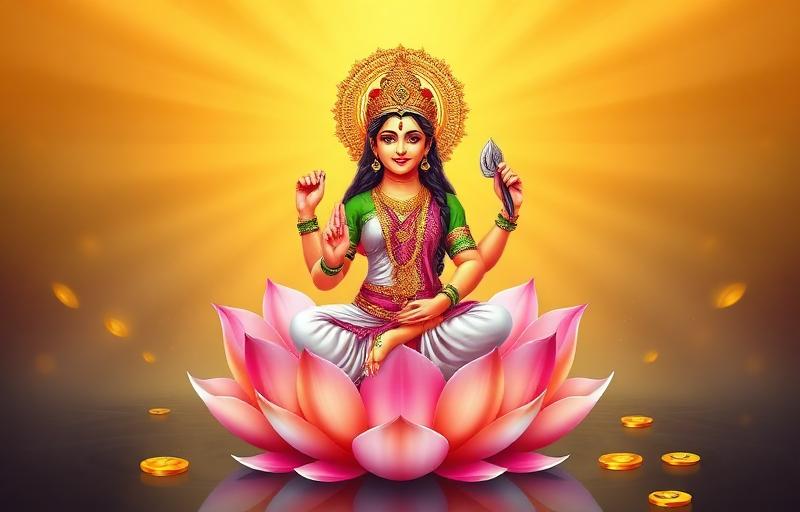
Across Hindu devotional life, the Goddess is approached in two seemingly opposite ways. As Jagat Janani, the mother of the universe, she is depicted with a soft gaze, blessing hand and gentle smile, the one devotees run to with their smallest worries, addressed simply as Maa. As Ranachandi or Mahishasura Mardini, she rides into battle, ten arms bearing weapons, eyes blazing, unwilling to let injustice stand.
Devotees do not see these as two different goddesses but as one Devi whose love takes whichever form a moment requires, tenderness when a child needs comfort, and ferocity when dharma needs defending.
Why Both Aspects Are Needed
Devotional thought explains this duality through the analogy of motherhood itself. A mother who only comforts, without ever standing firm against danger, cannot fully protect her child. Equally, a mother who is only fierce, without warmth, cannot fully nurture. True maternal love, tradition holds, contains both.
The Devi Mahatmya illustrates this directly, the same Goddess who slays Mahishasura with unrelenting power is, at the story's close, described as one who, when devotees remember her in distress, will remove their suffering just as a mother would, showing that her ferocity in battle and her tenderness toward devotees spring from the same source.
Seeing Both Aspects Across Tradition
- As Annapurna, she feeds and nurtures, a purely maternal aspect.
- As Kali, she destroys ego and evil with terrifying force, yet is addressed by devotees like Ramakrishna Paramahamsa with the deepest tenderness, as Ma Kali.
- As Durga, both aspects unite visibly, a warrior astride a lion, yet worshipped in homes as the most approachable, family-embracing form during Navratri.
- As Parvati, her patient tapasya to win Shiva shows a devoted, gentle strength, while her form as Chandi shows unwavering resolve against evil.
Each form, devotees believe, reveals that gentleness and strength were never opposites within the Devi, but two expressions of the same complete love.
What This Duality Means for a Devotee

Devotees often draw personal strength from this dual nature. In moments of sorrow, they turn to the Devi as Maa, seeking comfort the way a child seeks a mother's lap. In moments requiring courage, facing illness, injustice or fear, they invoke her as the warrior, asking for the strength to stand firm.
This teaches devotees that their own life need not separate softness from strength either, that one can be tender in love and unyielding in principle, both qualities held together, just as the Devi holds them.
The Takeaway
The Devi's dual nature as mother and warrior is not a contradiction but the fullest picture of divine love, one that comforts and one that protects. Approaching her in either mood is an act of the same faith, an offering to the one Mother who holds both the lap and the sword, never a transaction.
Quick Answers
Why is the Devi worshipped both as a gentle mother and a fierce warrior?+
Tradition holds that true maternal love includes both nurturing and protecting. The Devi's warrior form defends dharma and her devotees, while her mother form comforts and nurtures, both springing from the same complete love.
Is Kali considered less approachable than Durga because of her fierce form?+
Not at all. Many devotees, especially in Bengal, address Kali with the deepest tenderness as Ma Kali, showing that her fierce appearance does not diminish her closeness as a nurturing mother to her devotees.
How can devotees relate to both aspects of the Devi in daily life?+
Devotees turn to the Devi as Maa for comfort in sorrow, and invoke her warrior aspect for courage in difficulty, learning that both softness and strength can coexist within one heart, just as they do within her.
About the author
Anjali Mehta · Editor, M.A. Religious Studies
Anjali is the managing editor for Vandnaa and oversees the festival and vrat coverage. She holds an M.A. in Religious Studies and reviews every published article for accuracy, accessibility, and tradition-fidelity.
Meet the Vandnaa editorial team →