Who Is Dhumavati Mata
Dhumavati Mata is the seventh of the Das Mahavidya, the goddess of the void, smoke and dissolution. Her name means 'she who is made of smoke' (dhooma). She is the only Mahavidya shown as an elderly widow, representing the state that remains when all attachment, vanity and worldly comfort have fallen away. Far from being inauspicious, she teaches the deepest detachment and the freedom found beyond loss.
Her Iconography
Dhumavati is depicted as an old woman, thin and pale, dressed in white or faded clothes, riding a horseless chariot that bears the emblem of a crow. Her hair is unbound, her expression hungry and restless, and she holds a winnowing basket (soop). Every detail points to a form stripped of ornament and illusion. She is the Mother seen in her dissolving aspect, where everything impermanent returns to emptiness.
Significance and What She Grants
Dhumavati is worshipped to remove inauspiciousness, chronic problems, quarrels, poverty and the grip of ego and craving. She absorbs sorrows and misfortunes that other paths cannot reach. Spiritually, she grants the rare gift of total detachment - the peace of one who no longer fears loss because nothing impermanent can disturb them. Her worship is austere and is approached with humility, not for showy gain.
Dhumavati Beej Mantra
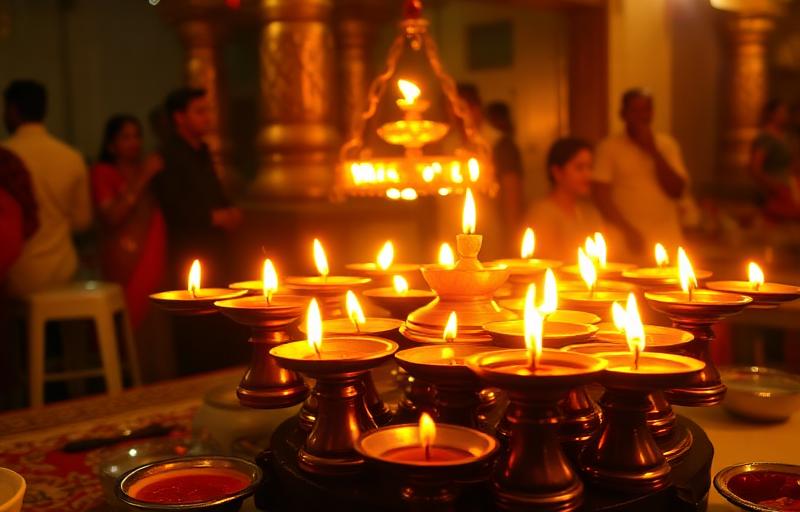
The traditional Dhumavati mantra is:
Om Dhoom Dhoom Dhumavati Swaha (ॐ धूं धूं धूमावती स्वाहा)
Dhoom is her seed sound, evoking smoke and dissolution. A longer form is Om Dhoom Dhoom Dhumavati Thah Thah. This is a serious tantric mantra of the void, and it is traditionally taken only under the guidance of an experienced guru, with a calm, detached and pure heart.
Worship Vidhi
1. Bathe and wear simple, clean clothes; sit facing south. 2. Worship is often done outside the main home or away from the family altar, as her energy is austere and solitary. 3. Offer black sesame, plain or slightly pungent food, and simple flowers; avoid sweets and festive items. 4. Chant Om Dhoom Dhoom Dhumavati Swaha quietly, ideally with a guru's permission. 5. Married couples traditionally do not worship her together, as she embodies the widow form. 6. Pray for release from sorrow, ego and misfortune, and for inner peace. Approach her with deep respect and never for harming anyone.
The Deeper Teaching
Dhumavati's austere form carries a tender message: nothing in life is permanent, and clinging to what fades only brings suffering. By accepting loss and letting go of ego, the devotee finds a peace that no misfortune can touch. She is the compassionate Mother who waits at the end of every attachment, offering the freedom that lies beyond fear.
Reader Questions Answered
Who is Dhumavati Mata?+
Dhumavati Mata is the seventh Das Mahavidya, the smoky goddess of the void shown as an elderly widow. She removes inauspiciousness, ego and craving, and grants deep detachment.
What is the Dhumavati mantra?+
The traditional mantra is 'Om Dhoom Dhoom Dhumavati Swaha'. 'Dhoom' is her seed sound. It is a serious tantric mantra best taken under a guru's guidance.
Why is Dhumavati shown as a widow?+
The widow form represents the state remaining when all attachment, vanity and comfort fall away. It teaches detachment and the freedom found beyond loss, not inauspiciousness.
Why is Dhumavati worshipped away from the home altar?+
Her energy is austere and solitary, so her worship is traditionally done outside the main home or away from the family altar, with simple offerings and a calm, detached heart.
What does Dhumavati worship remove?+
She is worshipped to remove inauspiciousness, chronic problems, quarrels, poverty and the grip of ego and craving, while granting peace and deep detachment from loss.
Is Dhumavati a frightening or negative goddess?+
No. Though her form is austere, she is a compassionate Mother who absorbs sorrow and ego, offering the peace and freedom that lie beyond fear and attachment.
About the author
Acharya Vinaya Kapoor · M.A. Sanskrit, Mantra & Stotra Studies
Acharya Vinaya holds an M.A. in Sanskrit from Banaras Hindu University and writes the mantra and stotra commentary on Vandnaa. Her focus is on accurate pronunciation, traditional context, and helping modern readers connect with classical texts.
Meet the Vandnaa editorial team →Explore on Vandnaa
Related Articles
Das Mahavidya - 10 Forms, Significance & Mantras
10 min read
Bagalamukhi Mata - Mantra, Significance & Benefits
9 min read
Tara Mahavidya - Mantra & Significance
9 min read
Bhuvaneshwari Mata - Mantra & Significance
9 min read
Durga Chalisa Lyrics in Hindi & English with Meaning
9 min read
Maha Mrityunjaya Mantra: Meaning & Benefits (महा मृत्युंजय मंत्र)
9 min read