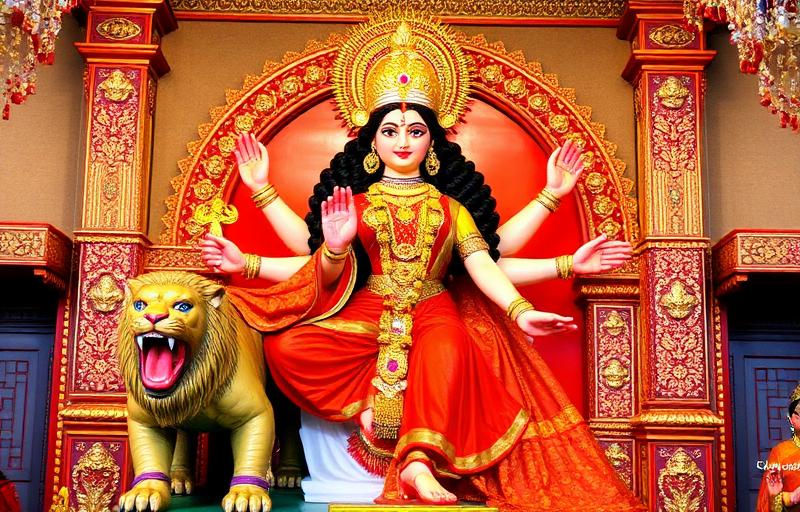
What Is the Durga Suktam?
The Durga Suktam is a short Vedic hymn to the Divine Mother, found in the appendices of the Taittiriya Aranyaka of the Krishna Yajurveda. It addresses the Goddess as Durga - the one who is difficult to reach, yet who protects those who call on her.
The hymn prays to Agni, the sacred fire, as a form of the Goddess who carries the devotee safely across the ocean of difficulties, like a boat across turbulent water. The word durga itself means 'a fort' or 'that which is hard to cross', and the Goddess is the power that helps us cross every obstacle. It is treasured as a Vedic invocation of divine protection.
Significance & When It Is Chanted
- Part of Navratri worship: The Durga Suktam is often chanted during Navratri and Devi pujas, alongside the Durga Saptashati (Chandi Path).
- Invocation before Chandi Path: Many recite it as an opening invocation, calling the Goddess to be present before the longer recitation begins.
- Homa and havan: It is a common hymn offered during Durga homa, as it praises the Goddess in the form of the sacred fire.
- Daily protection prayer: Devotees also chant it on Fridays and Ashtami as a short, powerful prayer for safety and strength.
- Universal appeal: Being Vedic, it is honoured across traditions that worship Shakti, from simple homes to great temples.
Benefits of Chanting
Devotees traditionally associate the Durga Suktam with:
- Protection from fear, danger and obstacles, as the Goddess carries us across difficulties.
- Courage and confidence to face challenges without losing peace.
- Removal of negativity and a sense of the Mother's guarding presence.
- Spiritual upliftment, since its final verses turn the mind toward the divine light.
To chant it well: bathe, sit before an image of Maa Durga, light a diya, and recite with a calm, devoted heart. Learning the correct pronunciation adds beauty, but sincerity is what the Mother receives. These are matters of faith, offered with love and humility.
Frequently Asked Questions
What does the Durga Suktam pray for?+
It prays to the Goddess, invoked through Agni the sacred fire, to carry the devotee safely across the ocean of difficulties. The word durga means 'that which is hard to cross', and the hymn asks the Divine Mother to help us cross every obstacle and danger.
When should the Durga Suktam be chanted?+
It is especially chanted during Navratri, Devi pujas and Durga homa, often as an invocation before the Durga Saptashati. Devotees also recite it on Fridays and Ashtami as a short prayer for protection and strength.
Is the Durga Suktam different from the Durga Saptashati?+
Yes. The Durga Suktam is a short Vedic hymn from the Taittiriya Aranyaka, while the Durga Saptashati (Chandi Path) is a longer text of 700 verses from the Markandeya Purana. The Suktam is often chanted as an opening invocation before the Saptashati.
About the author
Acharya Vinaya Kapoor · M.A. Sanskrit, Mantra & Stotra Studies
Acharya Vinaya holds an M.A. in Sanskrit from Banaras Hindu University and writes the mantra and stotra commentary on Vandnaa. Her focus is on accurate pronunciation, traditional context, and helping modern readers connect with classical texts.
Meet the Vandnaa editorial team →