
What Is the Dwadasa Jyotirlinga Stotram?
The Dwadasa Jyotirlinga Stotram is a short, much-loved hymn that names all twelve Jyotirlingas of Lord Shiva (dwadasa means twelve). A Jyotirlinga is a 'pillar of light' - a shrine where Shiva is believed to have manifested himself as a column of radiant light, making these the most sacred of all Shiva temples.
Spread across India from Gujarat to Tamil Nadu and from Uttarakhand to Andhra Pradesh, the twelve Jyotirlingas form a great pilgrimage circle. The stotram lets a devotee bow to all twelve in a single recitation, gaining the merit of their darshan from wherever they are.
The Opening Verse & Its Meaning
Sanskrit: सौराष्ट्रे सोमनाथं च श्रीशैले मल्लिकार्जुनम्। उज्जयिन्यां महाकालमोङ्कारममलेश्वरम्॥
Transliteration: Saurashtre Somnatham cha Shrishaile Mallikarjunam Ujjayinyam Mahakalam Omkaram Amaleshwaram
Meaning: (I bow to) Somnatha in Saurashtra and Mallikarjuna at Shrishaila; Mahakala at Ujjayini (Ujjain) and Omkara - the Amaleshwara - at Omkareshwar. This is the first of the verses that list the Jyotirlingas one after another, naming each by its sacred place. The full stotram continues in the same way until all twelve have been honoured.
The 12 Jyotirlingas
The twelve Jyotirlingas, in the traditional order of the stotram, are:
1. Somnath - Saurashtra, Gujarat 2. Mallikarjuna - Srisailam, Andhra Pradesh 3. Mahakaleshwar - Ujjain, Madhya Pradesh 4. Omkareshwar - on the Narmada, Madhya Pradesh 5. Kedarnath - Himalayas, Uttarakhand 6. Bhimashankar - Sahyadri hills, Maharashtra 7. Kashi Vishwanath - Varanasi, Uttar Pradesh 8. Trimbakeshwar - near Nashik, Maharashtra 9. Vaidyanath (Baidyanath) - Deoghar, Jharkhand 10. Nageshwar - near Dwarka, Gujarat 11. Rameshwaram (Ramanathaswamy) - Tamil Nadu 12. Grishneshwar - near Ellora, Maharashtra
Together they span the length and breadth of India, and completing their pilgrimage is considered one of the highest acts of Shiva devotion.
Benefits of Reciting It
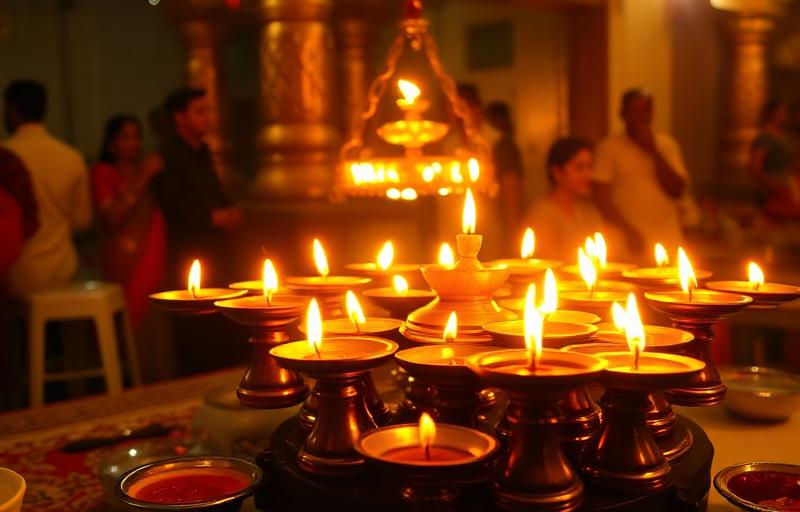
The phala-shruti of the stotram itself promises great fruit. Reciting the Dwadasa Jyotirlinga Stotram with devotion is believed to bring:
- The combined blessing of all twelve Jyotirlingas, as if one had taken their darshan.
- Freedom from sins accumulated over many lifetimes.
- Protection, peace and the fulfilment of sincere wishes.
- A heart drawn steadily toward Shiva and, ultimately, liberation (moksha).
How to recite: It is traditional to chant the stotram morning and evening, especially on Mondays, Pradosh and Maha Shivratri. Reciting it after a bath before a Shivling, with bilva leaves and a lamp, is the loved way - and even a single daily recitation is said to keep the grace of all twelve abodes upon the devotee.
Frequently Asked Questions
What is a Jyotirlinga?+
A Jyotirlinga is a 'pillar of light' - a shrine where Lord Shiva is believed to have manifested himself as a self-arisen column of radiant light. The twelve Jyotirlingas are the most sacred of all Shiva temples in India.
How many Jyotirlingas are there and where do they begin?+
There are twelve Jyotirlingas. The stotram begins with Somnath in Saurashtra (Gujarat), followed by Mallikarjuna at Srisailam, Mahakaleshwar at Ujjain and Omkareshwar, continuing through all twelve.
Is Kashi Vishwanath one of the twelve Jyotirlingas?+
Yes. Kashi Vishwanath in Varanasi is the seventh Jyotirlinga in the traditional order. It is one of the most revered, set in the holy city of Kashi on the banks of the Ganga.
What is the benefit of reciting the Dwadasa Jyotirlinga Stotram?+
Reciting it with devotion is believed to grant the combined blessing of all twelve Jyotirlingas, freedom from sins, protection and peace, as if one had taken darshan of every shrine - even without travelling to them.
About the author
Acharya Vinaya Kapoor · M.A. Sanskrit, Mantra & Stotra Studies
Acharya Vinaya holds an M.A. in Sanskrit from Banaras Hindu University and writes the mantra and stotra commentary on Vandnaa. Her focus is on accurate pronunciation, traditional context, and helping modern readers connect with classical texts.
Meet the Vandnaa editorial team →