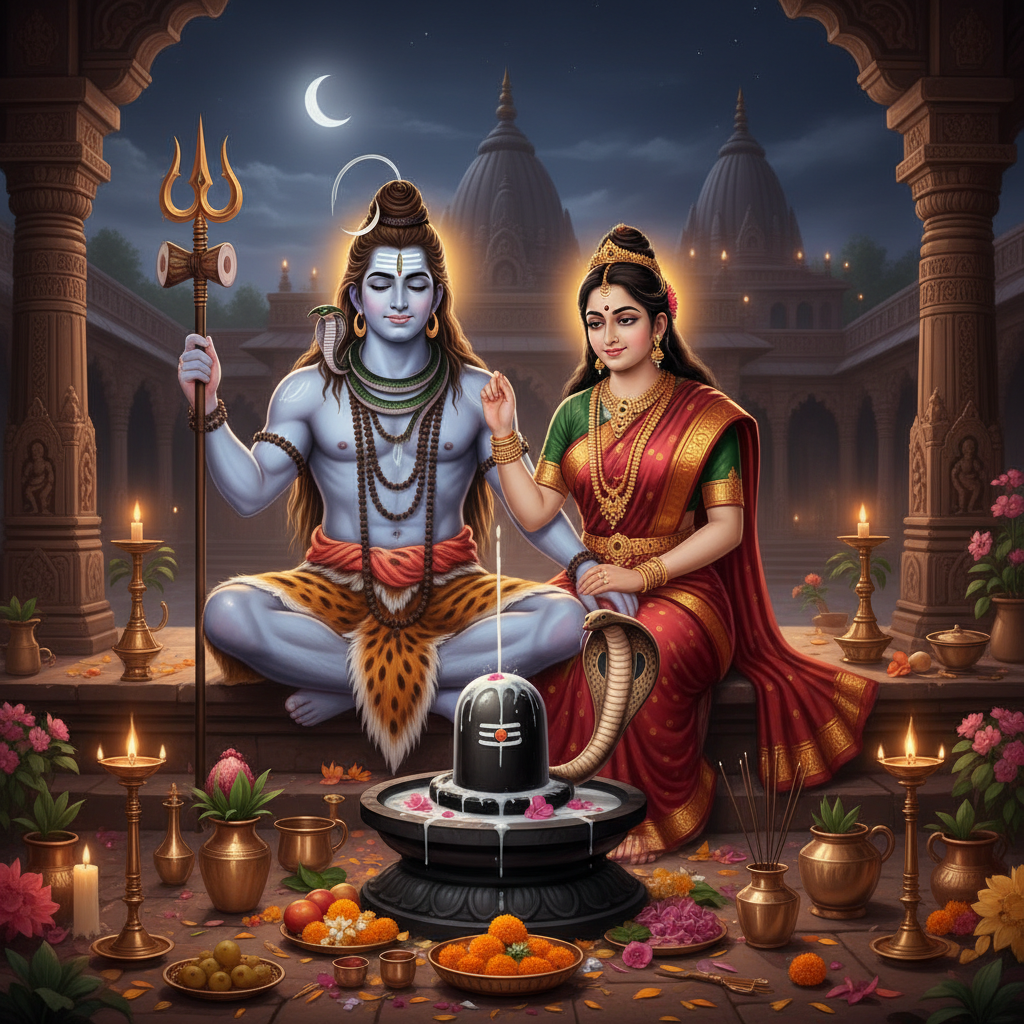
Who is Eklingji?
Eklingji Temple, located in the town of Kailashpuri about twenty kilometres north of Udaipur, enshrines a rare four-faced form of Shiva carved in black stone. The four faces are understood by devotees to represent Shiva's presence in all directions, a guardian who watches over his devotees from every side.
What makes Eklingji unique in Hindu tradition is his standing as the kuldevta, the family deity, of the Mewar royal family, the Sisodia dynasty of Udaipur. For centuries, the Maharanas of Mewar did not consider themselves the true rulers of their kingdom at all, they saw themselves as the diwan, the regent, governing the land only on behalf of Eklingji, who alone was regarded as Mewar's true king.
History and the Legend of Bappa Rawal
Tradition traces the origins of Eklingji back to Bappa Rawal, the legendary founder of the Mewar dynasty, said to have been guided and blessed in his youth by a sage devoted to Shiva. It is this blessing that devotees believe established the unbroken bond between the rulers of Mewar and Eklingji, a bond that shaped the dynasty's identity for generations that followed.
The temple structure seen today has been rebuilt and expanded several times over the centuries, with later Mewar rulers adding to its halls and towers, but the devotional relationship between the throne of Udaipur and this Shiva shrine has remained the constant thread through all of it. Even now, members of the royal family are said to visit the temple to seek blessings on significant occasions.
Significance: A Kingdom Ruled in Shiva's Name
The relationship between Mewar and Eklingji is considered one of the most striking examples of devotion shaping statecraft anywhere in Hindu tradition. Royal decrees and coins of Mewar are said to have carried Eklingji's name, a reflection of how deeply this devotion was woven into the identity of the kingdom itself.
- Eklingji is regarded as the eternal, unseen king of Mewar
- The Maharanas historically styled themselves as his diwan, or steward, rather than sovereign
- The temple complex includes numerous smaller shrines to other deities within its walled premises
- Devotees see the site as a living example of humility, a powerful dynasty choosing to govern in service of its deity rather than in its own name
Darshan Guide and Best Time to Visit

Eklingji follows a temple tradition where darshan is offered at set times through the day, typically opening early in the morning and again in the evening for aarti, with a midday closure common to many Shiva temples in the region. Monday evenings, sacred to Shiva, tend to draw larger crowds of devotees.
The temple is especially lively during Shivratri and other festivals associated with Shiva, when the courtyard fills with pilgrims from Udaipur and surrounding villages. As with any temple, it is worth confirming the day's exact darshan timings locally before setting out.
How to Reach Eklingji Temple
Eklingji is located in Kailashpuri, roughly twenty two kilometres north of Udaipur along the road toward Nathdwara, making it easy to visit both temples in a single day trip. Regular buses and taxis run this route from Udaipur, which has its own airport and railway station well connected to major Indian cities.
Many pilgrims combine a visit here with the nearby Nagda temples and Nathdwara's Shrinathji temple, forming a popular devotional circuit north of Udaipur.
Mantra to Chant and the Takeaway
Devotees at Eklingji chant the simple "Om Namah Shivaya" (salutations to Shiva), a mantra fitting for a deity worshipped here in his most protective, all-seeing form.
The story of Eklingji is ultimately a story about where true authority lies. For the rulers of Mewar, greatness was expressed not through claiming power but through surrendering it to their deity, a lesson in humility as relevant today as it was centuries ago. A visit here is best made as an act of faith and love, not a transaction.
Frequently Asked Questions
Why is Eklingji called the ruler of Mewar?+
Tradition holds that the Maharanas of Mewar governed as diwan, or regents, in the name of Eklingji, regarding this four-faced form of Shiva as the true, eternal king of the kingdom rather than themselves.
What does the four-faced form of Eklingji represent?+
The four faces are understood by devotees to represent Shiva's presence in every direction, a symbol of him watching over and protecting his devotees from all sides.
Can Eklingji Temple be visited along with Nathdwara?+
Yes, Eklingji lies on the same road that leads to Nathdwara's Shrinathji temple, and many pilgrims combine both shrines, along with the nearby Nagda temples, into a single day's devotional circuit.
About the author
Pandit Ravindra Sharma · Vedic Rituals & Bhakti, 22+ years
Pandit Ravindra is the Vandnaa editorial team's resident specialist on aarti, chalisa, and daily devotion. He has performed home and temple pujas across Varanasi and Delhi for over two decades and contributes the bhakti-focused articles on this site.
Meet the Vandnaa editorial team →