The Temple at Kailashpuri
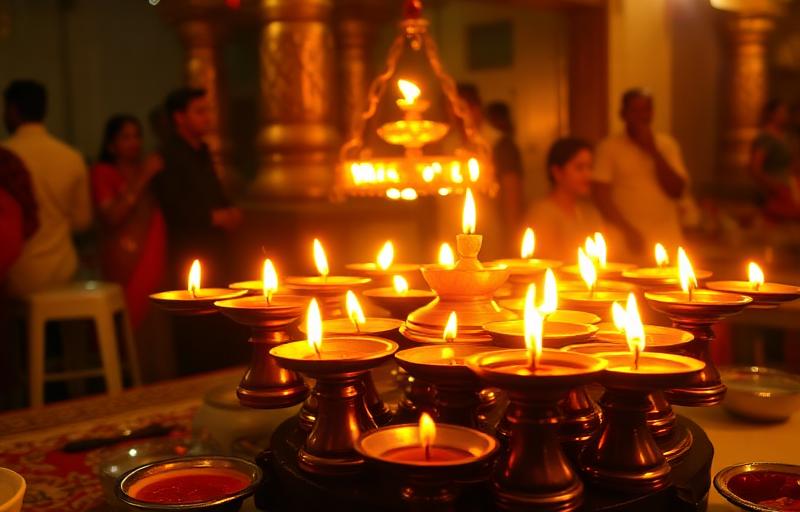
The Eklingji temple stands at Kailashpuri, about twenty two kilometres north of Udaipur in Rajasthan, and it is the presiding shrine of Mewar.
What is there:
- A four faced linga of black marble in the sanctum, facing the four directions, which is the temple's central image
- A silver Nandi before the sanctum, with further Nandi images in the complex
- A large walled complex holding over a hundred temples of various periods
- A pillared hall and a double storeyed structure over the sanctum
- Marble and stone construction, extended and rebuilt over centuries
The deity is Eklingji, Shiva, and the name refers to the single linga.
What makes the temple politically distinctive is the relationship between the deity and the rulers of Mewar. The Maharanas of Mewar, of the Sisodia line, held that the actual ruler of the state was Eklingji, and that they governed as his diwan, his minister or steward.
This was not decorative language. It was the constitutional formula of the state, used in documents and in ceremony, and it shaped how the dynasty presented its own authority for centuries.
Diwan of Eklingji
The Mewar formula is worth setting out clearly because it is unusual even among Indian kingdoms with tutelary deities.
How it worked:
- The Maharana styled himself Diwan of Shri Eklingji, the deity's minister
- Royal orders and grants could be issued in the deity's name
- The ruler's authority was framed as delegated, held on behalf of Eklingji rather than in his own right
- The temple was maintained as a state institution, and the ruler's personal devotion was a public duty
- Succession, coronation and state ceremonies involved the temple
Why a ruling house would adopt this. Several things converge:
- It places the dynasty's authority beyond dispute, since it derives from the deity rather than from conquest or grant
- It creates a standard the ruler is measured against, since a steward can fail in his duty
- It ties the state's identity to a fixed place that outlasts individual rulers
- In Mewar's case it reinforced the house's self understanding as defenders of a tradition rather than as one dynasty among many
Mewar's history, with its long resistance to Mughal authority under Rana Pratap and others, is inseparable from this self presentation. The state's claim was that it was not fighting for a family. It was holding a trust.
Whether that was accurate as history is a separate question. What is not in doubt is that the formula was used consistently for centuries and that the temple was its physical anchor.
The Four Faced Linga
The image at Eklingji is a chaturmukha linga, a linga with four faces carved on it, in black marble.
What the four faces represent:
- The four faces correspond to aspects of Shiva, associated in the tradition with Surya, Brahma, Vishnu and Rudra in one common reading, and with the directions
- The fifth face, Ishana, is understood as facing upward and is not carved
- The five faces together are the Panchamukha or Sadashiva form, a major concept in Shaiva theology
The five faces of Sadashiva, in the Agamic understanding:
- Sadyojata, west, associated with creation
- Vamadeva, north, with preservation
- Aghora, south, with dissolution
- Tatpurusha, east, with concealment
- Ishana, upward, with grace and revelation
This is one of the more developed pieces of Shaiva systematic thought, and it appears in temple imagery from Elephanta, where the great Trimurti is a Sadashiva image, to countless mukhalingas across India.
At Eklingji the four faces face the four directions with the deity at the centre, which fits the temple's role exactly. A deity who rules a state should look in every direction at once.
Worship and Timings

The temple maintains a regulated schedule and is managed by a trust associated with the Mewar house.
- Darshan is available at fixed periods through the day, with the temple closed between them, so timings should be checked before travelling
- Abhishek and shringar are performed at set times
- Offerings of bel patra, flowers and water are made in the usual Shaiva manner
- Prasad is available at the complex
- The Maharana's family maintains a ceremonial relationship with the temple
The calendar:
- Mahashivratri, the greatest occasion, with very large crowds
- Shravan Mondays, when devotees come from across Mewar
- Somvati amavasya
- Festivals connected with the Mewar house's ceremonial calendar
A note on discipline. Eklingji is a strictly run temple. Photography inside is prohibited, phones and cameras must be deposited, and there are rules about dress and conduct that are enforced.
This is not unusual for a temple with this history. A shrine that functioned as a state institution retains institutional habits, and the arrangements at Eklingji reflect that continuity more than they reflect any recent policy.
The Temples of Mewar
Eklingji anchors a wider set of shrines across Mewar, many of them connected to the same ruling house.
Within reach of Udaipur:
- Eklingji at Kailashpuri, the presiding shrine
- Nathdwara, about 50 km, the great Shrinathji temple of the Pushtimarg tradition
- Jagdish temple in Udaipur city, the seventeenth century Vishnu temple built by Maharana Jagat Singh
- Charbhuja at Garhbor in Rajsamand district
- Sanwaliya Seth at Mandphiya near Chittorgarh
- Ambika Mata at Jagat, the tenth century Devi temple
- Rishabhdeo at Dhulev, a Jain tirtha with a substantial tribal following
- Kankroli with the Dwarkadhish temple, another Pushtimarg shrine
What this cluster shows is a region with both Shaiva and Vaishnava institutions of major scale, patronised by the same house over centuries.
The Pushtimarg presence at Nathdwara is a specific historical development. The image of Shrinathji was brought from Braj in the seventeenth century, and Mewar's rulers gave it protection and land, which is how the largest Vallabha sampradaya centre came to be in Rajasthan rather than Mathura.
For a visitor, Udaipur makes an easy base for the whole set, and a three day circuit covers most of it comfortably.
Visiting Eklingji
Practical notes.
Getting there
- Eklingji is at Kailashpuri, about 22 km north of Udaipur on the Nathdwara road
- Udaipur has an airport and a railway station, well connected across India
- Taxis and buses run from Udaipur, and the drive takes around 45 minutes
- The temple can be combined with Nathdwara on the same trip
When to go
- Mahashivratri, the greatest occasion
- Shravan Mondays
- Mornings on ordinary days for an unhurried darshan
- October to March for comfortable weather in Rajasthan
Important practical points
- Check darshan timings before travelling, since the temple closes between fixed periods
- Photography is prohibited inside, and phones and cameras must be deposited
- Dress modestly; there are conduct rules and they are enforced
- Leather items may not be permitted inside
- Allow time to see the wider complex, which holds many temples beyond the main shrine
Combining the visit
- Nathdwara, about 30 km further, for Shrinathji
- Udaipur city, with the Jagdish temple, the City Palace and the lakes
- Haldighati, the battlefield site, on the same road
- Kumbhalgarh, the fort with its long wall, further north
- Ranakpur, the Jain temple, beyond Kumbhalgarh
A closing thought. Most temples associated with kings were built to display royal power. Eklingji was used to argue the opposite, that the king held nothing in his own name. Standing in the sanctum, that inversion is what the place is about.
Common Questions From Devotees
Why is Eklingji called the ruler of Mewar?+
The Maharanas of Mewar held that the actual ruler of the state was Eklingji and styled themselves Diwan of Shri Eklingji, his minister. Royal orders could be issued in the deity's name, and the ruler's authority was framed as delegated rather than held in his own right.
What is the image in the sanctum?+
A four faced linga of black marble, facing the four directions, with a silver Nandi before the sanctum. The fifth face, Ishana, is understood as facing upward and is not carved, so the whole represents the Panchamukha or Sadashiva form.
Where is the temple and how do you reach it?+
At Kailashpuri, about 22 km north of Udaipur on the Nathdwara road, around 45 minutes by taxi or bus. Udaipur has an airport and a railway station, and the temple can be combined with Nathdwara on the same trip.
What are the rules at the temple?+
Darshan is available only at fixed periods with the temple closed between them, so check timings before travelling. Photography inside is prohibited, phones and cameras must be deposited, dress rules apply and leather items may not be permitted.
What are the five faces of Sadashiva?+
Sadyojata facing west and associated with creation, Vamadeva north with preservation, Aghora south with dissolution, Tatpurusha east with concealment, and Ishana upward with grace and revelation. Only four are carved on a chaturmukha linga.
What else can be visited around Eklingji?+
Nathdwara about 30 km further for Shrinathji, Udaipur city with the Jagdish temple and the lakes, Haldighati on the same road, Kumbhalgarh fort further north, and Ranakpur beyond it.
About the author
Pandit Ravindra Sharma · Vedic Rituals & Bhakti, 22+ years
Pandit Ravindra is the Vandnaa editorial team's resident specialist on aarti, chalisa, and daily devotion. He has performed home and temple pujas across Varanasi and Delhi for over two decades and contributes the bhakti-focused articles on this site.
Meet the Vandnaa editorial team →Explore on Vandnaa
Related Articles
Charbhuja Nath of Garhbor: The Vishnu Mewar Hid in a Lake
8 min read
Sanwaliya Seth: The Dark Krishna Traders Take as a Business Partner
8 min read
Ambika Mata at Jagat: The Devi Temple Called the Khajuraho of Mewar
8 min read
Baba Ramdev of Ramdevra: The Rajasthan Deity Whose Shrine Refused Caste
9 min read