The Elephant's Wider Role in Hindu Iconography
Ask most people about the elephant in Hindu tradition and the answer arrives instantly: Ganesha, the elephant-headed deity beloved across India. Yet the elephant's presence in Hindu iconography extends well beyond Ganesha's form, appearing as a symbol of royal power, abundance and auspiciousness in its own right.
One of the most striking examples is Gaja Lakshmi, an ancient depiction of Goddess Lakshmi seated with two elephants standing on either side of her, their trunks raised to pour water over her from pots. This image appears on temple walls, ancient coins and doorframes across the subcontinent, long before it became associated with any single deity's vahana.
Airavata and the Churning of the Ocean
Puranic tradition connects the elephant to the great churning of the cosmic ocean, samudra manthan, undertaken jointly by devas and asuras in search of amrita, the nectar of immortality. Among the treasures said to have emerged from that churning was Airavata, a magnificent white elephant, who became the vahana of Indra, king of the devas and lord of rain and thunder.
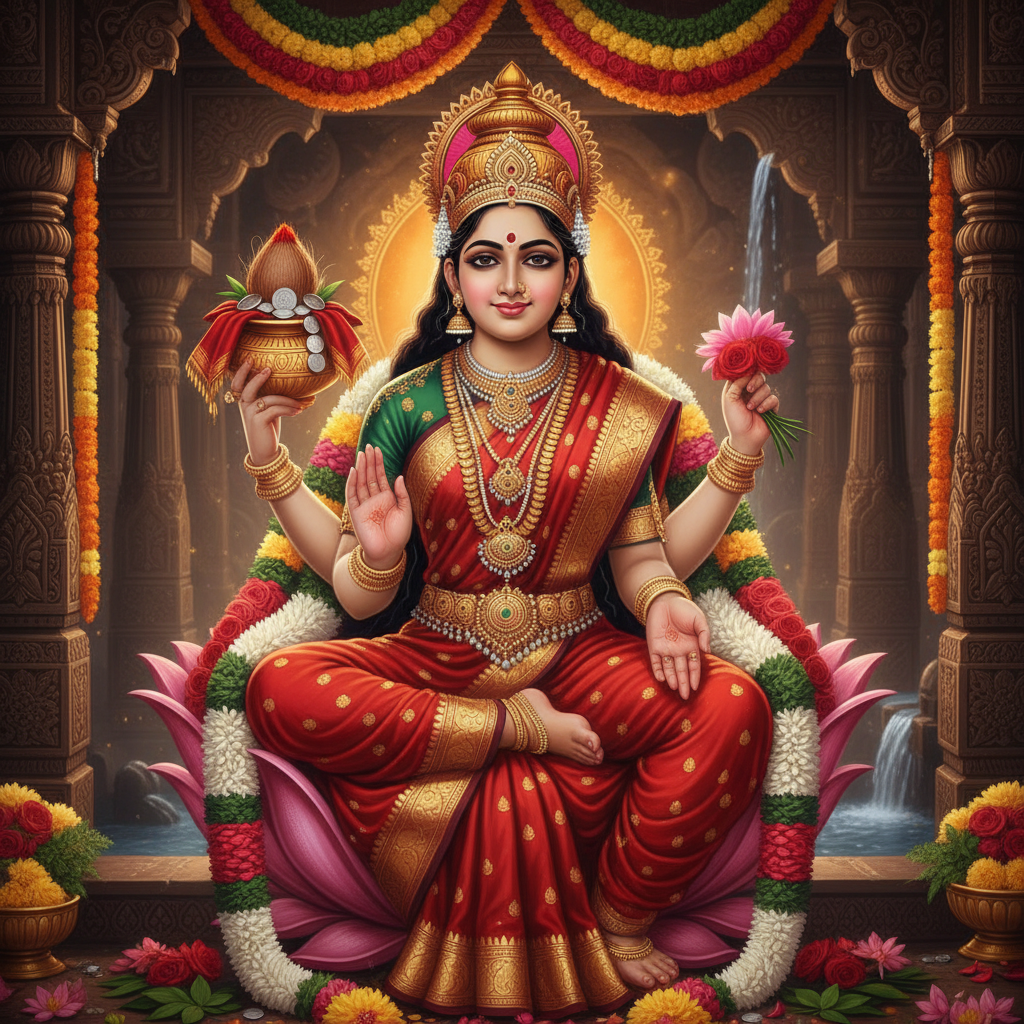
Goddess Lakshmi herself is described as emerging from the same churning, which is one reason her Gaja Lakshmi imagery so often includes elephants attending her arrival. The elephant and the goddess of fortune are, in this way, bound together at the very root of the story.
What the Elephant Symbolizes
In classical Indian imagination, elephant-bearing rain clouds and royal elephants were often described in the same poetic breath, linking the animal to abundance, fertility and the life-giving monsoon. A king's stature was traditionally measured partly by the elephants in his stable, making the animal an emblem of sovereignty and prosperity.
At the same time, the elephant is prized for combining immense physical strength with remarkable gentleness, capable of carrying great weight yet also known for careful, deliberate movement. This pairing of power and gentleness is central to why the elephant became such an enduring symbol of auspicious, righteous authority rather than mere force.
Elephants in Temple Tradition
Gaja Lakshmi imagery is traditionally placed at temple entrances and thresholds, welcoming devotees the same way the elephants welcome the goddess, with abundance and blessing. Many older coins, seals and temple lintels across India carry this motif as a mark of prosperity for the space it guards.
In several South Indian temple towns, real elephants are cared for as part of temple life and are especially honoured during major festivals and processions, decorated and led through the streets as living reminders of Gaja Lakshmi's blessing. Devotees regard the sight of a temple elephant, like the sight of a cow, as auspicious.
The Teaching Behind the Symbol
Devotees who reflect on the Gaja Lakshmi image often draw a simple lesson from it: true abundance arrives and stays where there is dignity and gentleness alongside strength. The elephant does not use its size to dominate; it uses it to serve, to carry, to bless.
This is why images or figurines of elephants, particularly Gaja Lakshmi motifs, are traditionally kept at the entrance of homes and shops, not as decoration alone but as a daily reminder of the values that are believed to invite prosperity earned through righteous, patient effort.
Carrying the Symbol Into Daily Life
The elephant's symbolism offers a gentle daily practice: to hold one's strength, position or success the way the elephant holds its own size, with patience and care rather than force. A short prayer before Gaja Lakshmi or Ganesha, asking for prosperity paired with humility, keeps this balance in mind.
Worship of these forms is an act of faith and love, not a transaction. The elephant simply asks devotees to notice that lasting abundance walks hand in hand with gentleness.
What People Ask Most
Who is Gaja Lakshmi?+
Gaja Lakshmi is an ancient depiction of Goddess Lakshmi seated with two elephants on either side, pouring water over her from pots. The image, found on old temple walls and coins, symbolizes prosperity, royal abundance and blessing.
What does the elephant symbolize in Hindu tradition besides Ganesha?+
Beyond Ganesha, the elephant symbolizes royal power, abundance and the balance of great strength with gentleness. It appears as Airavata, Indra's vahana, and alongside Goddess Lakshmi in the Gaja Lakshmi motif of prosperity.
Why are elephants honoured in South Indian temple festivals?+
In many South Indian temple towns, elephants are cared for as part of temple life and honoured during major festivals and processions. Devotees regard the sight of a decorated temple elephant as auspicious, echoing the blessing associated with Gaja Lakshmi.
About the author
Pandit Ravindra Sharma · Vedic Rituals & Bhakti, 22+ years
Pandit Ravindra is the Vandnaa editorial team's resident specialist on aarti, chalisa, and daily devotion. He has performed home and temple pujas across Varanasi and Delhi for over two decades and contributes the bhakti-focused articles on this site.
Meet the Vandnaa editorial team →