Hamsa: The Swan of Saraswati and Brahma
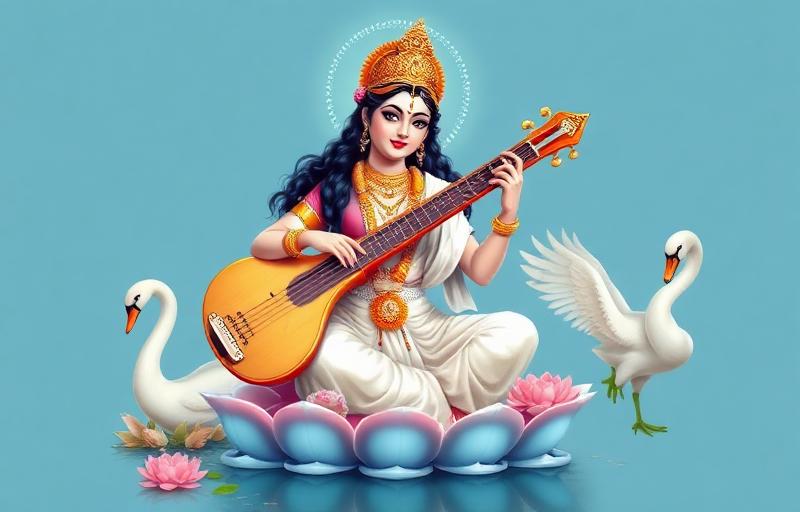
The hamsa, often translated as swan though sometimes understood as a goose or similar water bird, is the vahana of both Goddess Saraswati and Lord Brahma. In temple art and paintings, the hamsa appears beside Saraswati as she plays the veena, or beside Brahma as he holds the Vedas.
This pairing is not incidental. The hamsa was chosen to accompany the deities of knowledge and creation because of a very specific quality tradition assigns to it: the power of discernment.
The Concept of Neera-Kshira Viveka
Poetic and philosophical tradition holds that the hamsa possesses a remarkable ability: when milk and water are mixed together, the hamsa can drink only the milk, leaving the water behind. This quality is called neera-kshira viveka, the discernment between water (neera) and milk (kshira).
Whether taken literally or as poetic imagination, this image became one of Hindu philosophy's most enduring metaphors, used again and again across scripture and literature to describe the ability to separate what is essential and nourishing from what is not.
What the Swan Symbolizes
Beyond its link to Saraswati and Brahma, the hamsa carries a deeper philosophical meaning in Vedantic tradition. The very sound of natural breathing, so'ham, is sometimes read in reverse as hamsah, linking the swan to the atman, the soul, and its constant, unnoticed presence within every breath.
In this light, the hamsa represents not just intellectual discernment but a spiritual one: the capacity to recognize what is eternal and real amid the constant mixture of the temporary and the true that makes up daily experience.
Paramahamsa: The Title of Realized Saints
So central is this symbolism that Hindu tradition uses the title Paramahamsa, the supreme swan, for saints and sages believed to have reached the highest level of spiritual realization. Ramakrishna Paramahamsa is among the most widely known to carry this title in recent history.
The title suggests that such a soul has perfected the hamsa's gift completely, able to see through the mixture of illusion and truth in the world with unclouded clarity, taking only what is real.
What Tradition Says This Teaches
Devotees are encouraged to cultivate their own small measure of viveka in everyday choices, in words, relationships and decisions, learning to take what nourishes and let go of what does not, without bitterness toward what is set aside.
This is presented as a gradual practice rather than an instant gift, cultivated through study, honest self-reflection and prayer, especially prayer to Saraswati for clarity of thought.
Practicing Discernment Every Day
The swan's lesson can be practiced in small daily moments: pausing to ask whether a thought, word or habit is nourishing like milk or merely diluting like water, and choosing accordingly with patience rather than judgment.
Worship of Saraswati through the image of the hamsa is an act of faith and love, not a transaction. It quietly asks devotees to trust their own capacity to discern, and to keep refining it, one honest choice at a time.
What People Ask Most
Why is the swan considered Saraswati's vahana?+
The swan, or hamsa, is Saraswati's vahana because tradition credits it with neera-kshira viveka, the ability to separate milk from water when mixed together. This quality made it a fitting companion for the goddess of knowledge, representing wisdom's power of discernment.
What does neera-kshira viveka mean?+
Neera-kshira viveka literally means the discernment between water and milk, based on the traditional belief that a hamsa can drink only the milk from a mixture of the two. It became a lasting metaphor in Hindu philosophy for the ability to separate the essential from the unnecessary.
What does the title Paramahamsa mean?+
Paramahamsa means the supreme swan, a title given in Hindu tradition to saints and sages regarded as having reached the highest level of spiritual realization. It suggests they have perfected the hamsa's gift of discernment, seeing clearly through illusion to what is real.
About the author
Anjali Mehta · Editor, M.A. Religious Studies
Anjali is the managing editor for Vandnaa and oversees the festival and vrat coverage. She holds an M.A. in Religious Studies and reviews every published article for accuracy, accessibility, and tradition-fidelity.
Meet the Vandnaa editorial team →