Garba vs dandiya raas: the short answer
Garba is a circle dance performed with claps around a lamp or image of the Goddess; dandiya raas is a partner dance performed with a pair of wooden sticks, usually in two concentric circles. Both are danced during Navratri, but they differ in origin, mood, formation and timing. Here is the quick comparison:
- Origin: garba comes from the Gujarati worship of Shakti around the garbha deep, a perforated clay pot with a lamp inside; dandiya raas is linked by tradition to Krishna's raas leela with the gopis.
- Who it honours: garba is danced for Ambe Maa / Durga; raas is widely told to recall Krishna, with the sticks also said to stand for Durga's swords in her battle with Mahishasura.
- Formation: garba is one or more concentric circles, everyone facing the centre and moving the same way; raas is two circles moving in opposite directions so partners keep changing.
- Props: garba uses hands only (taali, snaps, turns); raas needs dandiya sticks.
- Tempo: garba starts slow and devotional and builds to the fast hinch; raas is brisk from the first beat.
- When in the night: garba after the aarti, usually first; raas later, once the crowd is warmed up.
If you can clap in rhythm you can do garba tonight. Raas takes a partner, sticks and a little practice.
Garba explained: the circle, the taalis and the hinch
Garba takes its name from the Sanskrit garbha, the womb. At the centre of the circle stands the garbo, a clay pot with holes and a lamp inside, or an image of the Goddess; dancers move around it in the direction of time while the light at the centre stays still. Our post on garba symbolism explains why this is itself an act of worship.
The steps are counted by claps. Ek taali is one clap per cycle, do taali (be taali) two, teen taali three and chaar taali four, each adding a turn or a dip. As the night goes on the dhol speeds up into hinch, a quick two-step with a bounce where the circle tightens and the taalis come fast. Styles like dodhiyu and trikoniya (the three-step) are variations experienced dancers slip into without announcement.
Songs that suit garba have a clear, repeating beat and a devotional or romantic text:
- Pankhida O Pankhida, a traditional Ambe Maa garba, perfect for the slow opening rounds
- Maine Payal Hai Chhankai, Falguni Pathak's 1999 anthem, an easy do taali
- Dholida from Gangubai Kathiawadi (2022), when the circle wants to go faster
- Kesariyo Rang, Falguni Pathak again, for the teen taali crowd
Garba in Gujarat was traditionally women-led; men joined widely through the twentieth century, and today everyone dances.
Dandiya raas explained: two circles, sticks and changing partners
Dandiya raas, often just called dandiya or raas, is played with a pair of decorated wooden sticks about the length of your forearm. Dancers form two circles, an inner and an outer, facing each other. The inner circle moves one way and the outer the other, so after each short sequence of strikes you step sideways and meet a new partner. The basic pattern is strike your own sticks, strike your partner's, turn, repeat, usually in a count of five or eight.
Because the sticks mark the beat out loud, raas songs need a steady, quick tempo and a strong dhol. Slow devotional garbas do not work here; the strikes sound hesitant. Songs that suit it:
- Tara Vina Shyam Mane Ekladu Lage, the traditional Krishna raas garba, in Falguni Pathak's version
- Ke Odhni Odhu Odhu Ne Udi Jaye, Alka Yagnik and Praful Dave, a classic raas tempo
- Lal Lal Sanedo, Maniraj Barot's folk sanedo, the fastest stick count of the night
- Nagada Sang Dhol from Ram-Leela (2013), the Bollywood raas most DJs end on
- For a long run, the Non Stop Gujarati Dandiya Raas Garba Jukebox
Raas usually comes after garba in the evening. The two-circle structure means you dance with dozens of people in one song, which is why it feels more social and less meditative than garba.
The Krishna connection and the Durga connection
Why two dances in one festival? The answer lies in the two deities the nine nights bring together.
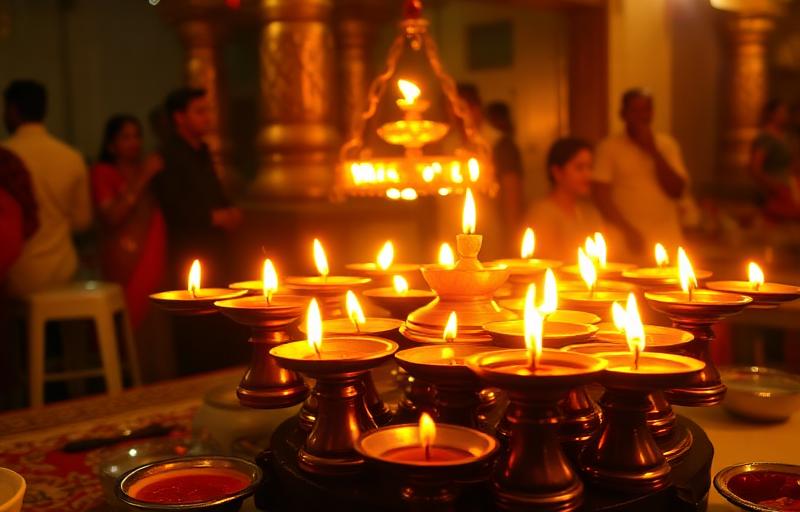
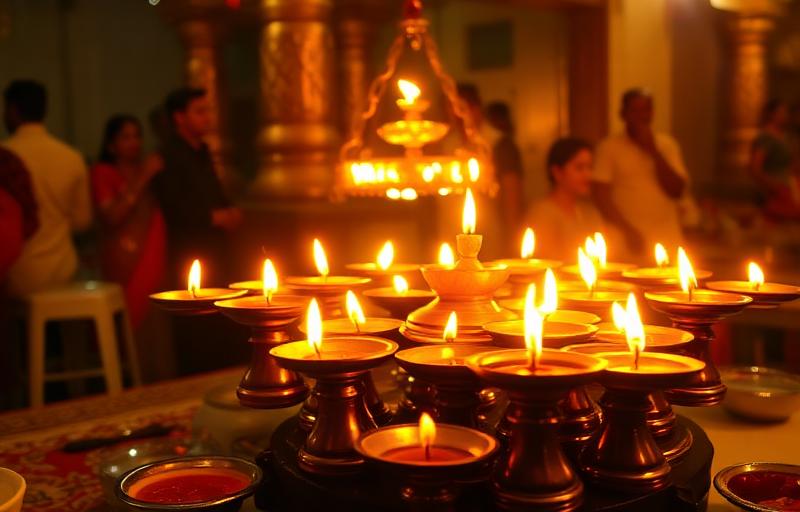
Garba is unambiguously for the Goddess. The garbo at the centre represents Shakti's creative energy, the lamp inside it the life within the body, and the circling dancers the cycle of birth, life and rebirth with the Divine unchanging at the heart of it. This is why the aarti comes first and the slow opening garbas are addressed to Ambe Maa, Bahuchar Maa or Khodiyar Maa.
Raas is told as Krishna's dance. It is widely believed that dandiya raas recalls the raas leela of Krishna and the gopis on the banks of the Yamuna, with the sticks echoing the rhythm Krishna set on his flute. Many of the oldest raas songs, Tara Vina Shyam among them, are the gopis' longing for Shyam. Gujarat, with its Dwarka tradition, has kept this Krishna thread alive inside a Shakti festival.
There is also a Durga reading of the sticks: it is widely said that the dandiya stand for the swords of Durga in her nine-night fight with Mahishasura, so each strike is a blow in that battle. Both are devotional interpretations rather than documented history, and most dancers hold both at once. Ask around a garba ground and you will hear each story from someone who is certain of it.
How a real Navratri night flows
A Navratri night at a Gujarat or Mumbai venue follows a shape that is nearly the same everywhere, and knowing it helps you arrive at the right time.
- Aarti, around 9 to 10 pm: the organisers gather everyone around the Goddess's image or the garbo for Jay Adhya Shakti. Stand, do not dance; join the clapping on the refrain.
- Slow garba: traditional songs like Pankhida and Rame Ambe Maa at ek taali and do taali. This is when beginners should step in, because the circle is forgiving.
- Fast garba: the dhol doubles, hinch and teen taali take over, and Bollywood garbas and Falguni Pathak medleys arrive. The circle shrinks and the regulars show off.
- Raas / dandiya: sticks come out and two circles form. Most venues announce it; this is the hour people have been waiting for.
- Second aarti or closing dhun: some venues close with a short aarti or a slow Krishna garba around midnight.
Sharad Purnima, which falls on 26 October 2026 (check your local panchang), is the traditional closing night in many places, with the moon full and songs like Aaj No Chandaliyo sung for it. If you can attend only one night after Navratri itself ends on 19 October, choose that one.
Dress and safety basics
You will dance for two or three hours, so dress for movement first and photographs second.
For women the classic is the chaniya choli: a flared skirt with mirror-work, a fitted blouse and a dupatta pinned or tied so it does not unwind during turns. Oxidised silver jewellery is traditional and light. For men, the kediyu, a short pleated jacket, with a dhoti or churidar and a turban or scarf; a plain kurta-pyjama is accepted everywhere. Avoid anything with long trailing ends; sticks and dupattas catch.
Safety is mostly common sense that people forget once the dhol starts:
- Wear comfortable shoes you can turn in. Juttis and flat sandals are traditional; ankle-strapped shoes stay on. Barefoot is fine only on a clean indoor floor.
- Drink water between songs, especially on humid October nights; most venues have stalls.
- Keep dandiya strikes at waist height and never swing above the shoulder. Watch for children in the raas circle.
- Keep your phone and keys in a zipped pocket or a small cross-body bag; chaniya cholis rarely have pockets.
- Leave the circle from the outside edge, not by cutting across it.
If you are fasting, eat something light before you go; many people dance after a full day of falahar and feel faint by the fast rounds.
Which to learn first if you are a beginner
Learn garba first, then raas. Garba needs no equipment and no partner, and its slow opening rounds are made for beginners: step in beside someone steady, watch their feet and clap when they clap. Within three songs you will have do taali, and do taali alone will carry you through most of the night.
Start with Omkar Manval's garba basics tutorial, which walks through ek, do, teen and chaar taali in order with a slow count. Practise at home to Maine Payal Hai Chhankai, which sits exactly at beginner tempo. For a full first-night plan, including what to wear, when to arrive and how to join a circle without feeling awkward, read Garba steps for your first Navratri night.
Raas comes next. The dandiya steps part 1 lesson by Step Up and Dance teaches the basic strike-strike-turn pattern and how to pass to the next partner. Practise with a friend in the kitchen using wooden spoons before you buy sticks; the hard part is the handover, not the hits.
A realistic plan for Navratri 2026: garba from 11 October, join the raas circle on the slower songs from around Day 4 or 5, and by Ashtami on 18 October you will be dancing both. Nobody at a garba ground expects perfection; they expect you to keep moving and keep smiling.
What People Ask Most
Is dandiya the same as garba?+
No. Garba is a clapping circle dance around the Goddess's lamp or image; dandiya raas is a stick dance in two circles with rotating partners. They are played at the same Navratri nights, garba first and raas later.
Do I need a partner for dandiya raas?+
You dance with a partner, but you do not need to bring one. The two circles rotate, so you meet a new partner every few counts. Just step into the outer circle with your sticks when raas is announced.
Which comes first in a Navratri night, garba or dandiya?+
Garba. After the aarti, usually around 9 or 10 pm, the night opens with slow garba, speeds up to fast garba and hinch, and only then moves to dandiya raas, often an hour or more in.
Can I do garba without knowing any steps?+
Yes. Join the circle during the slow opening songs, copy the person beside you and clap on the beat. Do taali, two claps per cycle, is enough for most of the night and takes a few minutes to pick up.
About the author
Pandit Mahesh Trivedi · Festival Traditions & Panchang
Pandit Mahesh leads the festival-date and Panchang content on Vandnaa. He cross-references multiple regional panchangs (Drik, Vaishnava, Bengali, Marathi) for every festival date published on the site.
Meet the Vandnaa editorial team →