The direct answer: garba is worship of Shakti in motion
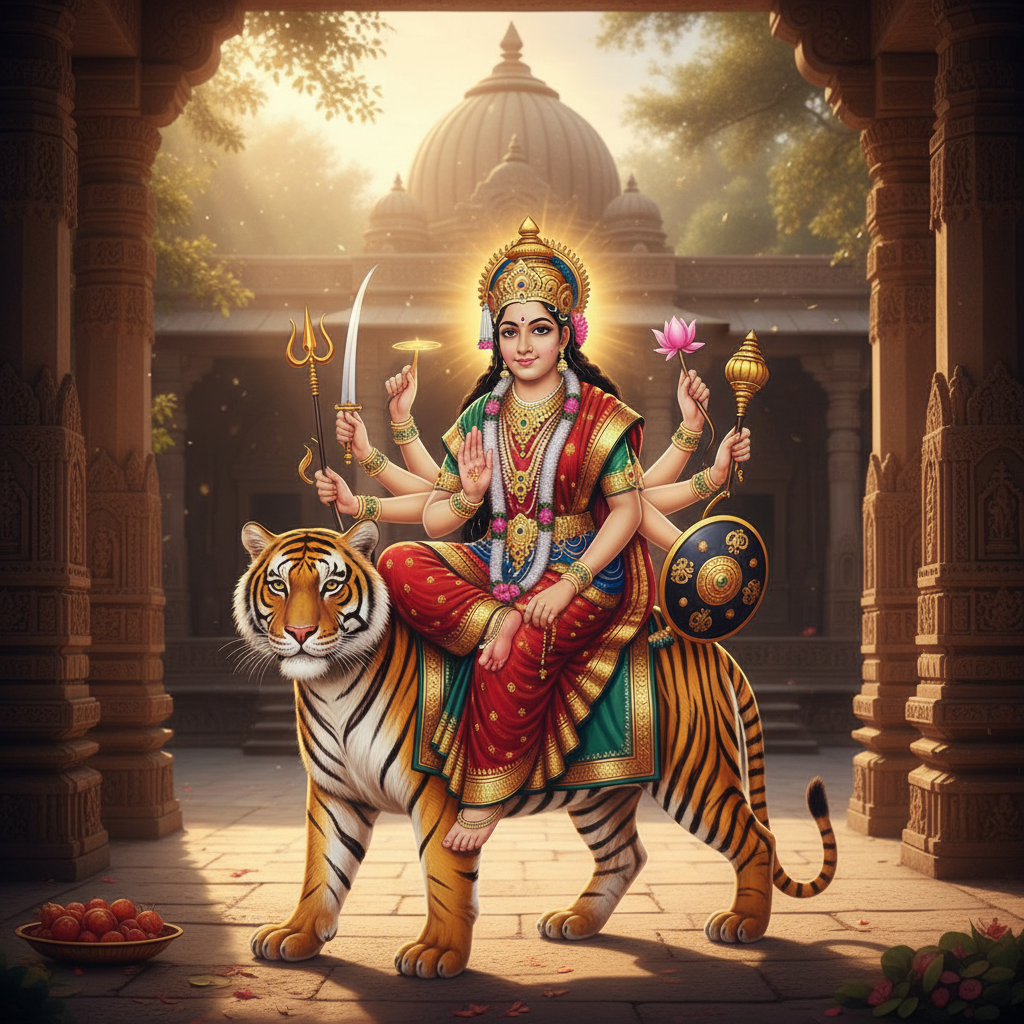
People play garba on Navratri because the dance itself is a form of worship. For nine nights the Goddess, Shakti, Ambe Maa, Durga, is honoured, and in Gujarat the oldest way to honour her is not to sit before her but to move around her, in a circle, clapping in rhythm, with her image or lamp at the centre. Every step is addressed to her.
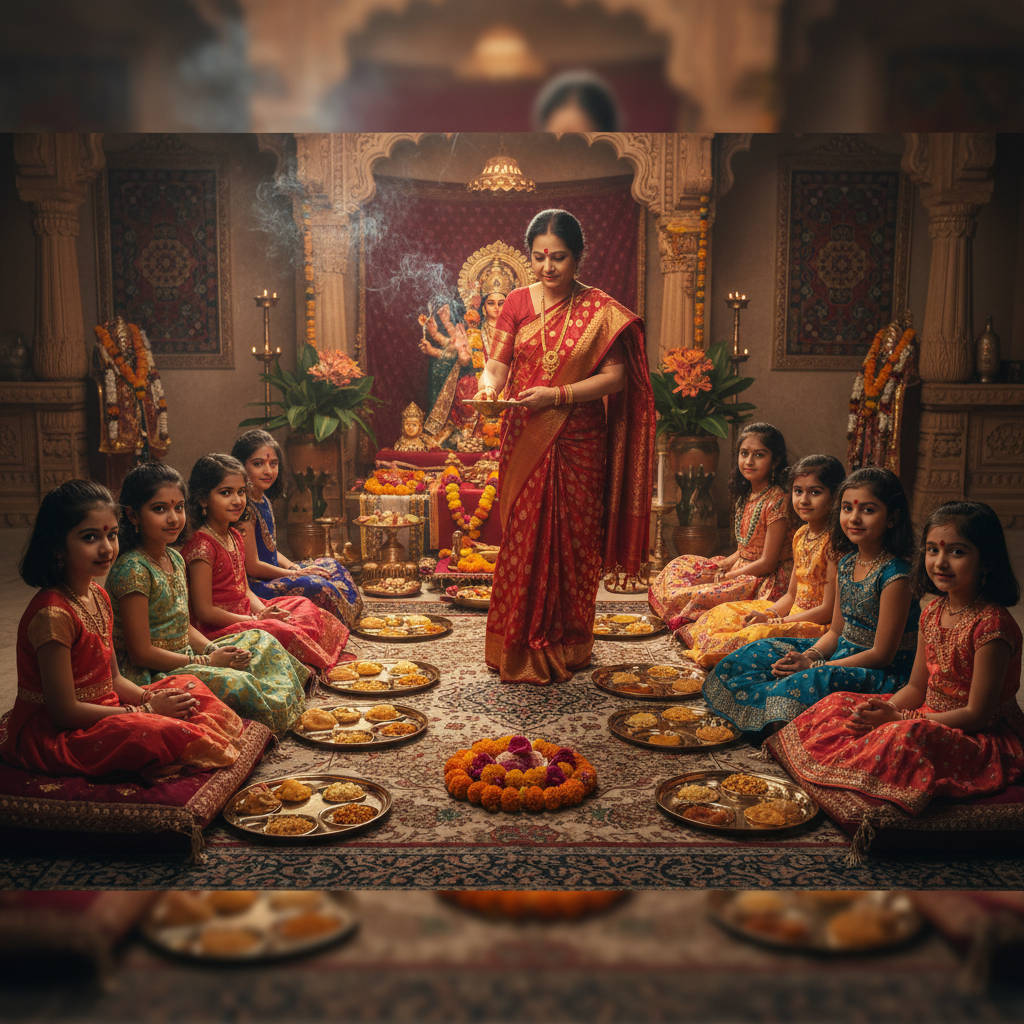
That is why garba is not thought of as entertainment that happens after the puja. In a traditional setting it is the puja continued. The aarti is sung, and then the same people, still facing the same Goddess, begin to move. The claps are a kind of taal offering, the songs are mostly addressed to the Mother by name, and the circle keeps her at its centre all night.
There are other reasons layered on top: community, the pleasure of the dance, the end of the monsoon and the clear nights of Ashwin, young people meeting, children learning the steps from grandmothers. All of these are real. But if you ask an older Gujarati woman why she plays garba, she will usually say something close to this: because Maa is here for nine nights, and this is how we welcome her. Everything else in this post grows out of that answer.
The word garba and the lamp at the centre
The word garba comes from the Sanskrit garbha, meaning womb. The object at the centre of the circle is the garbo, or garbha deep: a clay pot with holes pierced in its sides and a lamp burning inside, so that light shows through the small openings. In many homes it is set up on the first night, 11 October 2026 this year, and kept lit through all nine.
The pot is widely understood to stand for the Goddess as the source of life, the womb of the world, and the lamp inside for the life or consciousness that burns within every body. Dancers do not circle an empty space. They circle light held inside clay, which is a very direct picture of what a human being is in the Devi tradition.
We have written about this symbolism in detail, including the direction of the circle and the meaning of the perforations, in our post on garba tradition and symbolism in Gujarat, so we will not repeat all of it here. For this question it is enough to hold on to one idea: the name of the dance is the name of the womb, and the thing at its centre is a light inside a body. The dance exists for that centre, and that is the first reason it is played at all.
Why nine nights, and why at night
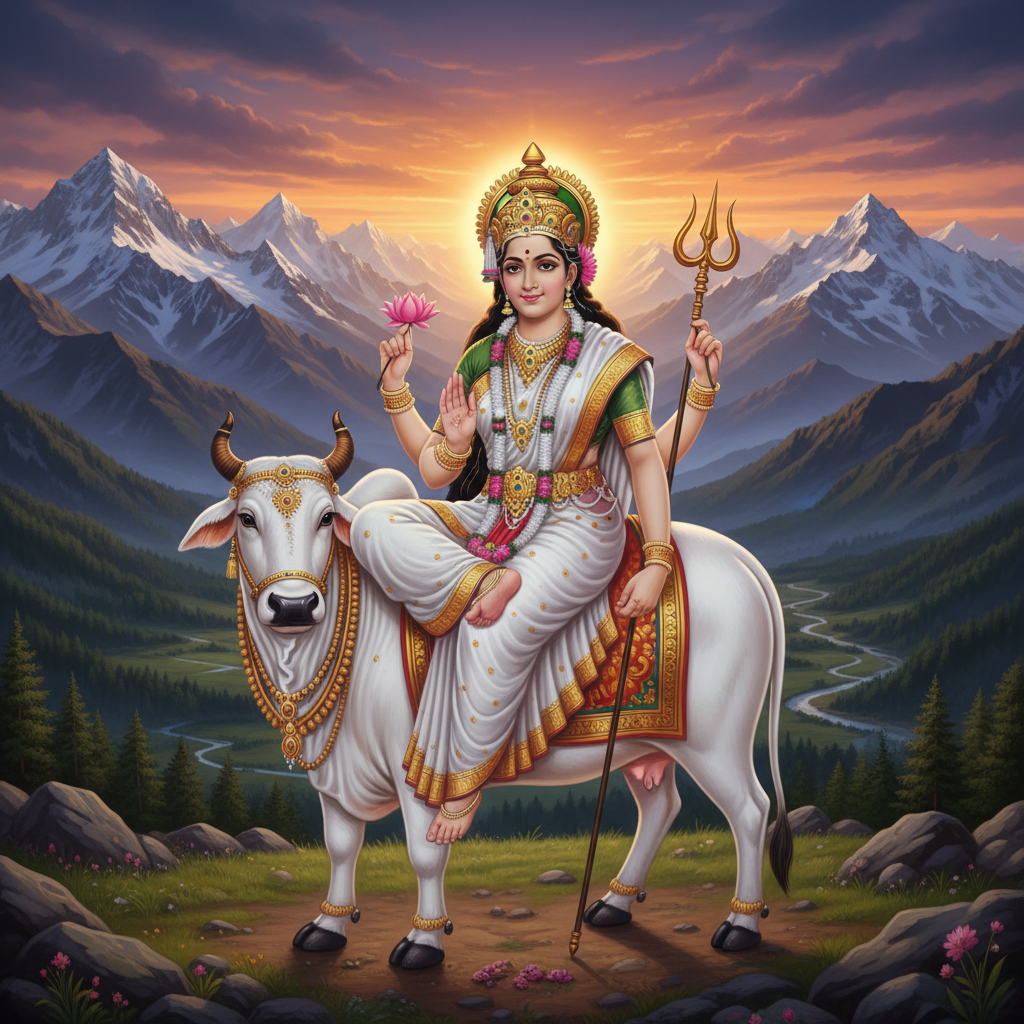
Navratri means nine nights, and this year they run from Sunday 11 October to Monday 19 October 2026, with Dussehra, or Vijayadashami, on Tuesday 20 October. Each night is given to a form of the Goddess, the Navadurga, from Shailputri on the first night to Siddhidatri on the ninth, and the dance is the evening offering to that night's form.
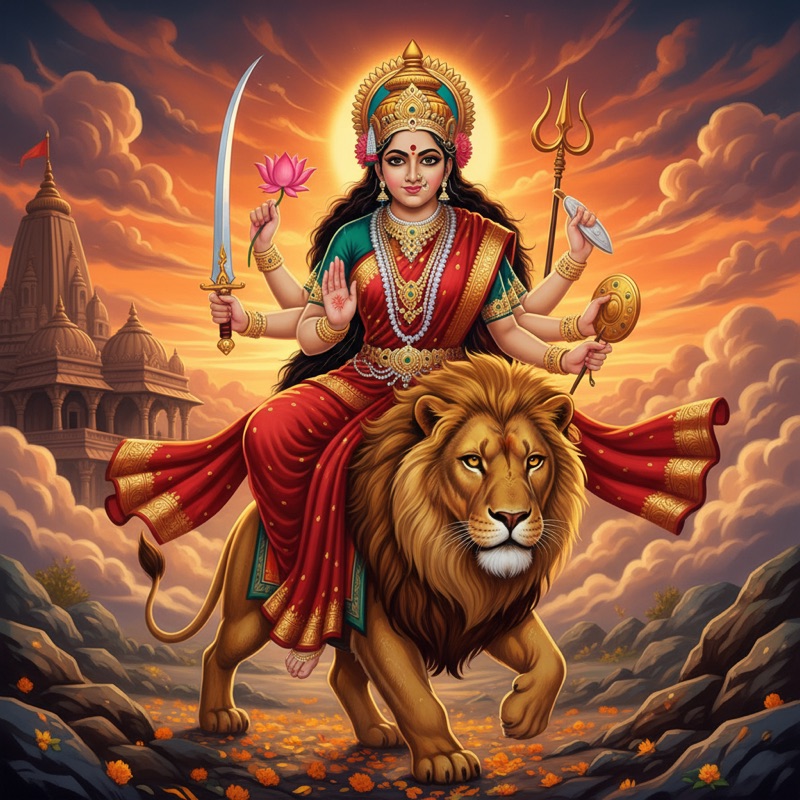
Why at night, rather than in the day? Several reasons are usually given. The puja and the fast belong to the daytime, so the evening is when the household is free. The month of Ashwin brings the first clear skies after the monsoon, and the nights are cool enough to dance for hours. And the Goddess in this festival is Mahishasura Mardini, the one who is said to have fought the buffalo demon for nine nights, so it is widely told that staying awake and alert through the dark hours in her name is part of the vigil.
The dance also follows the night's own curve. It begins slow after the aarti, builds through the late hours, and ends before dawn on the big grounds, or by midnight in a society. Nine such nights in a row is its own kind of sadhana. Our guide to the nine forms of Durga day by day tells you which form each night belongs to.
Why a circle, and why the Goddess stays at the centre
Garba is always a circle, never a line or a stage. The reason is simple once you see the lamp. The circle is the only shape in which everyone is equally close to the centre, and the centre is where the Goddess is. Nobody has the front row. The newest dancer and the oldest are at the same distance from Maa.
The movement is clockwise, in the direction of time, and it is widely understood to represent the turning of birth, life, death and rebirth, the wheel that every living thing is on. The lamp does not move. That is the second half of the teaching: the Divine is the still point, and everything else goes round it. When you dance you are enacting the cosmos with your own body, which is also why the dance is traditionally done barefoot, in contact with the ground.
There is a social meaning too. In the circle you cannot dance only for yourself. The claps have to land together, so you listen to your neighbours as much as to the dhol. In Gujarat the circle was traditionally women-led, with men joining widely over the twentieth century, and in many villages the first ring is still the women's. The circle is how a community says, together, that it is here for the Goddess.
How Raas and Krishna's story joined Navratri
If you go to a garba night, you will notice that after an hour or two the circle breaks into pairs, sticks come out, and the music changes. This is dandiya raas, and strictly speaking it is a different dance with a different story.
Raas is linked by tradition to Krishna's Raas Leela, the night dance with the gopis on the banks of the Yamuna in Vrindavan, and in Gujarat, which is also the land of Dwarka, Krishna's later kingdom, the two devotional streams have flowed together for centuries. It is widely told that the dandiya sticks also recall the swords of Durga in her fight with Mahishasura, which gives the stick dance a place in the Goddess's festival rather than only in Krishna's. Both readings are alive at the same time on the same ground, and nobody feels the need to choose.
So on Navratri the sequence is usually this: garba first, addressed to the Mother, open-handed and in one ring; then raas, with sticks, in two rings moving opposite ways, with partners meeting and passing. Songs like Tara Vina Shyam, a lament for Krishna's absence, belong to this second half, and nobody finds it odd that a Krishna song is sung at a Durga festival. In the Gujarati devotional imagination Shakti and Shyam share the night, and the dancer moves between them without changing her face.
From village chowk to Mumbai grounds and the diaspora
The oldest garba was a village or neighbourhood affair, danced in the chowk in front of the Mata's shrine, with the garbo placed on a stool and the singing done by the women themselves, unaccompanied or with a single dhol. That form still exists in many parts of Saurashtra and north Gujarat.
Through the twentieth century, as Gujaratis moved to Mumbai, as Ahmedabad grew, and as recorded music became common, the circle grew into the organised garba ground: ticketed, with a stage, a live singer or DJ, thousands of dancers and prizes for the best dressed. The late 1990s brought the Falguni Pathak era and then Bollywood garba songs, and Navratri music became something young people across India knew whether or not they were Gujarati. It is widely said that this is when garba stopped being regional and became a national festival night.
The diaspora carried it further. In Leicester, New Jersey, Toronto, Nairobi, Dubai and Melbourne, Gujarati associations hold garba nights every October, often in school gyms and community halls, and for many second-generation families these are the one time a year the whole community meets. The dress, the aarti and the circle have stayed remarkably constant across all of that change. Our post on Navratri around the world has more on how different communities keep the nine nights.
What the dance asks of you today
Knowing why garba is played changes how you play it. Three things in particular are worth carrying into the circle this year.
Bhav, or feeling. The old garbas are prayers set to a clap. When you dance to Pankhida or Rame Ambe Maa, you are singing to the Mother, and the step matters less than the face you turn to the centre. Learn the words of one slow garba this Navratri and the whole night will feel different.
Community. The circle is not a solo performance. Hold the pace of the people beside you, make room for a child or an elder who wants to join, and clap on the beat rather than ahead of it. The circle is how the community, not the individual, worships.
Simplicity. You do not need the most expensive chaniya choli or the fastest step. The garbo at the centre is a clay pot with a lamp in it. Comfortable footwear, water, a dupatta that will not trip you, and a willingness to start slow are enough. Dandiya sticks stay at waist height for the sake of the people on either side.
If you keep those three in mind, the dance becomes what it was meant to be: nine nights of greeting Maa with your whole body, in good company, under a clear sky.
Play these to feel it
Reading about garba only goes so far. Put these six on, in this order, and you will hear the arc of a traditional night, from aarti to Krishna raas to the song that took garba to all of India.
- Jay Adhya Shakti - Sadhana Sargam - the Gujarati Ambe Maa aarti that opens every garba night; stand for it.
- Rame Ambe Maa Chachar Na Chowk - devotional garba - the Mother dancing in the village square; the slow ek taali where the night begins.
- Pankhida O Pankhida - Saaj Bhatt & Prakriti Kakar - a message to Ambe Maa carried by a bird; gentle do taali.
- Tara Vina Shyam Mane Ekladu Lage - Falguni Pathak - the Krishna raas garba; this is where the sticks come out.
- Mor Bani Thanghat Kare - Ram-Leela (2013) - Jhaverchand Meghani's 1930s poem, sung by Osman Mir; the peacock dancing in the rain.
- Maine Payal Hai Chhankai - Falguni Pathak (1999) - the song that made Navratri music a pan-Indian sound.
For the full night, with Bollywood hits, dandiya picks and non-stop mixes, see our complete Navratri garba playlist, and read how Gujarat keeps the nine nights for the evening's structure. Whenever you play them, remember the lamp at the centre. That is the reason for all of it.
Quick Answers
Is garba a religious dance or just a celebration?+
Both, but it begins as worship. Garba is danced around the garbo lamp or the image of the Goddess during the nine nights of Navratri, after the aarti, and most traditional garba songs are addressed to Ambe Maa by name. The celebration grows out of that devotion rather than replacing it.
Can I join a garba night if I am not Gujarati?+
Yes. Most grounds and society nights welcome anyone who comes with respect: stand for the aarti, start at the outer edge of the circle with the slow do taali step, follow the pace of the people beside you, and keep dandiya sticks at waist height. Nobody expects a newcomer to know every step.
What is the difference between garba and dandiya raas?+
Garba is danced empty-handed in one circle around the lamp or the Goddess, with claps marking the taal, and is addressed to Shakti. Dandiya raas uses sticks, two circles moving opposite ways and changing partners, and is linked by tradition to Krishna's Raas Leela. On Navratri garba comes first and raas later in the night.
When is garba played in Navratri 2026?+
Sharad Navratri 2026 runs from Sunday 11 October to Monday 19 October, with Dussehra on Tuesday 20 October. Garba is played every evening after the aarti, usually from 9 pm onwards. Many communities hold a final garba night on Sharad Purnima, 26 October 2026; check your local panchang for the exact date.
About the author
Pandit Mahesh Trivedi · Festival Traditions & Panchang
Pandit Mahesh leads the festival-date and Panchang content on Vandnaa. He cross-references multiple regional panchangs (Drik, Vaishnava, Bengali, Marathi) for every festival date published on the site.
Meet the Vandnaa editorial team →