How to use this playlist: the order of a garba night
The short answer: a Navratri garba night runs aarti first, slow devotional garba next, faster garba after that, then dandiya raas, and a closing bhajan or second aarti. This playlist is arranged in exactly that order, so you can play it top to bottom for a home or society night anywhere between 11 and 19 October 2026 and it will feel right.
Here is how to read each section:
- Every song is a verified YouTube link with the film or artist and year, plus one line on mood, tempo and the step that suits it.
- Open with the aarti section before anyone picks up a dandiya. Even at a big Mumbai ground, the dhol waits until Jay Adhya Shakti is done.
- Traditional garba and the Falguni Pathak section are your first hour: ek taali and do taali, a steady circle, breath to spare.
- Bollywood hits are where the circle speeds up and teen taali or hinch takes over.
- Dandiya raas comes later, when partners pair up in two rings.
- Non-stop mixes are for nights when nobody wants to touch the phone.
- Close with a bhajan, and keep Sharad Purnima on 26 October 2026 for the last big circle, checking your local panchang for the exact date.
For the meaning of the garbo lamp and the circle itself, read our post on garba tradition and symbolism before the first night.
Aarti to open the night (and for the morning puja)
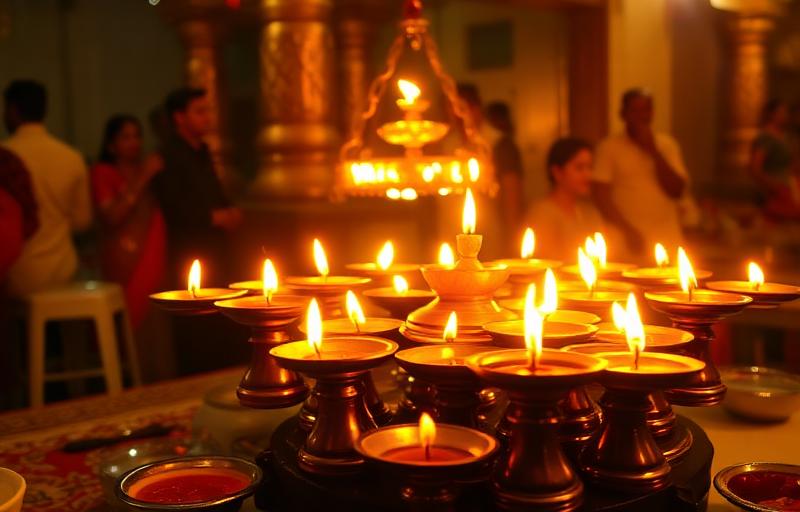
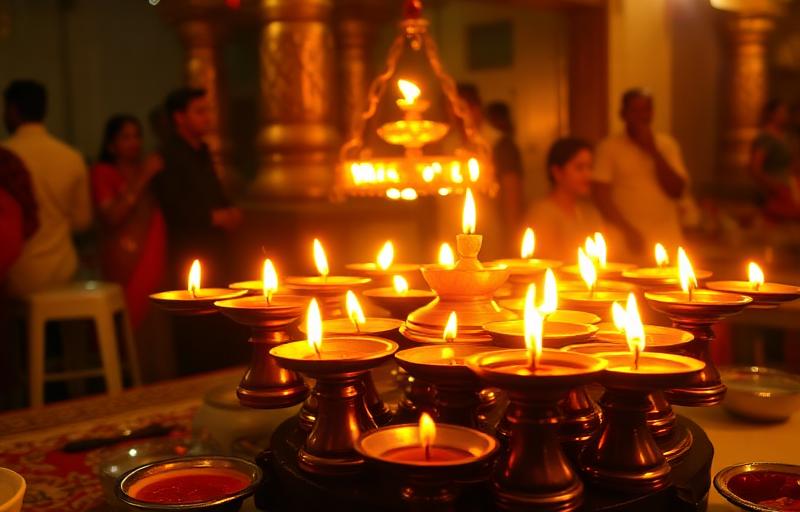
Garba does not begin with a dhol. It begins with the Goddess, and the aarti is how the whole ground turns to face her before the first step. In Gujarat and Mumbai that aarti is almost always Jay Adhya Shakti, sung standing, lamps in hand, usually between 9 and 10 pm. In north Indian homes the same place is taken by Jai Ambe Gauri. Play one or both, then move to the slow garba.
- Jay Adhya Shakti - Sadhana Sargam - the classic Gujarati Ambe Maa aarti, calm and full, everyone sings along.
- Jay Adhya Shakti with Gujarati lyrics - Studio Sangeeta - the same aarti with words on screen, useful if your group is still learning it.
- Jai Ambe Gauri - Anuradha Paudwal - the standard Hindi Durga aarti, lyrics on screen.
- Ambe Tu Hai Jagdambe Kali - Anuradha Paudwal - a second aarti many families sing straight after.
For the daytime puja at home, before you dress for the night:
- Durga Chalisa - Anuradha Paudwal - forty verses, around ten minutes, lyrics on screen.
- Ya Devi Sarvabhuteshu - the Devi Suktam chant from the Durga Saptashati.
- Argala Stotram chant-along - short and repeatable, good for a morning with little time.
Our Jai Ambe Gauri meaning guide explains that aarti verse by verse.
Traditional and devotional garba: the slow first hour
These are the garbas the circle was built for. Most are addressed directly to Ambe Maa, or to Krishna in the raas tradition, and they sit at ek taali and do taali tempo, so the whole ground can join without anyone being out of breath. Play them in roughly this order and let the speed climb on its own.
- Pankhida O Pankhida - traditional, Saaj Bhatt & Prakriti Kakar version - a message sent to Ambe Maa through a bird; gentle do taali, the song most Gujarati nights open with.
- Rame Ambe Maa Chachar Na Chowk - devotional garba - the Mother herself dances in the village square; slow, swaying ek taali.
- Aaso Ni Raat Ajwari Re - Hemant Chauhan - a bright Ashwin night; steady do taali.
- Maa No Garbo - Hemant Chauhan - a non-stop Ambaji set, ideal when you want twenty minutes without changing tracks.
- Ame Mahiyara Re Gokul Gamna - Usha Mangeshkar & Praful Dave - the milkmaids of Gokul; medium tempo, works for teen taali too.
- Tara Vina Shyam Mane Ekladu Lage - Falguni Pathak version - the Krishna raas garba, longing in a slow swing; the natural bridge to dandiya.
- Aaj No Chandaliyo - Pamela Jain - the Sharad Purnima moon garba; keep it for the full-moon night.
If you learn the words to just one of these, make it Pankhida. It is sung in every circle from Rajkot to Toronto.
The Falguni Pathak era
If you grew up in the late 1990s, Navratri sounds like Falguni Pathak. Her 1998-99 albums, led by Maine Payal Hai Chhankai, took a regional festival's music to every Indian city and gave her the title people still use, Queen of Dandiya. The songs are mid-tempo, melodic and built for do taali and teen taali, which is why they still fill the floor in the second hour, when the circle has warmed up but has not yet gone to full speed.
- Maine Payal Hai Chhankai - Falguni Pathak (1999) - the anthem; medium tempo, do taali with a half turn.
- O Piya - Falguni Pathak - softer and romantic, a swaying teen taali.
- Chudi Jo Khanke - Falguni Pathak - bright and playful; good for the step where the wrist leads.
- Kesariyo Rang - Falguni Pathak - saffron-coloured devotion with a quicker pulse.
- Odhni Odhu - Falguni Pathak - an older folk melody in her voice; steady teen taali.
- Hoon To Gai Thi Mele - Falguni Pathak - words by poet Avinash Vyas, music Gaurang Vyas; a story-song about a fair, lively and easy to follow.
Play these six as one block, roughly twenty-five minutes, and watch the aunties who taught you the steps come back into the circle. They also work well as the warm-up on a society night when half the crowd is still arriving.
Bollywood garba hits: when the circle speeds up
This is the hour when the dhol takes over. Film garbas are louder, faster and built for teen taali, hinch and the spin, and every DJ from Ahmedabad to a Dubai community hall plays them between 11 pm and midnight. Here they are in a rough order of rising tempo.
- Dholi Taro Dhol Baaje - Hum Dil De Chuke Sanam (1999) - the original film garba; fast teen taali.
- Rangilo Maro Dholna - Pyaar Ke Geet (1999) - Shubha Mudgal's voice; a mid-tempo dodhiyu favourite.
- Shubhaarambh - Kai Po Che! (2013) - an auspicious start; steady, joyful do taali.
- Mor Bani Thanghat Kare - Ram-Leela (2013) - Meghani's poem in Osman Mir's voice; slow and dignified, a rain garba.
- Nagada Sang Dhol - Ram-Leela (2013) - the big one; full-speed hinch.
- Lahu Munh Lag Gaya - Ram-Leela (2013) - a swaying raas tempo, good for partner steps.
- Udi Udi Jaye - Raees (2017) - Bhoomi Trivedi and Karsan Sagathia; fast teen taali.
- Chogada - Loveyatri (2018) - the modern crowd-pleaser; medium-fast, easy claps.
- Kamariya - Mitron (2018) - DJ tempo, hips lead.
- Ghoomar - Padmaavat (2018) - a Rajasthani ghoomar, not garba, but a graceful spin everyone knows.
- Odhani - Made in China (2019) - Sachin-Jigar; light, quick do taali.
- Sanedo - Made in China (2019) - the folk sanedo in film clothes; the fastest step of the night.
- Dholida - Gangubai Kathiawadi (2022) - dhol-heavy, mid-fast, teen taali with a spin.
Dandiya raas picks
Raas is the second half of the night. Two circles move in opposite directions, partners meet, strike sticks, turn and move on to the next person, and the music needs a clear, even beat so that two hundred sticks land together. Slower songs work better than you expect, because the stick pattern itself adds the speed. Keep sticks at waist height, and switch to raas only after the garba circle has thinned a little.
- Tara Vina Shyam Mane Ekladu Lage - Falguni Pathak version - the classic Krishna raas; medium swing, the song most raas sets open with.
- Ke Odhni Odhu Odhu Ne Udi Jaye - Meru Malan, Alka Yagnik & Praful Dave - a Gujarati film song with a clear count; good for learning the partner change.
- Lal Lal Sanedo - Maniraj Barot - the folk sanedo at full pace; a fast two-hit pattern for confident players.
- Non Stop Gujarati Dandiya Raas Garba Jukebox - an hour of raas-tempo tracks when you do not want to curate.
It is widely told that the sticks recall the swords of Durga in her battle with Mahishasura, and that raas itself comes from Krishna's dance with the gopis, which is why Krishna songs sit so naturally here. Our post on the nine nights in Gujarat has more on how the evening is structured.
Non-stop mixes for home and society nights
On many nights nobody wants to be the DJ. A small society function, a terrace with twenty people, a living room with the furniture pushed back: these run best on a single long mix that already climbs from slow to fast. The four below are all from Gujarati artists and channels, and each gives you forty minutes to an hour without touching the phone.
- Kinjal Dave - Navrangi 2.0 non-stop garba - contemporary Gujarati pop garba; starts mid-tempo and keeps building.
- Best Gujarati Garba Dandiya Jukebox 2025 - Khelaiya - a mixed set of garba and raas tracks; good for a crowd of all ages.
- Non-Stop Raas Garba Jukebox - DJ Rangratri - heavier beats and club-style transitions, aimed at the younger end of the circle.
- Garba Medley live - Osman Mir, Third Culture Collective & Kavi Pau - a live acoustic medley; slower and warm, lovely for a small family night.
A practical tip: queue the aarti from section two first, then one of these mixes, then a closing bhajan from the last section, and your night is set. Keep water nearby, wear comfortable footwear, and let the youngest in the circle decide when the tempo drops.
Closing bhajans and the Sharad Purnima night
A garba night should end the way it began, with the Goddess. When the dhol stops, play one bhajan everyone can sing standing still, and the energy settles instead of simply running out. These are the tracks that do that, followed by the stotra many venues use for a second aarti.
- Maa Sherawaliye Tera Sher Aa Gaya - Khiladiyon Ka Khiladi (1996) - Sonu Nigam and Alka Yagnik; a film bhajan with a strong clap, the last big sing-along.
- Chalo Bulawa Aaya Hai - Avtaar (1983) - Narendra Chanchal's call to the Mother; slow, and everyone knows the words.
- Jai Mata Di (Dhuni Maa Ke Naam Ki) - Lakhbir Singh Lakkha - a jagrata-style bhajan to close the circle.
- Lakhbir Singh Lakkha non-stop Mata bhajans - for the slow walk home or the puja the next morning.
- Aigiri Nandini - Rajalakshmee Sanjay - the Mahishasura Mardini Stotram; stand for this one.
Navratri 2026 ends on Monday 19 October, with Dussehra on Tuesday 20 October. Many grounds then hold one more night on Sharad Purnima, 26 October 2026, under the full moon, and that night traditionally belongs to Aaj No Chandaliyo. Check your local panchang for the exact date, and read our Mahishasura Mardini guide for the stotra's meaning.
Reader Questions Answered
In what order should I play garba songs on a Navratri night?+
Start with the aarti (Jay Adhya Shakti or Jai Ambe Gauri), then slow traditional garba at ek and do taali, then Falguni Pathak and Bollywood hits as the tempo rises, then dandiya raas, and close with a bhajan such as Chalo Bulawa Aaya Hai.
Which aarti is sung before garba?+
In Gujarat and Mumbai it is Jay Adhya Shakti, the Gujarati Ambe Maa aarti, sung standing with lamps before the dhol starts. In Hindi-speaking homes Jai Ambe Gauri takes the same place. Many venues sing a second aarti or Aigiri Nandini at the end of the night.
Which Bollywood songs are best for garba?+
The ones DJs rely on are Dholi Taro Dhol Baaje, Nagada Sang Dhol, Dholida, Chogada, Udi Udi Jaye and Kamariya for fast teen taali, with Shubhaarambh and Mor Bani Thanghat Kare for the slower do taali stretch. All are linked in the Bollywood section above.
When is the last garba night of Navratri 2026?+
Sharad Navratri 2026 runs from Sunday 11 October to Monday 19 October, with Dussehra on Tuesday 20 October. Many grounds hold a final garba on Sharad Purnima, 26 October 2026; check your local panchang for the exact date in your city.
About the author
Pandit Mahesh Trivedi · Festival Traditions & Panchang
Pandit Mahesh leads the festival-date and Panchang content on Vandnaa. He cross-references multiple regional panchangs (Drik, Vaishnava, Bengali, Marathi) for every festival date published on the site.
Meet the Vandnaa editorial team →