Two Armed Men Near a Nervous King's Border
By the time Rama and Lakshmana reach the hills near Kishkindha searching for Sita, Sugriva has already spent years in hiding, watching for anyone Vali might send to finish what the bounty on his life started.
So when his scouts report two tall, powerful, armed men moving through the forest toward his refuge on Rishyamukha hill, Sugriva's first response is not welcome. It is dread. He assumes the worst case: that his brother has finally found soldiers capable of reaching him even here.
Rather than confront them himself, or ignore them and hope they pass, Sugriva does what a cautious exile does. He sends someone to find out who they actually are before deciding anything.
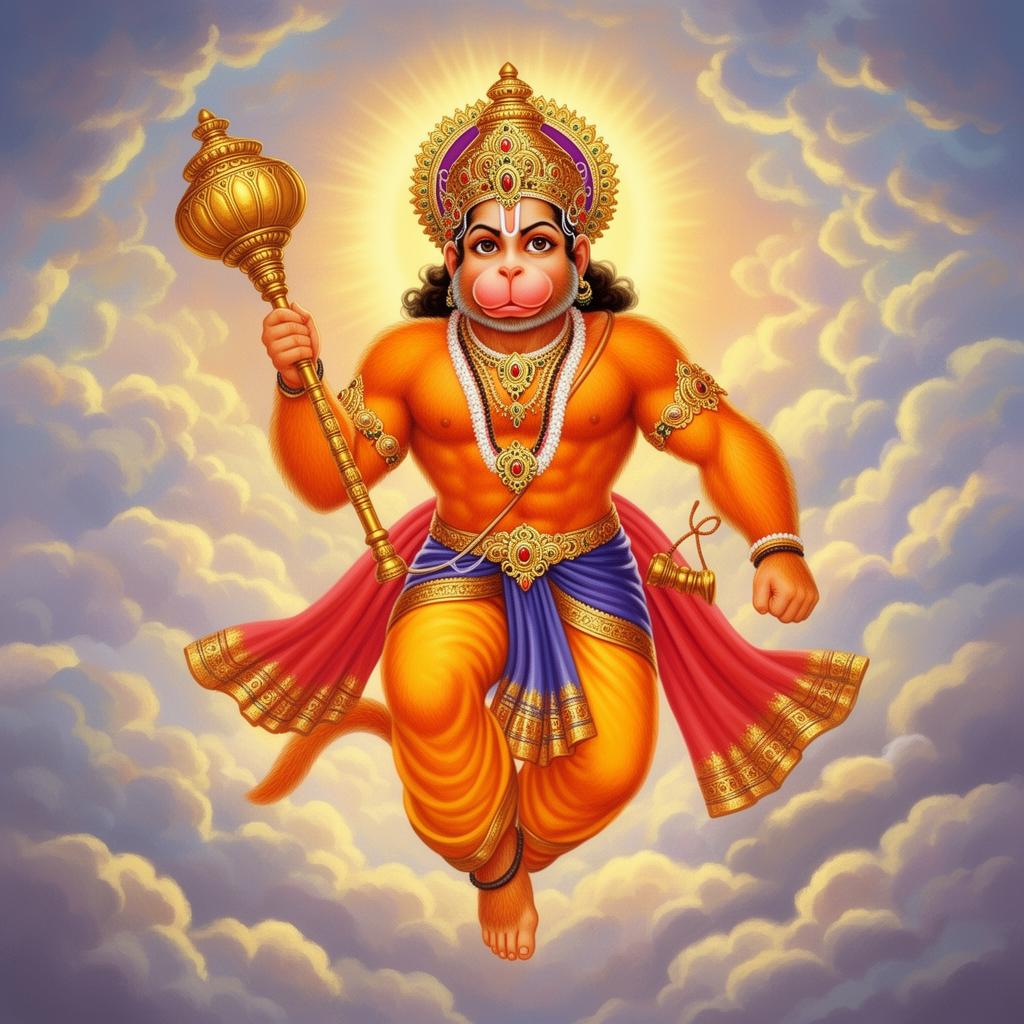
That someone is Hanuman. Among the vanaras loyal to Sugriva, he is already known as the one you send when a situation needs to be read correctly rather than met with force, and he is told to approach the strangers not as a warrior but disguised as an ordinary Brahmin, a wandering scholar with no stake in the conflict, so that he can ask questions and gather the truth without provoking a fight neither side wants yet.
A Brahmin Whose Grammar Was Too Good
Hanuman approaches Rama and Lakshmana in his disguise and speaks first, as any Brahmin greeting travelers might, asking who they are, why two such evidently royal and capable men are wandering this remote forest on foot, and what has brought them to a land ruled by a king in hiding.
It is a perfectly ordinary set of questions. What gives Hanuman away is not the content of what he says but the quality of it.
Rama listens and turns to Lakshmana with an observation that becomes one of the most quoted lines about him in the entire epic: that no one could speak with such command of grammar, such precision in every syllable, without having mastered the Rig Veda, the Yajur Veda and the Sama Veda, and that such command of speech simply does not come from an ordinary wanderer. A person who speaks this correctly, Rama says, could not possibly be capable of failing at whatever he sets out to do.
This is Hanuman, still in disguise, being read correctly within moments of opening his mouth, not because his story was inconsistent but because his language itself was too refined for the role he was pretending to play. He drops the disguise once he is satisfied these are not Vali's men, reveals himself as Sugriva's minister, and carries Rama on his own shoulders to meet Sugriva directly, the first of many times in the epic that Hanuman becomes the one who physically closes the distance between Rama and someone he needs to reach.
Why This Small Scene Carries So Much Weight
Rama's line about Hanuman's speech is quoted far more often than the scene it comes from, usually in isolation, as praise for eloquence in general. Read inside the story, it means something more specific.
Rama has just arrived in an unfamiliar kingdom, grieving, exhausted, and with no way to know who around him can be trusted. The first test anyone puts to him is not a show of strength but a conversation, and Rama's judgment of who Hanuman is comes entirely from how carefully Hanuman has trained his own mind. That is the introduction the epic gives its most devoted character: not a feat of strength, which comes later and often, but a demonstration of discipline in something as ordinary as correct speech.
It also sets the pattern for the alliance that follows. Sugriva does not simply throw open his kingdom to two armed strangers. He tests first, through someone he trusts to judge accurately, and only commits to helping once that judgment comes back sound. Rama, for his part, extends the same trust back through Hanuman rather than around him, and from this first exchange onward, every major task in the search for Sita runs through him.
What People Ask Most
What language did Hanuman speak to impress Rama?+
Sanskrit. The text specifically praises his command of Vedic grammar and the precision of his usage, not any particular content of what he said.
Did Hanuman know who Rama was before this meeting?+
Not with certainty. He approached to gather information on Sugriva's behalf, as an act of due caution rather than recognition, and only committed fully once Rama's character and speech convinced him.
Why did Sugriva not go himself?+
He was in hiding from Vali and could not risk exposing himself if the strangers turned out to be a threat. Sending a trusted minister first was the safer, and as it turned out correct, course of action.
Is this the same meeting where Hanuman carries Rama on his shoulders?+
Yes, immediately after revealing his true identity, Hanuman carries both Rama and Lakshmana to Sugriva, since Sugriva remains cautious about approaching the strangers directly himself even after Hanuman's report.
About the author
Anjali Mehta · Editor, M.A. Religious Studies
Anjali is the managing editor for Vandnaa and oversees the festival and vrat coverage. She holds an M.A. in Religious Studies and reviews every published article for accuracy, accessibility, and tradition-fidelity.
Meet the Vandnaa editorial team →