Two Calendars Working Together
The Hindu calendar, or panchang, is not purely lunar and not purely solar, it is lunisolar, meaning it tracks both simultaneously and uses each for a different purpose. Religious festival dates, vrat days and most muhurat calculations follow the lunar cycle, since the moon's visible phases have always offered an easy, universally observable way to mark time even before clocks or written calendars existed. The solar cycle, meanwhile, governs the agricultural and seasonal markers, most visibly the Sankranti days that mark the sun's movement through the zodiac.
This dual structure is not a modern compromise, it goes back to ancient Vedic timekeeping, where both cycles were tracked for different, practical reasons: the moon for ritual and monthly rhythm, the sun for the agricultural year and seasonal accuracy. The genius of the system, and also the source of most confusion for newcomers, is that these two cycles do not divide evenly into each other. A lunar year of roughly 354 days and a solar year of about 365.25 days drift apart steadily, which the calendar has to reconcile using mechanisms explained further below.
Understanding this dual nature answers the single most common question about Hindu festivals: why they land on a different Gregorian date every year, yet somehow never drift into a completely different season. The lunar side explains the yearly shift, the solar side explains why that shift stays bounded rather than running away indefinitely. Both halves of the system need to be understood together, since looking at only one half leaves the picture incomplete.
What Exactly Is a Tithi
A tithi is the basic unit of the lunar calendar, but it is defined in a way that surprises most people who assume it works like a Gregorian day. A tithi is not a fixed 24-hour block, it is defined astronomically as the time it takes for the angular distance between the moon and the sun, measured along the ecliptic, to increase by exactly 12 degrees. Because the moon's orbital speed is not perfectly constant, the real-world duration of a tithi varies, ranging from roughly 19 hours to about 26 hours depending on where the moon is in its orbit.
A lunar month contains exactly 30 tithis, 15 in the waxing fortnight (shukla paksha), ending at purnima, the full moon, and 15 in the waning fortnight (krishna paksha), ending at amavasya, the new moon. Ekadashi, the eleventh tithi, and Chaturthi, the fourth, are examples most devotees already recognize by name from vrat observances.
Because tithis vary in length and don't align neatly with sunrise-to-sunrise days, two unusual situations can occur. A kshaya tithi happens when a tithi begins and ends entirely within a single sunrise-to-sunrise period, meaning it is never the "tithi at sunrise" for any day and gets skipped in date-naming for festival purposes. A vriddhi tithi is the opposite: a tithi that spans two consecutive sunrises, meaning it technically "exists" as the sunrise tithi on two consecutive days. This is precisely why panchang publishers occasionally differ by a day on when a festival falls, since the convention of which tithi "counts" for a given calendar day depends on which moment relative to sunrise is used as the reference point, a rule that is well established but does require careful calculation.
Purnimant vs Amanta: Two Ways to Count a Month
Adding another layer, India follows two different conventions for where a lunar month begins and ends, and which one is used depends on region. The Purnimant system, traditionally followed across most of North India, including Uttar Pradesh, Bihar and Madhya Pradesh, treats the full moon (purnima) as the end of one month and the start of the next. The Amanta system, followed across Maharashtra, Gujarat, Karnataka, Andhra Pradesh, Tamil Nadu and Bengal, instead treats the new moon (amavasya) as the dividing line between months.
The practical effect of this is that the same set of days can be labeled as belonging to different months depending on which regional system is being used, even though the underlying tithis and the festivals tied to them fall on the same actual days. This is the real reason a festival can appear to be "a month apart" when comparing a North Indian panchang to a South Indian one, when in practice the festival is happening on the same day, just named differently in the two calendars.
Diwali is a commonly cited example of this naming difference: under the Amanta system it falls at the end of Ashwin month, while under the Purnimant system the same day falls within Kartik month, since Kartik under Purnimant reckoning began earlier, right after the previous full moon. Once a reader understands that these are two labeling conventions for the same underlying lunar cycle, rather than two different calendars producing different actual dates, a lot of apparent confusion around regional festival calendars resolves itself immediately.
The Solar Side: Sankranti and the Zodiac Months
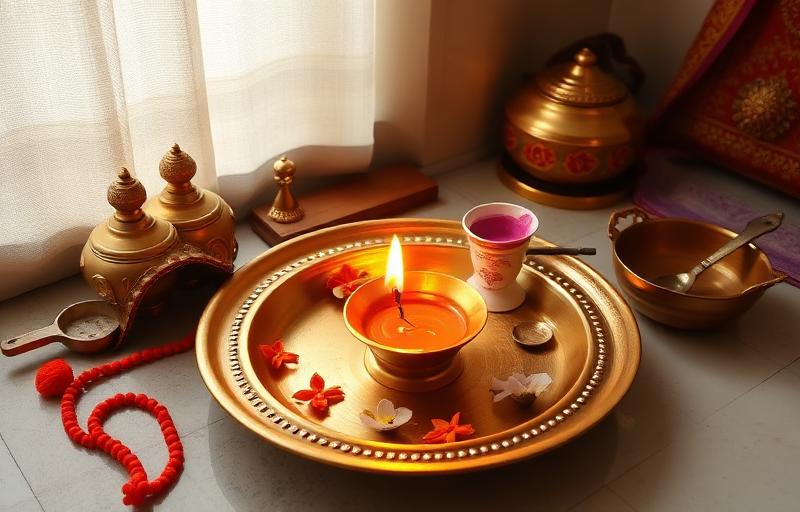
While most Hindu festivals follow the lunar tithi, one category runs entirely on the solar calendar instead: Sankranti days, which mark the sun's transit from one zodiac sign, or rashi, into the next. There are twelve sankrantis every year, one for each rashi, and because these are tied purely to the sun's position rather than the moon's phase, they fall on nearly the same Gregorian date every single year, a genuine exception to the general rule that Hindu festivals shift annually.
Makar Sankranti, marking the sun's entry into Capricorn, is the most widely celebrated of these and typically falls on January 14th, occasionally January 15th depending on the precise moment of transition and how leap years affect the Gregorian calendar's own drift. This is also why Makar Sankranti is often cited as one of very few major Hindu festivals with an almost fixed date on the English calendar, standing apart from lunar festivals like Diwali or Holi that move within a broader window each year.
This solar framework matters beyond just Sankranti itself. It is also the mechanism that keeps the lunar calendar from drifting endlessly out of season, since the insertion of an extra lunar month, adhik maas, is calculated specifically by checking whether a lunar month has failed to contain a solar sankranti within it. When that happens, the calendar effectively pauses the lunar count for an extra month, allowing the solar year to catch back up, which is the core mechanism keeping Hindu festivals within a recognizable seasonal window year after year rather than slowly cycling through the entire year over decades.
Why the Panchang Is Still Consulted Today
The traditional panchang is built around five core elements, called its panch angas, or five limbs, which together give it its name:
- Tithi - the lunar day, as explained above
- Vaar - the weekday, tied to one of seven classical grahas
- Nakshatra - the lunar mansion, one of 27 star-based divisions the moon passes through
- Yoga - a calculated combination of the sun and moon's longitudes, used mainly for auspicious timing
- Karana - half of a tithi, giving finer resolution for muhurat calculations
These five elements together allow a panchang to do far more than simply name festivals. They are used to determine muhurat, auspicious windows of time for weddings, griha pravesh (housewarming), starting a new venture, and other significant life events, since certain combinations of tithi, nakshatra and yoga are traditionally considered more favorable than others for specific undertakings.
This is why families still consult a panchang, whether in printed form, from a temple priest, or increasingly through an app, well beyond just checking when the next festival falls. A single day's panchang entry carries a compact summary of the tithi, the ruling nakshatra, the yoga and karana in effect, and any special observances tied to that specific combination, information that would otherwise require independent astronomical calculation to reproduce.
Temple priests, astrologers and family elders have historically been the keepers of this knowledge, calculating panchang details by hand using established astronomical tables long before printed almanacs or apps existed. That calculation work has not disappeared with technology, it has simply moved into software, and a reliable digital panchang today is still running the same core five-limb logic that has guided Hindu timekeeping for centuries, just computed instantly instead of by hand.
How to Read a Hindu Calendar Practically
For someone looking up a date themselves for the first time, a few practical habits make the panchang far less confusing. First, always check which regional convention, Purnimant or Amanta, the source you're using follows, particularly if comparing calendars from different parts of India, since the same day can carry two different month names without being two different days at all.
Second, remember that a festival's date is usually anchored to a specific tithi and month, not a fixed number of days from some other reference point. Looking up "Diwali" really means looking up "Kartik Amavasya" (or Ashwin Amavasya under Amanta reckoning), and once that tithi is located on that year's panchang, the Gregorian date follows automatically.
Third, when a source's dates seem to disagree with another by exactly one day, the most likely explanation is a kshaya or vriddhi tithi situation, or a difference in how sunrise-relative timing was calculated, rather than an actual error. Regional and even individual temple traditions sometimes make slightly different, both valid, choices about which day to observe in these edge cases, so it is generally best to simply follow the panchang used consistently by one's own family or local temple rather than trying to reconcile every source.
Finally, for the handful of solar festivals like Makar Sankranti, expect a stable date each year and no real ambiguity, since the solar calendar's straightforward mechanics don't carry the same tithi-based edge cases that lunar festival dates do.
🪔 Vandnaa's panchang and festival calendar handles all of this calculation for you, showing accurate dates for your city without needing to interpret tithis yourself.
Quick Answers
Why do Hindu festival dates change every year on the English calendar?+
Because festival dates follow lunar tithis, which are tied to the moon's cycle of about 354 days a year, roughly 11 days shorter than the 365-day solar year. This gap causes each festival's Gregorian date to shift earlier annually until an adhik maas resets it.
What is a tithi in simple terms?+
A tithi is a lunar day, defined by the moon moving 12 degrees further from the sun than it was before. Unlike a 24-hour Gregorian day, a tithi's actual length varies, typically between about 19 and 26 hours.
Why does South India sometimes celebrate a festival a month apart from North India?+
This is usually a naming difference, not an actual date difference. North India largely follows the Purnimant month system while much of South India and Maharashtra follow Amanta, so the same day can be labeled as belonging to two different months.
Is Makar Sankranti the only Hindu festival with a fixed date?+
It is the most widely known fixed-date festival, since it follows the solar calendar, but other sankranti days throughout the year share this same solar-based stability, even though they receive less widespread celebration.
What are the five limbs (panchang) of the Hindu calendar?+
The five limbs are tithi (lunar day), vaar (weekday), nakshatra (lunar mansion), yoga (a sun-moon based combination) and karana (half a tithi). Together they are used for both festival dating and muhurat calculation.
How is a leap month (adhik maas) decided?+
An adhik maas is inserted whenever a lunar month does not contain a solar sankranti within it, which typically happens once every two to three years. This extra month realigns the lunar calendar with the solar year, keeping festivals within a consistent seasonal window.
About the author
Pandit Mahesh Trivedi · Festival Traditions & Panchang
Pandit Mahesh leads the festival-date and Panchang content on Vandnaa. He cross-references multiple regional panchangs (Drik, Vaishnava, Bengali, Marathi) for every festival date published on the site.
Meet the Vandnaa editorial team →Explore on Vandnaa
Related Articles

Dincharya: Structuring a Hindu Daily Spiritual Routine From Sunrise to Sleep
7 min read
The 16 Samskaras: A Complete Overview of Hindu Life-Cycle Rites
8 min read
Why Hindu Festival Dates Change Every Year: The Lunar Calendar Explained
7 min read
Why Each Day of the Week Belongs to a Different God
7 min read