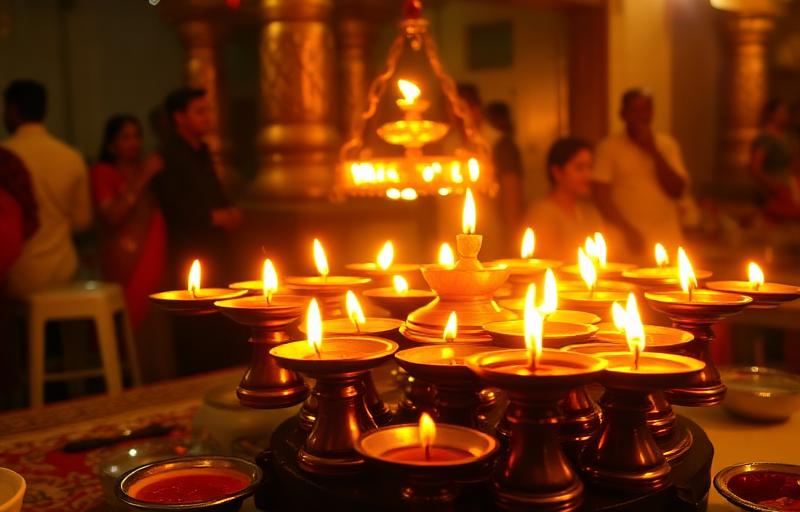
What is Aarti & Why It Matters
Aarti (आरती) is the devotional worship ceremony where light, sound, and offering combine to invoke and honor the divine. The word 'aarti' comes from Sanskrit aratrika - 'that which removes ratri (darkness)'.
The 5 elements of aarti: 1. Diya (lamp) - fire element, divine light 2. Bell ringing - sound element, removes negativity 3. Songs/mantras - devotional poetry 4. Camphor (kapoor) - purity, complete burning (no residue) 5. Bhog (food offering) - sweetness, gratitude
Why aarti is essential:
- Daily anchor for spiritual practice
- Dedicated 'family time' with deity
- Energetic cleansing of home
- Connects all family members through shared ritual
- Children learn devotion through observation
- Sets dharmic tone for the day
Cosmic principle: Aarti is light meeting form. The diya represents divine consciousness; the deity represents cosmic personality. Moving the light around the deity is symbolic of consciousness illuminating the divine. This is why circular motion is essential.
When to do aarti:
- Morning (after bath, before breakfast)
- Sunset (sandhya time)
- Before any major event
- On festival days (extended)
Daily 5-minute aarti is enough. You don't need elaborate setup for daily practice. Save grand aartis for festivals.
📿 The Vandnaa App has aartis for all major deities with audio in 5 styles.
Items Needed for Daily Aarti
Permanent items (one-time setup):
- Aarti thaali (brass plate, 8-12 inches)
- Diya holder (small brass with spaces for cotton wicks)
- Camphor holder (small brass)
- Bell (brass, small to medium)
- Conch shell (shankh) - optional but powerful
- Asana (sitting cloth - red/saffron)
- Chowki (small wooden platform)
- Cloth covering for chowki (yellow/red)
- Rudraksha mala (108 beads)
Daily consumables:
- Ghee OR mustard oil (depends on deity - Krishna/Vishnu = ghee; Hanuman/Shani = mustard oil; Shiva = either)
- Cotton wicks (1-5 per diya)
- Camphor pieces (4-5 small)
- Agarbatti/incense (sandalwood preferred)
- Akshat (rice + small pinch of haldi)
- Fresh flowers (deity-specific)
- Tilak material (sindoor for Devi/Hanuman; chandan for Vishnu/Krishna; bhasma for Shiva)
- Bhog (sweet item - small piece daily)
- Pure water in small lota
Deity-specific flowers:
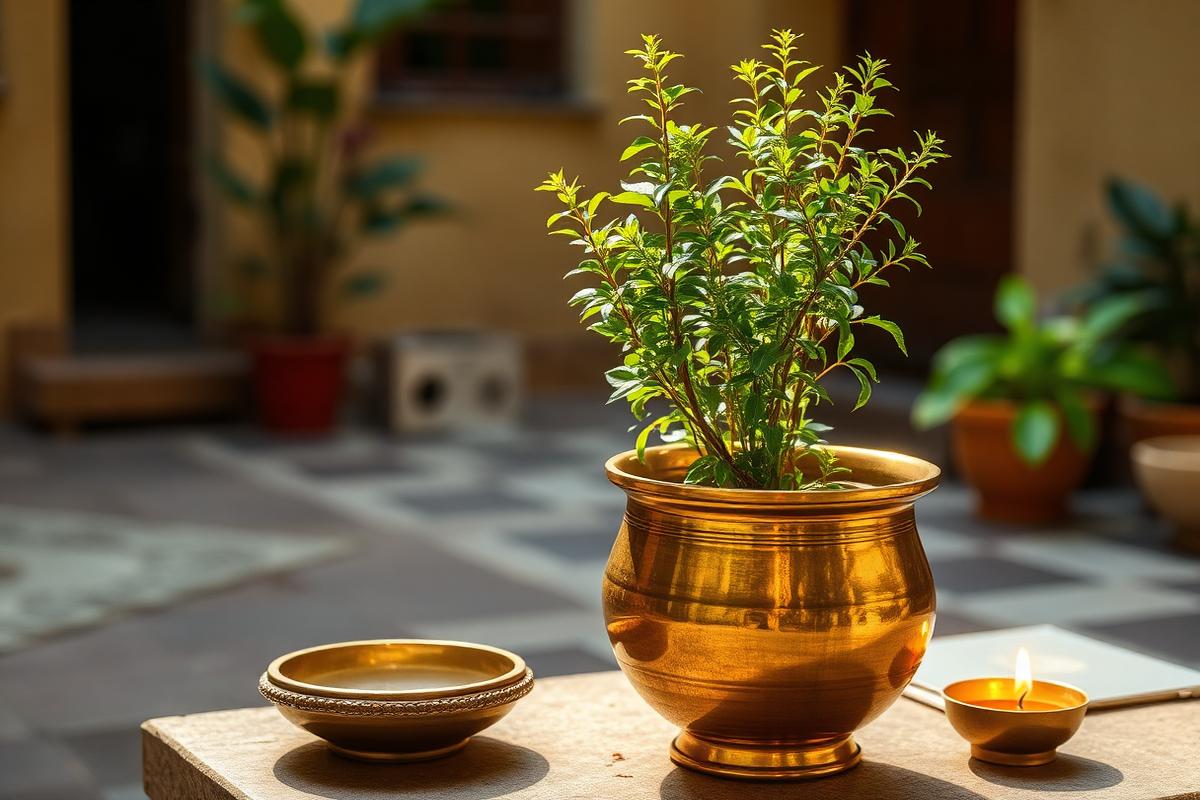
- Krishna/Vishnu/Ram - Tulsi (mandatory) + yellow flowers
- Shiva - Bilva leaves (mandatory) + white flowers (datura, kaner)
- Devi/Durga/Lakshmi - red flowers (hibiscus, rose, lotus)
- Hanuman - red hibiscus, marigold
- Ganesh - red flowers (hibiscus), durva grass
- Saraswati - white/yellow flowers
- Surya - red flowers, red sandalwood
Bhog suggestions:
- Krishna/Vishnu - makhan-mishri, kheer
- Shiva - bel laddoo, fruits
- Lakshmi - kheer, fruits
- Hanuman - boondi laddoo, jaggery
- Ganesh - modak, laddoo
- Devi - kheer, halwa
For modern apartment setups:
- Compact thaali set available online (₹500-1500 complete)
- LED-style 'safe' camphor holders for fire-conscious homes
- Smaller diyas if space limited
- Wall-mounted aarti shelf if no chowki space
Total cost: ₹1500-3000 one-time + ₹100-200 weekly consumables.
Step-by-Step Aarti Vidhi
Daily 5-minute aarti vidhi:
Step 1 - Personal preparation (1 min):
- Bath complete (or wash hands and face minimum)
- Wear clean clothes
- Apply tilak to your forehead
- Approach puja space
Step 2 - Setup (1 min):
- Sit on asana facing east
- Light agarbatti to purify space
- Take 3 deep breaths to settle
Step 3 - Sankalpa (30 sec):
- Take pure water in right palm
- Mentally state intention
- Pour at base of altar
Step 4 - Apply tilak (30 sec):
- Apply chandan/sindoor/bhasma to deity
- Use ring finger of right hand
Step 5 - Offer flowers + akshat (1 min):
- Place fresh flowers at deity's feet
- Sprinkle akshat (rice + haldi)
Step 6 - Light the diya (30 sec):
- Take ghee/oil diya
- Light cotton wick from agarbatti
- Place in your right hand
Step 7 - The actual aarti (2-3 min): This is THE main step.
- Stand up (sitting only if elderly/ill)
- Hold aarti thaali in right hand
- Move thaali in CLOCKWISE circular motion in front of deity
- Sing or play deity's aarti song
- Move thaali:
- Small circles around deity's head
- Larger circle around full body
- 3-4 rounds total
- Ring bell with left hand simultaneously (rhythmic)
Step 8 - Camphor aarti (1 min):
- Light camphor on small thaali
- Continue circular motion with camphor flame
- Sing concluding line of aarti
- Camphor must completely burn out (no residue)
- Symbolizes complete surrender
Step 9 - Bhog offering (30 sec):
- Place bhog (small sweet) before deity
- Wait 30 seconds (deity 'eats' the bhog)
Step 10 - Closing prayer (30 sec):
- Fold hands
- Take 30 seconds for personal silent prayer
- Bow down (3 times if possible)
Step 11 - Aarti taking (10 sec):
- Family members come forward
- Take blessing of aarti flame by:
- Hold both palms over flame briefly (don't touch)
- Touch palms to eyes and face
- This transfers the deity's energy to devotee
Step 12 - Distribute prasad (30 sec):
- Take small portion of bhog
- Distribute to family members
- Eat your portion last
- If distributed water - sprinkle few drops on head before drinking
Total time: 5-8 minutes.
For elaborate festival aarti, extend to:
- Full Sanskrit mantras
- Multiple deity aartis
- Extended bhog
- 15-30 minutes
Critical rules:
1. Always clockwise motion - never counter-clockwise (that's for funerals)
2. Stand up for aarti - sitting only if physically unable
3. Camphor must completely burn out - extinguishing it early is incomplete
4. Don't blow out diyas - let burn naturally or smother with cloth
5. Offer flowers FRESH - never reuse old flowers from yesterday
6. Take aarti blessing - don't skip the final palm-over-flame step
7. Distribute prasad to all - never eat without sharing
8. Maintain silence after closing - don't immediately argue/discuss work
Common Mistakes & Conclusion
Common mistakes:
1. Counter-clockwise motion. Most fundamental mistake. ALWAYS clockwise.
2. Sitting throughout aarti. Stand if physically able. Sitting reduces 50% of energy.
3. Not lighting camphor. Camphor is THE concluding element. Don't skip.
4. Blowing out diyas. Sacred fire shouldn't be extinguished by breath. Let it burn out, or smother with cloth.
5. Reusing yesterday's flowers. Always fresh.
6. Skipping bhog. Even a small piece of fruit/sweet is essential.
7. Phone notifications during aarti. Silence phone before starting.
8. Aarti while wearing shoes/leather. Remove all leather articles.
9. Children running around. Have them participate, not interrupt.
10. Rushing through aarti. 5 minutes minimum. Faster = mechanical, no bhakti.
11. Skipping aarti when 'busy'. 5 minutes is always available. The exception becomes habit.
12. Doing aarti in unclean clothes. Even quick wash if full bath isn't possible.
13. Wearing dark colors. White, yellow, saffron, red, light pink. Avoid black for daily aarti.
14. Eating non-veg the day before/during aarti time. Sattvic environment matters.
15. Using packaged 'aarti songs' instead of singing. Recorded okay if you can't sing, but try to sing yourself - even badly.
Three commitment levels:
Level 1 - Beginner (Daily 5-min):
- Single deity, single aarti
- Morning OR evening
- Simple vidhi
Level 2 - Householder Standard (Morning + Evening):
- Morning aarti at sunrise
- Evening aarti at sandhya
- Multiple deities
- Full vidhi
- 10-15 minutes each
Level 3 - Devoted (Multi-deity, festivals expanded):
- Daily morning + evening + brief noon
- Special festival aartis
- Family group aartis
- Extended on Pradosh, Ekadashi, Purnima
A final reflection:
Aarti is the simplest yet most universal Hindu practice. Even a 5-year-old child can do it. Even an 80-year-old grandmother can do it. No Sanskrit expertise needed. No expensive setup.
Yet it has the power to:
- Transform your home's energy
- Anchor your day in spirituality
- Connect generations
- Build family bond
- Cultivate inner peace
In a culture rushing toward complexity, aarti's simplicity is its power.
Start tomorrow morning. Light a diya. Offer a flower. Sing one verse. Move clockwise.
5 minutes daily. For life.
Watch your home transform.
📿 The Vandnaa App's Aarti module: 50+ deity aartis with audio, vidhi tutorials, family group-aarti mode, festival reminders, daily streak tracker.
Reader Questions Answered
Can I do aarti without a priest?+
Absolutely yes. Daily home aarti is meant for householders. Priest needed only for major festival pujas. Family does daily aarti themselves.
Is morning or evening aarti better?+
Both. Ideal - both daily. If only one, morning sets day's tone. Evening closes day. Choose based on schedule.
Can children do aarti?+
Yes - even better. Start age 4-5. Have them ring bell, light camphor, offer flowers under supervision. Builds bhakti from young age.
What if I can't sing?+
Recite the aarti words instead. Or play recording softly while doing the motions. Imperfect singing is better than no singing - bhava matters more than skill.
How long should aarti take?+
Daily: 5-8 minutes. Festivals: 15-30 minutes. Don't rush below 5 minutes.
Can women do aarti during menstruation?+
Traditional rule restricts. Modern devotees handle individually. Family member can do on your behalf with your sankalpa. Resume after cycle.
About the author
Dr. Suresh Iyer · Vastu Shastra & Jyotish, 18+ years
Dr. Suresh has practiced traditional Vastu and basic Vedic Jyotish for over 18 years across South India. He contributes the Vastu, direction, and home-puja layout guides on Vandnaa.
Meet the Vandnaa editorial team →Explore on Vandnaa
Related Articles
Diya Jalane Ke Niyam: Right Direction, Best Oil, Number of Wicks & What Every Flame Means
8 min read
Puja Room Vastu – How to Set Up a Mandir at Home
10 min read
Shankh (Conch) Significance: Sound, Spiritual Power, Vidhi & Rules
8 min read
Why We Ring the Temple Bell: 7 Spiritual Reasons & 3 Scientific Findings (Complete Guide)
8 min read

Significance of Camphor (Kapoor) in Aarti & Puja
7 min read
Best Flowers to Offer Each Deity: Complete Hindu Rules
8 min read