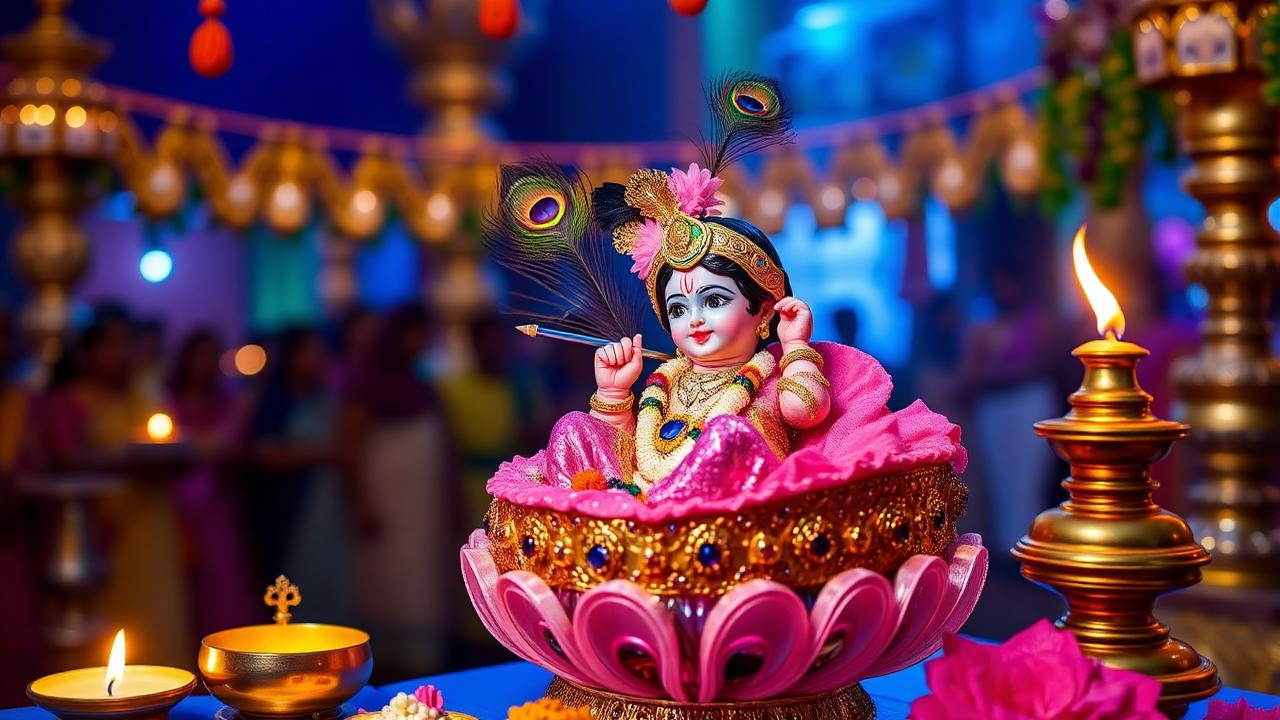
The Govardhan Story Behind the Number 56
The number 56 is one of the most specific, distinctive details in all of Krishna devotional practice, and its origin traces back to a single, dramatic event: the lifting of Govardhan Parvat.
According to the Bhagavata Purana, the people of Vrindavan traditionally worshipped Indra, the god of rain and thunder, with elaborate offerings each year to ensure good rainfall for their crops. One year, young Krishna questioned this practice, arguing that it was Govardhan hill, the local cows, and nature itself, not a distant deity, that truly sustained their daily lives. He convinced the villagers to redirect their worship toward Govardhan Parvat instead.
Enraged at being snubbed, Indra unleashed a catastrophic storm on Vrindavan, sending torrential rain for seven continuous days and nights, threatening to flood and destroy the entire village. Krishna, to protect his people, lifted the entire Govardhan hill on the little finger of his left hand, holding it aloft like a giant umbrella, and every villager, along with their cattle, sheltered safely beneath it for the full seven days.
Here is where the number 56 enters the story: Krishna, as a growing child, was normally fed eight meals a day by his mother Yashoda. During the seven days he stood holding the mountain, unable to eat at his usual intervals, he could not be fed at all. When the rain finally stopped and Krishna gently lowered the hill back into place, Yashoda and the women of Vrindavan, overwhelmed with relief and gratitude, prepared and offered him all 56 meals he had missed at once, 8 meals multiplied by 7 days.
That single act of collective, overflowing love became the template for chappan bhog: not a rulebook of exact dishes, but a symbol of a mother's, and a community's, desire to give everything at once to someone who had given everything to protect them.
The Six Categories of Chappan Bhog
Rather than being a rigid checklist, chappan bhog is traditionally organized into broad categories of food, giving priests and households flexibility in exactly which dishes to prepare while still honouring the spirit of variety and abundance.
1. Grains and staples (Anna): Various preparations of rice, wheat and other grains, including different types of khichdi, pulao and simple boiled rice, representing everyday sustenance.
2. Sweets (Mithai): The largest and most elaborate category, including items like laddoo, peda, barfi, kheer, halwa and malpua, reflecting Krishna's well-known fondness for sweet food.
3. Dairy items (Dugdh Padarth): Milk, curd, butter (makhan), ghee, and paneer-based preparations, given special importance because of Krishna's childhood association with Gokul's cattle and dairy abundance.
4. Namkeen and savoury snacks: Items like kachori, mathri, and various fried and roasted savoury preparations that balance the sweetness of the mithai category.
5. Fruits and dry fruits (Phal): Seasonal fresh fruits along with almonds, cashews, pistachios and raisins, often used both as standalone offerings and as garnish across other dishes.
6. Beverages (Peya Padarth): Items like panakam (a spiced jaggery drink), sharbat, buttermilk and spiced milk, included to represent refreshment alongside solid food.
A properly assembled chappan bhog draws multiple items from each of these six categories rather than, say, 56 different sweets alone, since the underlying idea is complete nourishment across every kind of food a growing child would be fed through a full day, not simply indulgence in one type of dish. This categorical thinking is also why chappan bhog looks somewhat different from temple to temple and region to region, while still recognisably following the same six-part structure.
A Representative List of Chappan Bhog Items
While exact lists vary between temples and regional traditions, here is a representative selection covering the range of dishes typically included across a full chappan bhog spread, grouped for clarity:
Sweets (mithai): Besan laddoo, motichoor laddoo, kaju katli, milk peda, rabri, kheer, malpua, gulab jamun, rasgulla, imarti, ghevar, chandrakala, moong dal halwa, gajar halwa, boondi ladoo, and shrikhand.
Dairy-based (dugdh padarth): Fresh makhan (butter), mishri (sugar crystals), plain curd, sweetened lassi, paneer sabzi, basundi, and plain and flavoured milk.
Savoury and namkeen: Kachori, mathri, dahi vada, khasta puri, moong dal pakora, and a light vegetable sabzi such as lauki or aloo.
Grains and rice preparations: Plain rice, sweet pulao (meetha chawal), khichdi, poori, and puran poli in some regional traditions.
Fruits and dry fruits: Banana, apple, pomegranate, seasonal melon, and a mix of almonds, cashews, pistachios and raisins, either offered whole or used as garnish across the sweets.
Beverages: Panakam (jaggery-pepper-cardamom water), a fruit-based sharbat, spiced buttermilk (masala chaas), and saffron milk.
Special Krishna favourites always included: No chappan bhog is considered complete without makhan-mishri front and centre, alongside a bowl of curd or panchamrit, since these directly reference Krishna's own childhood cravings described repeatedly in the Bhagavata Purana.
Most temples and elaborate home setups reach the number 56 by including multiple variations within a category, for instance, three or four different types of laddoo counted as separate items, rather than by sourcing 56 genuinely distinct standalone dishes. The exact composition has always varied by region, available seasonal produce, and family tradition, since scripture describes the principle (eight meals across seven days) far more precisely than it prescribes an exact universal menu. What stays constant is the intention: presenting Krishna, symbolically, with abundance from every corner of the kitchen at once.
How Chappan Bhog Varies by Region
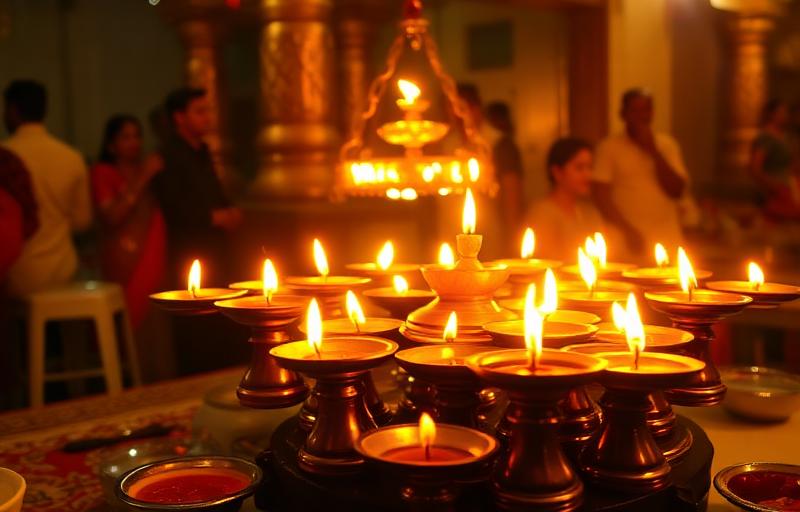
Chappan bhog is not a single fixed menu handed down unchanged from Vrindavan; it has absorbed local food culture wherever Krishna worship has flourished, resulting in meaningful regional differences.
Mathura and Vrindavan (Braj region): Considered the most authoritative version, since it originates here. Expect heavy emphasis on dairy (this is, after all, cattle country), makhan-mishri, rabri, and peda made from thickened milk, alongside kachori and traditional Braj sweets like mathura ke pede.
Rajasthan: Ghevar, a distinctive disc-shaped, honeycomb-textured sweet associated with the monsoon season, features prominently, alongside besan-based sweets and namkeen reflecting the state's broader culinary identity.
Gujarat: Chappan bhog here often includes a wider variety of farsan (savoury snacks), alongside sweets like mohanthal and a distinctly Gujarati sweet-and-savoury balance across the spread.
Bengal and Odisha: In regions with a strong Krishna and Jagannath worship tradition, chhena-based sweets (made from fresh paneer-like curd), such as rasgulla and sandesh, take a much larger share of the mithai category than in North Indian versions.
South India: In Krishna temples across Tamil Nadu, Karnataka and Andhra Pradesh, items like Mysore pak, payasam (the southern equivalent of kheer), and pongal often replace or sit alongside the North Indian staples, adapted to local taste and available ingredients.
ISKCON temples worldwide: Being a global movement, ISKCON centres often prepare chappan bhog using ingredients and near-equivalents available locally, whether in Delhi, London or Los Angeles, while preserving the six-category structure and the symbolic count of 56 items.
This regional flexibility is not a departure from tradition; it is, in a sense, the tradition working exactly as intended, adapting the same loving gesture to whatever a community's kitchen naturally produces best.
A Realistic Simplified Version for Home Devotees
Preparing a genuine 56-item spread is realistically out of reach for most working households, and thankfully, priests and scripture alike agree that devotion, not dish count, is what actually matters. Here is a realistic, meaningful simplified version most home devotees can manage.
A practical 9-11 item home chappan bhog:
- Makhan-mishri (non-negotiable, the single most important item)
- A bowl of curd or panchamrit
- One or two laddoos (besan or motichoor, homemade or store-bought)
- A small bowl of kheer or basundi
- A simple sweet like peda or barfi
- Seasonal fruit (banana, apple, or pomegranate)
- A handful of mixed dry fruits
- Sweetened milk or a small glass of panakam/sharbat
- A light namkeen item like mathri or sev, if desired
- Plain rice or a small portion of sweet pulao
- Tulsi leaves placed on top of at least one item, since Krishna's offerings are traditionally never made without tulsi
The "multiply what you have" approach: Some families symbolically reach 56 by offering small portions, even a spoonful, of every dish cooked in the house that day, across breakfast, lunch and snacks, rather than preparing dozens of separate items specifically for the bhog. This keeps the spirit of "everything at once" alive without days of additional cooking.
Time-saving tips:
- Order 4-5 good-quality sweets from a trusted local sweet shop rather than making everything from scratch
- Prepare dairy items (curd, panchamrit, sweetened milk) fresh on the day, since these are quick and central to the offering
- Batch-prepare one or two items a day or two in advance, like laddoos, which store well
What matters far more than hitting an exact count is that the offering includes something from each broad category, sweet, dairy, savoury, grain, fruit and drink, echoing the six-part structure without the seven-day cooking marathon.
🙏 Find simplified bhog and prasad recipes for every festival inside the Vandnaa app.
How to Offer Chappan Bhog the Right Way
How chappan bhog is offered matters as much as what is included in it, since the ritual etiquette around the offering is what transforms a plate of food into prasad.
Cleanliness first: All dishes should be prepared with a clean body and mind, ideally by someone who has bathed and is in a sattvic frame of mind, avoiding tasting the food before it is offered, since food offered to the deity should not have already been eaten from.
Arrangement on the thali: Items are typically arranged on a large thali or several small plates around the deity, often organized by category, with makhan-mishri and the dairy items placed closest to the idol, given their special significance.
Tulsi leaf, always: A tulsi leaf is placed on or near the food before offering, since scripture holds that Vishnu and his avatars, including Krishna, do not accept offerings without tulsi.
Timing of the offering: For Janmashtami specifically, chappan bhog is most commonly offered right after the midnight puja and aarti, once the idol has been bathed and dressed, though some temples also prepare a smaller bhog offering earlier in the evening.
The bhog mantra: While offering, many households recite a simple line such as "Om Namo Bhagavate Vasudevaya" or a short prayer asking Krishna to accept the offering with love, while mentally presenting the food to the deity before anyone else touches it.
After the offering: Once offered, the food is left before the deity for a short period, traditionally a few minutes to half an hour, before being distributed as prasad to family members and, where possible, neighbours or those in need.
A note on intention: Priests consistently emphasise that a single sincerely offered laddoo, offered with full attention and tulsi, carries more spiritual weight than 56 items offered mechanically or with distracted attention.
What People Ask Most
Why exactly 56 items in chappan bhog?+
The number comes from the Govardhan Parvat katha - Krishna held up the mountain for seven days without his usual eight daily meals from Yashoda. When he set the mountain down, the women of Vrindavan offered him all 56 missed meals (8 meals x 7 days) at once, and that gesture became the template for chappan bhog.
Do I really need to prepare all 56 items at home?+
No. Even most temples reach 56 by counting variations within categories rather than 56 entirely distinct dishes, and priests consistently emphasise sincerity over exact count. A well-chosen 9-11 item spread covering sweets, dairy, fruit, savoury, grain and a drink captures the same spirit.
What is the one item that must never be missing from chappan bhog?+
Makhan-mishri (butter and sugar crystals) is considered the most essential item, directly referencing Krishna's own well-loved childhood craving. A tulsi leaf placed with the offering is equally non-negotiable, since scripture holds that Krishna does not accept food offered without tulsi.
When during Janmashtami is chappan bhog offered?+
It is most commonly offered right after the midnight puja, once baby Krishna's idol has been bathed and dressed, and just before or alongside the aarti. Some households and temples also prepare a smaller preliminary bhog earlier in the evening.
Can chappan bhog include items bought from a shop, or does everything need to be homemade?+
Store-bought sweets and snacks from a trusted, clean source are widely accepted, especially for households short on time. What matters ritually is that the food is offered with a clean heart and proper etiquette (tulsi leaf, sincere prayer), not strictly where or by whom it was prepared.
Is chappan bhog specific to Janmashtami, or offered at other times too?+
While most strongly associated with Janmashtami and Govardhan Puja (where the story originates), some Krishna temples, particularly in the Braj region, offer chappan bhog on other significant Krishna-related occasions throughout the year as well, though Janmashtami remains its most widely observed occasion.
About the author
Pandit Mahesh Trivedi · Festival Traditions & Panchang
Pandit Mahesh leads the festival-date and Panchang content on Vandnaa. He cross-references multiple regional panchangs (Drik, Vaishnava, Bengali, Marathi) for every festival date published on the site.
Meet the Vandnaa editorial team →