Who Jyotiba Is
Jyotiba, also called Kedarling, Kedarnath and Jyotirling in local usage, is the presiding deity of the hill of Wadi Ratnagiri, about eighteen kilometres from Kolhapur in Maharashtra.
He is worshipped as a form of Shiva, and local tradition describes him as a deity in whom the powers of Brahma, Vishnu and Mahesh came together, joined with the tejas of the sage Jamadagni, for a specific purpose: to assist the Devi of Kolhapur in defeating the asuras who were troubling the region.
His devotion has a very distinct texture:
- Devotees greet him with the cry Chang Bhala, a Marathi phrase meaning may good prevail
- His offering is gulal, thrown in handfuls, so that the hill, the temple and every devotee turn pink
- Sunday is his day, and Sunday crowds at Wadi Ratnagiri are large through the year
- He is the kul daivat of a very large number of families in western Maharashtra and northern Karnataka
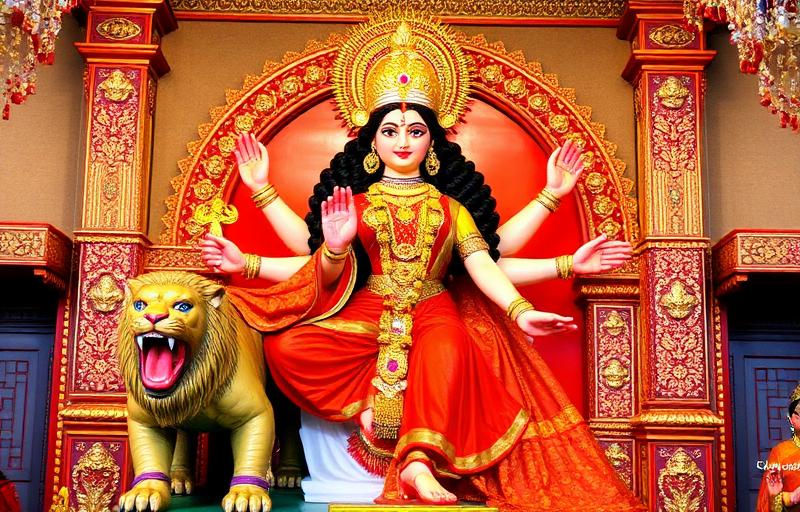
For families in this belt, Jyotiba and Ambabai of Kolhapur are usually visited on the same trip, and the two are spoken of as deities who work together.
The Katha: A Deity Called to Help the Devi
The katha of Jyotiba is told in the region alongside the katha of Mahalakshmi of Kolhapur, and the two only make sense together.
The region, according to local tradition, was under the control of asuras, chief among them Kolhasur and Ratnasur, from whom Kolhapur and Ratnagiri hill take their names. Mahalakshmi, the Devi of Kolhapur, undertook the battle against them.
At this point Jyotiba appears. Born through the tapas of the sage Jamadagni and his wife, and carrying the combined power of the trimurti, he came to the hill and joined the Devi's campaign. Ratnasur was defeated on the hill that now bears the name Ratnagiri, and Jyotiba remained there afterwards as its presiding deity.
The relationship established in that katha still governs practice:
- Devotees traditionally consider a Kolhapur yatra incomplete without a Jyotiba darshan
- The Devi is approached for prosperity and protection, Jyotiba for strength and for the resolution of difficult matters
- Several communities keep both as family deities, with the Devi as kul devi and Jyotiba as kul daivat
This pairing is common in Maharashtra, where a Devi shrine and a guardian deity's shrine are often understood as two halves of one devotional map.
The Gulal Tradition
Nothing identifies Jyotiba's worship more than gulal, the pink powder offered in enormous quantities.
- Devotees buy gulal along with khobra, dried coconut, at the base of the hill and throw it upward as they climb and again at the temple
- The offering is made with the shout of Chang Bhala, and the two go together
- During the Chaitra yatra the entire hilltop, the temple walls, the trees and every devotee are covered in pink
- Families returning home carry gulal as prasad and apply it at the doorway and on the household deity
Why gulal, when most Shiva shrines use bhasma or bel patra? The local explanation ties it to victory. Gulal thrown into the air is a celebration of the asura's defeat and of the deity's arrival, closer in spirit to a battle cry than to a quiet offering. The practice also fits the season, since the main yatra falls at Chaitra Purnima, close to the end of Holi's colour season in the Deccan.
One practical note for visitors: gulal gets everywhere. Wear clothes you do not mind staining, protect cameras and phones, and consider covering your eyes and nose when the crowd is thick.
The Chaitra Purnima Yatra and the Sasan Kathis
The main yatra at Wadi Ratnagiri falls on Chaitra Purnima, and it is one of the largest gatherings in western Maharashtra.
Its most striking feature is the sasan kathi, an enormously tall decorated pole, often many metres high, carried by devotees from villages that hold hereditary rights to bring them. Each kathi belongs to a particular village, is topped with cloth and ornaments, and is carried and balanced by teams of men through the crowd and up the hill.
What the day looks like:
- Village processions with kathis, drums, tashe and lezim troupes converge on the hill through the night and morning
- Gulal is thrown continuously, and by afternoon the entire hilltop is pink
- The palanquin of the deity is taken in procession, and the kathis are dipped in salute
- Families complete vows, distribute prasad and cook together in the open
A second yatra is held in Vaishakh, and Sundays through the year, especially in Shravan, draw steady crowds. For devotees who prefer a quiet darshan, any weekday morning outside the yatra season is best, when the temple is calm and the view across the Panhala range is clear.
The Temple and Daily Worship
The temple complex on Wadi Ratnagiri contains several shrines, built and expanded over centuries with the patronage of local rulers.
- The main temple of Kedarling, where the deity is worshipped in murti form
- Kedareshwar and Ramling shrines within the same complex
- A Chopdai temple nearby, dedicated to a Devi associated with Jyotiba's story
- Yamai Devi at the adjacent hill, visited on the same trip by many families
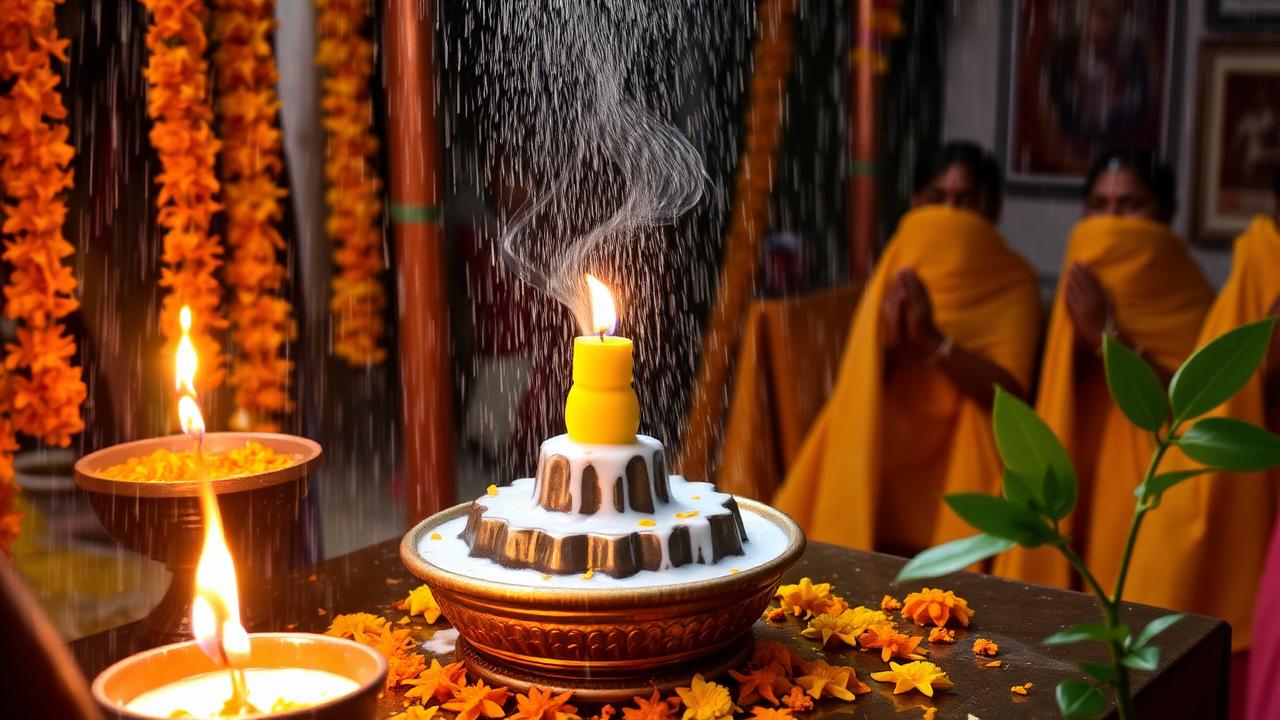
Daily worship includes abhishek, alankar with gulal, and aarti performed morning and evening. Devotees offer gulal, khobra, coconut, garlands, a saffron flag and lamps. Many families perform their child's first jawal or hair offering here, and weddings often begin with a Jyotiba darshan for families who keep him as kul daivat.
The deity is addressed in Marathi devotional songs and in the traditional gondhal performance, in which the deity's katha is sung through the night with the tuntune and sambal. Families who keep Jyotiba as kul daivat commonly arrange a gondhal after a wedding, which is one of the clearest ways the tradition is still transmitted.
Planning a Visit
Wadi Ratnagiri is an easy trip from Kolhapur and is usually combined with the Mahalakshmi temple.
- Distance - about eighteen kilometres from Kolhapur, roughly forty minutes by road, with the last stretch climbing the hill
- Suggested order - Mahalakshmi temple in Kolhapur first, then Jyotiba, which is the sequence most local families follow
- Best time - October to March for weather. Chaitra Purnima for the full yatra experience, Sundays for a busy but manageable darshan, weekday mornings for quiet.
- What to carry - gulal and khobra bought at the base, a cloth for the head, water, and clothes you do not mind colouring
- Nearby - Panhala fort, Jyotiba's neighbouring Yamai shrine, and the Kolhapur Rankala area
One courtesy worth observing: during the yatra, the sasan kathis have right of way, and their teams need space to balance poles that are several storeys tall. Step aside when a kathi approaches, keep children close, and do not attempt to touch or photograph from directly beneath one.
Reader Questions Answered
Who is Jyotiba?+
Jyotiba, also called Kedarling, is the presiding deity of Wadi Ratnagiri hill near Kolhapur in Maharashtra. He is worshipped as a form of Shiva who, in local tradition, carried the combined power of the trimurti and came to assist the Devi of Kolhapur against the asuras.
Why is gulal offered to Jyotiba?+
Gulal is offered as a celebration of victory over the asuras and of the deity's arrival on the hill. Devotees throw it in handfuls with the cry of Chang Bhala, and during the yatra the entire hilltop turns pink.
What does Chang Bhala mean?+
It is the traditional Marathi cry raised at Jyotiba's shrine, meaning may good prevail or may everything be well. It is said continuously during the climb and while offering gulal.
When is the main Jyotiba yatra?+
The main yatra falls on Chaitra Purnima, when villages bring their tall sasan kathis in procession. A second yatra is held in Vaishakh, and Sundays through the year, especially in Shravan, draw large crowds.
What is a sasan kathi?+
It is a very tall decorated pole carried in procession by devotees from villages holding hereditary rights to bring one. Teams of men balance the kathis through the crowd and up the hill during the Chaitra yatra.
Should Jyotiba be visited along with the Kolhapur Mahalakshmi temple?+
Yes, that is the local custom. Devotees traditionally consider a Kolhapur yatra incomplete without Jyotiba darshan, and most families visit the Mahalakshmi temple first and then go up to Wadi Ratnagiri.
About the author
Pandit Ravindra Sharma · Vedic Rituals & Bhakti, 22+ years
Pandit Ravindra is the Vandnaa editorial team's resident specialist on aarti, chalisa, and daily devotion. He has performed home and temple pujas across Varanasi and Delhi for over two decades and contributes the bhakti-focused articles on this site.
Meet the Vandnaa editorial team →