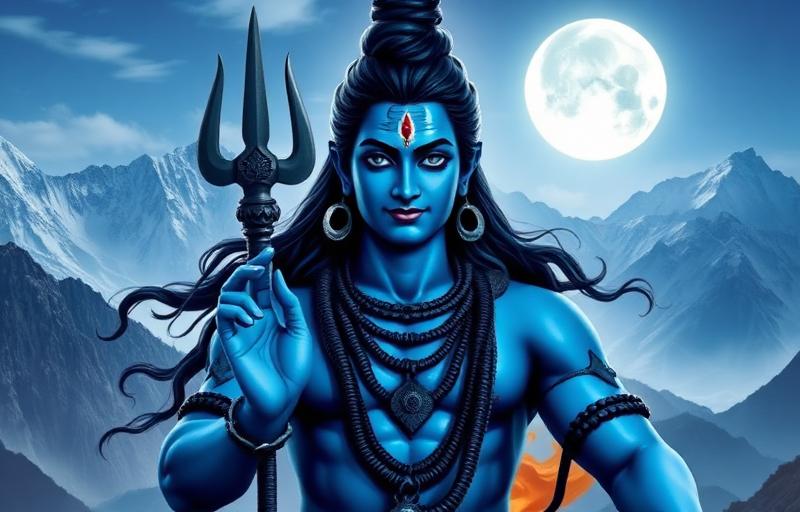
Mount Kailash - The Abode of Shiva
Rising in solitary majesty on the Tibetan plateau, Mount Kailash is revered in Hindu tradition as the eternal abode of Shiva and Parvati, the still centre around which the universe turns. The Puranas identify it with Mount Meru, the cosmic axis, and four of Asia's great rivers - the Indus, the Sutlej, the Brahmaputra and the Karnali (a source stream of the Ganga) - rise within its region, as if the mountain itself feeds the world. Kailash is sacred not to Hindus alone: Buddhists revere it as the seat of Demchok, Jains as Ashtapada, where their first Tirthankara Rishabhanatha attained liberation, and the Bon tradition of Tibet as its soul-mountain. Four faiths, one summit, zero conquest: that is the singular dignity of Kailash. For a shiv-bhakt, simply seeing its snow-draped dome is considered the darshan of a lifetime.
Why Kailash Remains Unclimbed
Though far lower than Everest, Kailash has never been officially summited, and climbing it is not permitted. The reason is reverence, not difficulty alone. To the traditions that hold it sacred, setting foot on the summit would be like walking on a deity's head. Mountaineering history records that permissions contemplated in the past were withdrawn after worldwide protests, and the celebrated climber Reinhold Messner, offered the chance, is famously said to have declined, suggesting the mountain be left to the spirit. Tibetan lore holds that only the yogi Milarepa ever reached the top, riding a ray of the dawn sun, and that no ordinary mortal should follow. This restraint is itself a teaching at the heart of the yatra: Kailash is not a peak to be conquered but a presence to be circled, bowed to, and carried home in the heart.
Mansarovar - The Lake Born of Brahma's Mind
South of Kailash spreads Mansarovar, one of the highest freshwater lakes in the world. Its name tells its origin story: manas (mind) and sarovar (lake) - the lake first conceived in the mind of Brahma and then manifested on earth. The scriptures say the waters of Mansarovar cleanse the sins of a hundred lifetimes; pilgrims take a ritual snan (where conditions and current rules allow), perform achaman (sipping the sacred water), and carry the jal home for family and temple use. Tradition also holds that the devas descend to bathe here in the hours before dawn. In striking contrast, the neighbouring lake Rakshastal, linked to Ravana's tapasya, lies saline and stormy, while Mansarovar stays sweet and serene: devotees read in this pairing the eternal choice between turbulence and stillness. Many yatris say the silence at Mansarovar's shore is the deepest they have ever known.
The Parikrama - 52 Kilometres Around the Sacred Mountain
The heart of the yatra is the parikrama (Tibetan: kora) - a circumambulation of about 52 km around Kailash, traditionally completed in three days. It typically begins near Yam Dwar, the gateway where pilgrims symbolically leave their old selves behind, with an overnight halt at Dirapuk, from where the sheer north face of Kailash fills the sky. The second day is the test: the climb over Dolma La pass at roughly 5,600 metres, past Gauri Kund, the emerald pond associated with Parvati, then a long descent to Zuthulpuk. The third day completes the circle. Tradition holds that one parikrama burns the sins of a lifetime, and 108 bring liberation. An inner kora, closer to the mountain's south face, is by custom attempted only after thirteen outer circuits. Buddhists and Hindus walk it clockwise; Bon pilgrims walk counter-clockwise; the mountain receives them all.
Routes to Kailash - What to Know Before Planning
Kailash and Mansarovar lie in the Tibet Autonomous Region of China, so every route involves an international border. Historically, the official Indian yatra has operated through the Lipulekh pass (Uttarakhand) and the Nathu La pass (Sikkim), organised by the Ministry of External Affairs with state corporations such as KMVN, while private operators have run routes via Kathmandu, Nepal, crossing into Tibet and driving to the Kailash region. Access, permits, quotas and route availability depend entirely on the arrangements prevailing between governments at any given time, and these have changed repeatedly in recent years. So treat any itinerary you read - including this one - as orientation, not assurance, and verify the current position through official sources such as the Ministry of External Affairs and authorised operators before committing money or leave. Whichever route operates, expect multiple days of high-altitude road travel and basic accommodation.
The Inner Yatra - Outer Circle, Inner Stillness
The sages teach that every outer tirtha mirrors an inner one. The parikrama of Kailash is walked around a mountain, but it is equally walked around the ego: each step at altitude strips away comfort, vanity and hurry until only breath, mantra and the white summit remain. Yam Dwar at the start represents dying to the old self; Dolma La, the pass of Tara the compassionate, represents the moment of surrender at the hardest height; the descent past Gauri Kund represents return - the same person outwardly, renewed within. This is why tradition says that those unable to travel may perform a manas yatra, a journey of contemplation, visualising Kailash and Mansarovar in meditation with full faith. The outer kora without inner attention is trekking; the inner attention, even at home, is already pilgrimage. The fortunate yatri brings both together.
Preparing for the Yatra - Body, Mind and Who Should Go
The Kailash region lies mostly above 4,500 metres, so preparation is a duty, not an option. Physically: begin months ahead with daily brisk walking, stair climbs and breathing practice (pranayama); official yatras have historically required medical fitness tests, and anyone with serious heart, lung or blood-pressure conditions must consult doctors honestly before considering the journey. Acclimatisation days en route are not delays; they are protection. Spiritually: establish a steady practice before departure - japa of Om Namah Shivaya, lighter food, reduced screen and chatter - so the mind arrives as prepared as the body. Pack for harsh cold even in summer, and travel light. Who should consider it? Reasonably fit devotees, usually between young adulthood and their sixties (subject to current age rules - check official sources), who can accept hardship as prasad. For all others, Mansarovar jal, a photograph on the home altar and the manas yatra carry the same Lord home.
Reader Questions Answered
Why is Mount Kailash never climbed?+
Climbing Kailash is not permitted, out of reverence for its sanctity to Hindus, Buddhists, Jains and the Bon tradition. Past proposals were withdrawn after worldwide protests, and mountaineer Reinhold Messner famously declined the chance. Tradition says only the yogi Milarepa ever reached the summit. The mountain is circled, never conquered.
How long is the Kailash parikrama and how many days does it take?+
The outer parikrama (kora) is about 52 km and is usually completed in three days, with halts at Dirapuk and Zuthulpuk. The hardest stretch is the Dolma La pass at roughly 5,600 metres on day two. Tradition holds that one parikrama cleanses the sins of a lifetime.
What is the significance of Mansarovar lake?+
Mansarovar is said to have been first conceived in the mind of Brahma (manas plus sarovar) and then manifested on earth. Its waters are believed to cleanse the sins of many lifetimes, devas are said to bathe there before dawn, and pilgrims perform snan or achaman and carry the sacred jal home.
Which routes lead to Kailash Mansarovar?+
Historically, official Indian yatras have run via the Lipulekh pass (Uttarakhand) and Nathu La pass (Sikkim), while private operators travel via Kathmandu into Tibet. Access depends entirely on current arrangements between governments, so verify the present position with the Ministry of External Affairs and authorised operators before planning.
How should I prepare physically for the Kailash yatra?+
Start months in advance with daily brisk walking, stair climbing and pranayama. The region lies mostly above 4,500 metres, so acclimatisation is essential and medical fitness tests have historically been mandatory on official yatras. Anyone with serious heart, lung or blood-pressure conditions must consult a doctor honestly before considering the journey.
Can those who cannot travel still receive the punya of Kailash?+
Yes. Tradition honours the manas yatra: a journey of contemplation in which the devotee visualises Kailash and Mansarovar in meditation with full faith, accompanied by japa of Om Namah Shivaya. Keeping Mansarovar jal or an image of Kailash on the home altar, and serving returning yatris, are also cherished forms of participation.
About the author
Pandit Ravindra Sharma · Vedic Rituals & Bhakti, 22+ years
Pandit Ravindra is the Vandnaa editorial team's resident specialist on aarti, chalisa, and daily devotion. He has performed home and temple pujas across Varanasi and Delhi for over two decades and contributes the bhakti-focused articles on this site.
Meet the Vandnaa editorial team →