Two Lingas on One Pedestal
Kaleshwaram stands in Jayashankar Bhupalpally district, Telangana, at the confluence where the Pranahita joins the Godavari, near the Maharashtra border.
What is there:
- The Kaleshwara Mukteswara Swamy temple
- Two lingas on a single pedestal, side by side, which is the temple's distinguishing feature
- The Triveni Sangamam, the confluence of the Godavari and the Pranahita, with a third river held to join invisibly
- Ghats for bathing
- A large modern lift irrigation project sharing the name, which is a separate thing and is addressed below
The two lingas:
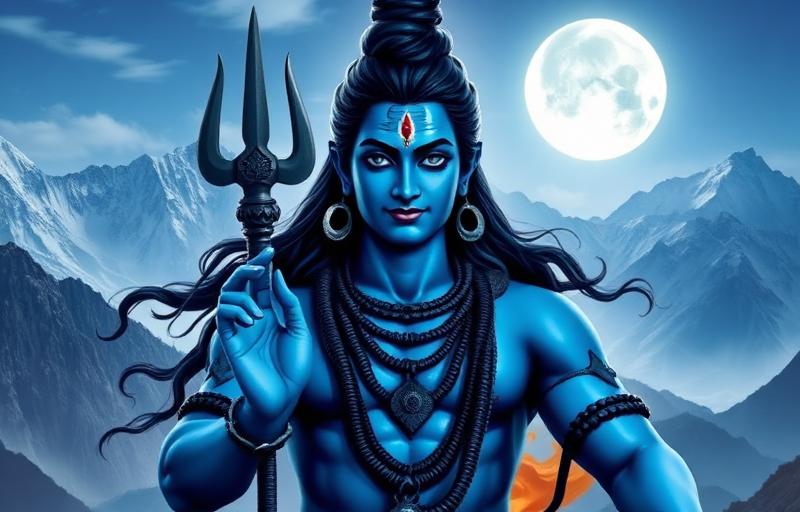
- Kaleshwara, associated with Yama, the lord of death, who is called Kala
- Mukteswara, Shiva as the giver of mukti, liberation
- They stand together on one pedestal, receiving worship together
Why that combination is remarkable. Putting the deity of death and the deity of liberation on the same base, in one sanctum, is a compressed theological statement and it repays unpacking.
- Yama takes you out of this life
- Shiva as Mukteswara takes you out of the cycle entirely
- These are not the same thing and the tradition is careful about the difference
- Death is a transition within samsara; liberation is release from it
- Placing them together says that the two are encountered at the same point, and that what you meet at the end depends on what you have done
The hole in the Mukteswara linga. A further feature is described at the temple.
The Mukteswara linga is said to have an opening or channel, and water poured into it is said to disappear without the cavity ever filling, no matter how much is offered. Devotees are shown this during abhishekam.
The likely mechanism is the same as at Mangalagiri, a cavity or fissure in the stone or the platform leading elsewhere. The temple's account and the physical account do not conflict, as discussed in the entries on Yaganti and Mangalagiri.
Why the temple matters beyond itself. Kaleshwaram is one of three temples whose relative positions gave the region its name, and that is the subject of the next section.
The Trilinga Kshetras
Telangana takes its name, in the most widely accepted derivation, from Trilinga, and the three lingas are three temples.
The three Trilinga Kshetras:
- Kaleshwaram, in the north, at the Godavari and Pranahita confluence
- Srisailam, in the south, in the Nallamala hills, a Jyotirlinga and a Shakti Peetha
- Draksharamam, in the east, in the Godavari delta, one of the Pancharama Kshetras
The derivation:
- The land enclosed by these three shrines was known as Trilinga desha, the country of the three lingas
- Trilinga becomes Telinga, which becomes Telangana
- The language of the region, Telugu, is derived by many from the same root
- Alternative derivations exist for both words, and philologists disagree, but this is the reading that the tradition holds and that is generally offered
Why this is worth knowing. Regions are usually named for rivers, rulers, directions or peoples. It is unusual for a region to be named for the shape made by three temples.
What it tells you:
- The shrines were the fixed points by which people located themselves, more than any political boundary
- The three are very far apart, so the region was conceived at a large scale from early on
- The triangle is a deliberate figure, not a list. The three define an area, not a route
Compare other sacred geographies:
- The Char Dham across India, which defines the whole subcontinent by its four corners
- The Jyotirlingas, twelve, spread from Kedarnath to Rameswaram
- The Shakti Peethas, which map the places where Sati's body fell and which extend into Pakistan, Bangladesh, Nepal and Sri Lanka
- The Pancharama Kshetras of coastal Andhra, five Shiva temples said to be pieces of one linga
What these networks did historically:
- They gave a very large area a single religious identity before any state covered it
- They created routes, which carried trade, news, language and craft as well as pilgrims
- They made distance meaningful, since the merit of a pilgrimage is partly the difficulty of reaching it
- They survived the rise and fall of every dynasty that ruled the ground beneath them
Kaleshwaram's specific position. It is the northern point of the triangle, at the meeting of two rivers, on what was for a long time a frontier between the Deccan powers and the country to the north.
That is a good place for a shrine marking the boundary of a region, and it is very likely why it is there.
Telangana statehood. The name matters currently as well as historically. Telangana became a separate state in 2014 after a long movement, and the Trilinga derivation is cited in that context as evidence of a distinct regional identity with deep roots.
That is a political use of a religious geography, which is a thing that happens everywhere and is worth recognising when it does.
The Confluence
The temple sits at a sangam, a river confluence, and this is why the site was chosen.
The rivers:
- The Godavari, coming from the west, India's second longest river
- The Pranahita, coming from the north, which is itself formed from the Wardha, Wainganga and Penganga and carries the drainage of a very large part of central India
- A third river, the Saraswati, held to join invisibly, which makes it a Triveni Sangamam
The Pranahita. It deserves a note because it is little known outside the region.
By volume it is one of the largest tributaries of the Godavari, draining much of Vidarbha and eastern Maharashtra. Where it meets the Godavari, the combined flow is very substantial, and the confluence in the monsoon is a serious body of water.
The invisible third river. The claim of a hidden Saraswati at a two river confluence is made at several sites in India, most famously at Prayagraj, where the Ganga and Yamuna meet and the Saraswati is held to join underground.
Why confluences are sacred. The pattern is universal in India and the reasons are worth setting out.
- A confluence is a meeting, and meetings of any kind are treated as charged in this tradition
- Two things become one, which is a physical model of the idea the philosophy is most concerned with
- The water changes at a confluence, visibly, with different colours and different currents mixing
- Practically, confluences are where people crossed, where settlements grew and where routes met
- A shrine at a confluence catches everyone who passes
Other major sangams:
- Prayagraj, Ganga and Yamuna, site of the Kumbh Mela
- Devprayag, where the Bhagirathi and Alaknanda become the Ganga, and the four other prayags above it
- Bhavani Sangameswarar in Tamil Nadu, at the Kaveri and Bhavani
- Narsobawadi, in Maharashtra, at the Krishna and Panchaganga
- Kudalasangama, in Karnataka, at the Krishna and Malaprabha, where Basavanna's samadhi is
Bathing at Kaleshwaram. Devotees bathe at the sangam before darshan.
Safety, which matters here. This is a large river confluence with real currents and it is not a bathing pool.
- Bathe only at the ghats, in shallow water
- Do not enter during or after heavy rain, when flow increases very quickly
- Currents at a confluence are complex and unpredictable, since two flows are interacting
- Never swim out. People drown at Indian river confluences every year, and almost all of them thought the water was calm
- Keep children within arm's reach and out of the water entirely if the flow is up
Yama and the Deity of Death
The presence of Yama in the sanctum, as Kaleshwara, is unusual enough to be worth explaining, since Yama is not a deity most people worship.
Who Yama is:
- The deity of death and of dharma, and both titles are used
- Called Dharmaraja, the king of dharma, and Yamaraja
- In the Rigveda he is the first mortal to die, and therefore the one who found the path and rules over those who follow it
- He is not evil, and this is a point the tradition is clear on. He does his job
- He keeps the record of actions, assisted by Chitragupta
Why he is not usually worshipped:
- People do not generally wish to invite his attention
- There are very few Yama temples in India
- He is invoked in specific contexts rather than propitiated regularly
Where he does appear:
- At Kaleshwaram, as Kaleshwara
- At Yamunotri and in connection with the Yamuna, who is his sister
- On Bhai Dooj, when the story of Yama visiting Yami is the reason for the festival
- On Dhanteras, when a lamp is lit outside the house for Yama, the Yama Deepam
- In Naraka Chaturdashi observances
- At the Dharmaraja shrines in Tamil Nadu and Kerala, where the Pandava Yudhishthira, Yama's son, is worshipped
The great Yama stories:
- Nachiketa, in the Katha Upanishad, who is sent to Yama by his father in anger, waits three days at his door, is granted three boons, and uses the third to ask what happens after death. Yama tries to deflect him with every worldly offer and eventually teaches him. It is one of the central texts of Indian philosophy and the whole of it is a conversation with death
- Savitri, who follows Yama when he takes Satyavan, argues with him along the road, and wins her husband back by the quality of her reasoning rather than by force or grief
- Markandeya, who clung to a Shiva linga when Yama came for him at sixteen as fated, and whom Shiva saved by striking Yama down, which is why Shiva is called Mrityunjaya and Kalantaka
Why Markandeya matters at a temple like this. The Markandeya story is precisely about the relationship between Yama and Shiva, and it explains why the two can share a pedestal.
- Yama comes for Markandeya because it is lawful that he should
- Shiva intervenes because the boy is holding on to him
- Shiva does not deny the law. He overrides it for a devotee
- The teaching is that death is real and operates by rule, and that devotion is the one thing that is not subject to the rule
At Kaleshwaram the two stand together. Kala, who takes you, and Mukteswara, who releases you. The devotee bathing at the sangam below and coming up to the sanctum is being shown both at once, which is a considerably more honest arrangement than most temples offer.
Mrityunjaya practice. The Mahamrityunjaya mantra is chanted for protection from untimely death and for recovery from serious illness, and its association is exactly this. It is recited at Shiva temples across India and is one of the most widely used mantras for a person in danger.
The Temple and the Project That Took Its Name
Anyone searching for Kaleshwaram now will find mostly engineering, and the distinction should be made clearly.
Two different things share the name:
- The Kaleshwara Mukteswara Swamy temple, the ancient shrine at the confluence, which is the subject of this guide
- The Kaleswaram Lift Irrigation Project, a very large modern water infrastructure scheme, named after the temple and beginning near it
What the project is:
- A lift irrigation scheme, which pumps water uphill rather than relying on gravity
- Designed to draw Godavari water from near the confluence and lift it several hundred metres to irrigate large parts of Telangana
- Involving barrages, pump houses, reservoirs, tunnels and canals on a very large scale
- One of the largest such projects in the world by pumping capacity
- Commissioned in stages from 2019
Why it exists. Telangana is largely upland plateau. The Godavari runs along the lower northern edge of it. Historically that meant the state's biggest river was below the land that needed it, which is a hard problem and the reason lift irrigation was proposed at all.
The debate around it. This is a genuinely contested subject in Telangana and it would be dishonest to present it as settled.
- Supporters point to irrigation delivered to previously dry districts and to drinking water supply
- Critics point to very large cost, to the enormous electricity requirement of continuous pumping, and to questions about the engineering
- Structural problems at the Medigadda barrage near Kaleshwaram, reported from 2023, became a major political and technical controversy
- Inquiries and expert examinations have followed and the matter remains live
Why mention it in a temple guide. Two reasons.
First, practically: visitors going to Kaleshwaram will encounter the project. There are barrages and construction in the area, roads have changed, and search results are dominated by it. Knowing which is which prevents confusion.
Second, because the relationship between the two is worth noticing. A temple has stood at that confluence for a very long time because the water there mattered. A twenty first century state built the largest pumping scheme it could imagine at the same spot for exactly the same reason.
The temple treats the confluence as sacred and asks people to bathe at it. The project treats it as a source and lifts it uphill. Both are responses to the same fact, which is that in this landscape water is the thing that decides everything.
For the visitor. The temple is still there, still in worship, and the sangam is still the sangam. Check road conditions before travelling, since access in the area has changed with the construction.
Visiting Kaleshwaram
Getting there
- Kaleshwaram, Jayashankar Bhupalpally district, Telangana, at the Godavari and Pranahita confluence
- About 250 km from Hyderabad and roughly 130 km from Warangal
- Near Mahadevpur, close to the Maharashtra and Chhattisgarh borders
- Warangal and Ramagundam are the nearest railheads
- Hyderabad for air
- A vehicle is the practical way. Public transport exists but is slow
Timings
- The temple opens early and runs through the day with a break. Check locally
When to go
- Maha Shivaratri, the principal festival, with very large crowds
- Karthika Masam, November or December
- Godavari Pushkaram, when it falls, for the confluence
- November to February for weather. This region is very hot from March to June
- Avoid the peak monsoon if you want to bathe, since flow at the confluence is high and dangerous
At the sangam
- Bathe only at the ghats and in shallow water
- Do not enter after heavy rain
- Keep children out of the water when the flow is up
- Bring a change of clothes
Practicalities
- Traditional dress is appropriate
- Facilities in the area are limited. Carry water and food for the journey
- Accommodation is basic. Most visitors come as a day trip from Warangal or stay at Mahadevpur
- Check road conditions before travelling, since the irrigation project construction has affected access
- Mobile coverage in parts of this district is patchy
Combining the visit
- Warangal, with the fort, the Thousand Pillar Temple and the Kakatiya Kala Thoranam
- Ramappa temple at Palampet, the UNESCO site, about 90 km
- Laknavaram lake, with its suspension bridges, in the same district
- Medaram, site of the Sammakka Saralamma Jatara, one of the largest tribal gatherings in the world, held every two years
- Bhadrachalam, the Rama temple, to the south east
- Kawal and Eturnagaram wildlife sanctuaries
A note on Medaram. If your visit falls in the Jatara year, generally in February of even years, the Sammakka Saralamma Jatara at Medaram draws numbers in the millions over four days and is one of the most extraordinary religious gatherings in India, held for two Koya tribal goddesses. It is not a temple festival in the usual sense and it is worth knowing about.
A suggested route. Warangal as a base, then Ramappa, Laknavaram, Kaleshwaram and, in season, Medaram, over three days.
A closing thought. Kaleshwaram is a long way from anywhere, at the edge of the state, at the meeting of two rivers, with two lingas on one pedestal.
One of them is death and one of them is release, and the people who put them there decided that the honest thing was to show you both, on the same stone, and let you decide what to make of it.
What People Ask Most
Where is Kaleshwaram?+
In Jayashankar Bhupalpally district, Telangana, at the confluence where the Pranahita joins the Godavari near Mahadevpur, close to the Maharashtra and Chhattisgarh borders. It is about 250 km from Hyderabad and roughly 130 km from Warangal, with Warangal and Ramagundam the nearest railheads.
Why are there two lingas on one pedestal?+
Kaleshwara, associated with Yama the lord of death who is called Kala, and Mukteswara, Shiva as the giver of liberation. Death is a transition within samsara while liberation is release from it, and placing them together says the two are encountered at the same point, with what you meet at the end depending on what you have done.
What are the Trilinga Kshetras?+
Three Shiva temples whose triangle defined the region: Kaleshwaram in the north, Srisailam in the south and Draksharamam in the east. The land enclosed was known as Trilinga desha, the country of the three lingas, and Trilinga becomes Telinga and then Telangana. Many derive the name Telugu from the same root.
Which rivers meet at Kaleshwaram?+
The Godavari from the west and the Pranahita from the north, with a third river, the Saraswati, held to join invisibly, making it a Triveni Sangamam. The Pranahita is itself formed from the Wardha, Wainganga and Penganga and carries the drainage of much of Vidarbha and eastern Maharashtra.
Is Yama worshipped anywhere else?+
Rarely. There are very few Yama temples in India, since people do not generally wish to invite his attention. He appears at Yamunotri in connection with the Yamuna who is his sister, on Bhai Dooj, on Dhanteras when the Yama Deepam is lit outside the house, in Naraka Chaturdashi observances, and at Dharmaraja shrines in Tamil Nadu and Kerala.
Is the Kaleshwaram project the same as the temple?+
No. The Kaleswaram Lift Irrigation Project is a very large modern water scheme named after the temple and beginning near it, which pumps Godavari water several hundred metres uphill to irrigate parts of Telangana. It is separate from the ancient shrine, is politically contested, and has affected roads and access in the area, so check conditions before travelling.
About the author
Pandit Ravindra Sharma · Vedic Rituals & Bhakti, 22+ years
Pandit Ravindra is the Vandnaa editorial team's resident specialist on aarti, chalisa, and daily devotion. He has performed home and temple pujas across Varanasi and Delhi for over two decades and contributes the bhakti-focused articles on this site.
Meet the Vandnaa editorial team →