Seven Streams
Edupayala is in Medak district, Telangana, at Nagasanpally, on the Manjeera river, and the name describes exactly what is there.
Edu payalu means seven streams in Telugu.
What happens:
- The Manjeera approaches the site as a single river
- It divides into seven channels around the temple
- The channels run past on either side
- They rejoin downstream and the river continues as one
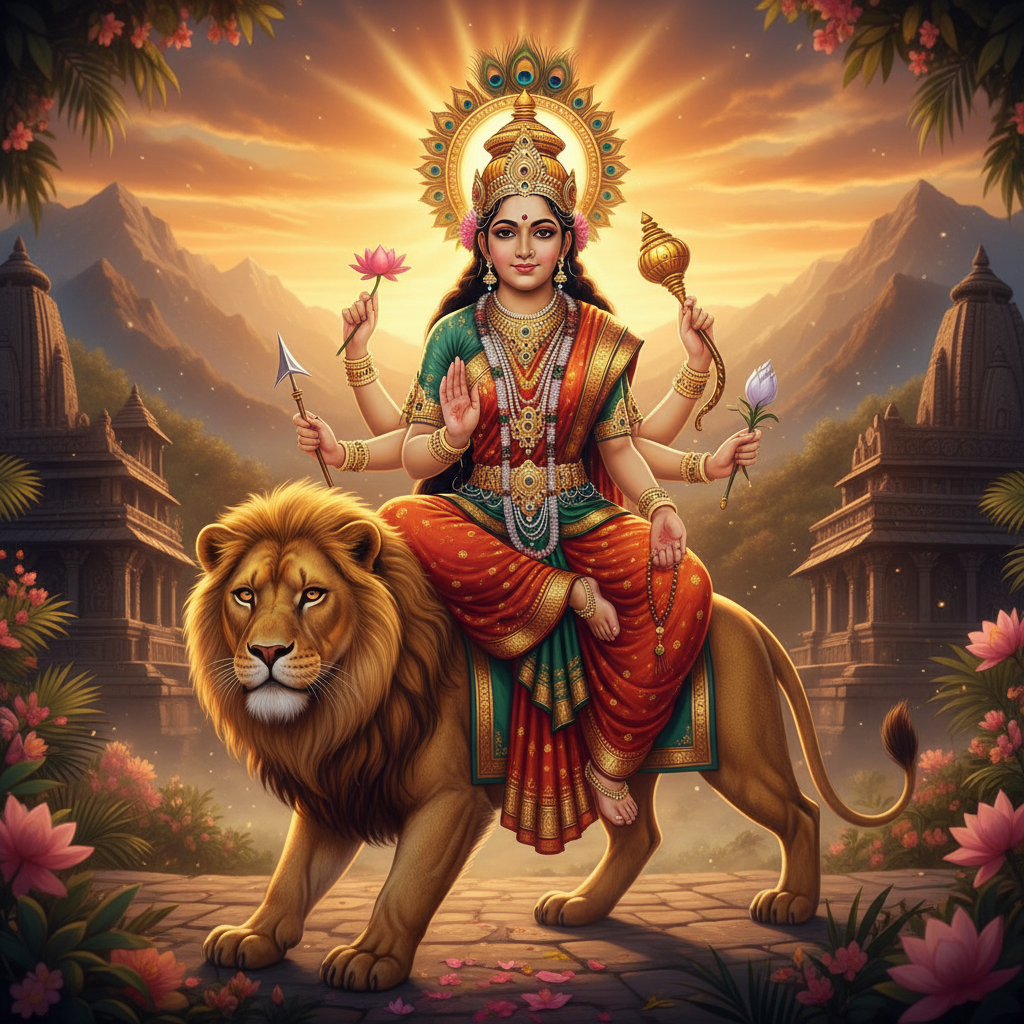
The temple, dedicated to Vana Durga, the forest Durga, sits within this division.
What is there:
- The Vana Durga shrine, modest in scale
- The river channels around it
- Bathing places used by devotees
- Open country, with the Singur reservoir upstream
The physical explanation. The river reaches a stretch of resistant rock, splits around obstructions, runs through multiple channels across the exposure and recombines below.
Braided and anastomosing channels are ordinary river behaviour and occur wherever a river crosses varied resistance at low gradient. Nothing here is unexplained.
Why it is nonetheless striking. It is one thing to know that rivers braid and another to stand at a place where one arrives as a single body of water, divides into seven visible channels around a small temple, and puts itself back together on the other side.
The tradition looked at that and drew the obvious conclusion, which is that the river was making way for something.
Scale of the jatara. On Maha Shivaratri, when the temple's principal festival is held, the site receives crowds in the hundreds of thousands and by some counts over a million people across the period.
That is very large for a shrine most people outside Telangana have never heard of, and it is a good illustration of how much religious activity in India takes place entirely outside the circuit of famous temples.
The Katha of the Parting River
The story attached to the site explains the seven streams.
As it is told:
- The goddess fought and killed Mahishasura at this place, or in some versions came here after the killing
- The river parted to make way for her, or parted in reverence, or parted so that she could rest between its arms
- It divided into seven and has run that way since
- She remained here as Vana Durga, the Durga of the forest
Vana Durga. The epithet is worth attention.
- Vana means forest
- The forest Durga is the goddess outside the settlement, not in it
- She is not a household or temple deity brought to a village. She is the one who was already in the wild place
- The form is associated with protection of those travelling and of those living at the margin
Rivers parting for deities. The motif appears repeatedly in Indian narrative and is one of the most recognisable.
- The Yamuna parts for Vasudeva carrying the infant Krishna across on the night of his birth, which is the best known instance
- Rivers part or become fordable in numerous local kathas
- Waters recede at various tirthas to reveal a linga or an image
Why the motif works. A river is the standard obstacle in Indian geography. It divides villages, delays journeys, floods in monsoon and kills people every year.
A story in which the river moves aside is a story about the removal of the most familiar obstacle there is, which is why it recurs and why it lands.
And here it is visibly true. That is what makes Edupayala different from most such sites.
The river has, in a completely literal and observable sense, parted around the temple. Whatever you believe about why, the fact is there in front of you, seven channels wide.
Most sacred stories require you to take somebody's word for it. This one you can walk across.
The Shivaratri Jatara
The jatara at Edupayala on Maha Shivaratri is one of the largest gatherings in Telangana.
What a jatara is. The Telugu word for a large periodic gathering at a shrine, and it is worth distinguishing from a temple festival.
- A jatara is a gathering of people at a site, frequently a rural one, frequently associated with a goddess or a local deity
- The organising principle is the gathering as much as the ritual
- There is trade, food, entertainment, meeting of relatives, arrangement of marriages and the settlement of matters that require the community to be in one place
- The religious observance is at the centre but the event is a social institution
At Edupayala:
- Held over several days around Maha Shivaratri, in Magha or Phalguna, February or March
- Devotees bathe in the seven streams
- Offerings are made to the goddess
- Bonam offerings and other Telangana forms are performed
- Very large numbers, in the hundreds of thousands, and over a million across the whole period by some estimates
- The site is rural and the infrastructure is temporary, erected for the occasion
Telangana's great jataras. Edupayala is one of a family, and the family is remarkable.
- Sammakka Saralamma Jatara at Medaram, held every two years in Mulugu district, which draws numbers in the millions over four days and is one of the largest religious gatherings in the world. It honours two Koya tribal goddesses, a mother and daughter, remembered as having resisted a Kakatiya ruler over taxation during a famine
- Nagoba Jatara at Keslapur, of the Mesram clan of the Gond community
- Peddagattu Jatara at Durajpally
- Edupayala, here
Why these matter. The Telangana jataras are among the clearest examples in India of religious gatherings that are not organised around a brahminical temple establishment.
- Many are for tribal or village deities rather than the Puranic pantheon
- Priests are frequently from the community itself rather than from a priestly caste
- Offerings and forms differ from Agamic temple worship
- They are enormous, and the numbers at Medaram exceed those at most famous temples in India
Sammakka Saralamma deserves more than a line. The story is that during a famine the Koya people could not pay tribute, the Kakatiya ruler sent forces, and the Koya resisted under Sammakka and her daughter Saralamma, who were killed.
Sammakka is said to have disappeared into the forest and been found as a vermilion casket at a tree.
The jatara honours them, and the numbers attending are in the millions. That a rebellion against a Hindu ruling dynasty, led by tribal women who lost, produced one of the largest religious gatherings on earth, is a fact worth sitting with.
How to attend a jatara responsibly:
- These are not tourist events and should not be treated as spectacle
- Photograph people only with permission, and never during personal ritual
- Do not enter areas restricted to the community
- Crowds are extremely dense and the sites are rural with limited facilities. Plan accordingly
- Support the local economy by buying food and goods on site
Telangana's Village Goddesses
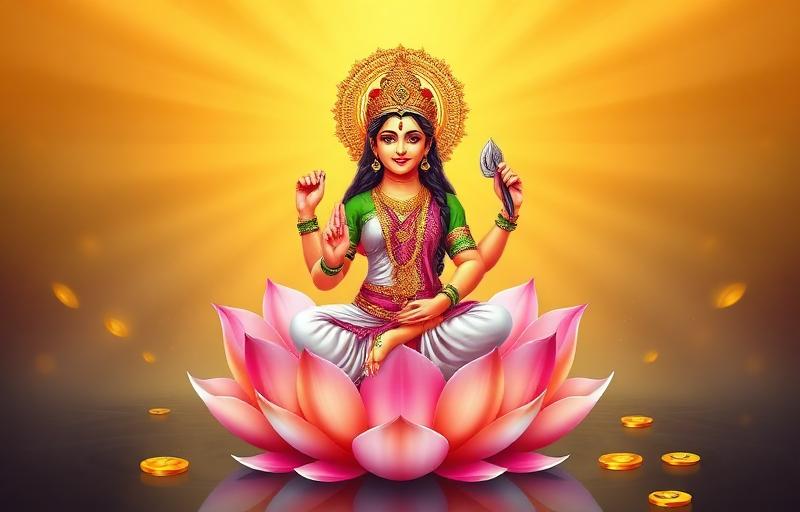
Edupayala's Vana Durga belongs to a layer of worship that is older and more widespread in the Telugu country than the temple traditions above it.
The grama devata:
- The village goddess, present at almost every village in the Telugu country
- Names include Pochamma, Maisamma, Ellamma, Mutyalamma, Peddamma, Balamma, Ankamma and many more
- Frequently a stone rather than an image, sometimes under a specific tree, sometimes an anthill
- Usually at the village boundary or at a tank or crossroads
What distinguishes them from temple deities:
- Local, and each village has its own, who is not the same as the next village's even when the name is shared
- Unmarried in many traditions, or with a complicated marital story, which is theologically distinct from the consort goddesses of the Puranic pantheon
- Served by non brahmin priests from specific communities
- Approached with different offerings, in some places including animal sacrifice, which continues in parts of Telangana
- Concerned with immediate, local matters: disease, rain, cattle, childbirth, the safety of the village
Pochamma specifically. She is associated with smallpox and other pox diseases, as Shitala is in the north and Mariamman in Tamil Nadu.
This is an important pattern and it is worth understanding.
- The goddess is understood to be the disease as well as to cure it
- The eruptions are her presence in the body
- The patient is not treated as ill but as visited, and is cooled, kept clean and given light food
- The practices, cooling, isolation, cleanliness and neem, are broadly consistent with sensible care
- After smallpox eradication in 1980, these goddesses have not disappeared but have shifted their scope to other illnesses and to general protection
Why the older layer survives. It survives because it does something the temple layer does not.
- It is immediate. The goddess is at the edge of your own village, not in another district
- It is specific. She is concerned with your crops and your children, not with cosmic order
- It is accessible. There is no Agamic priesthood, no restricted sanctum, no elaborate protocol
- It belongs to the community, which manages it and pays for it
How the layers interact. Over time, village goddesses are frequently identified with Puranic figures.
- Pochamma becomes a form of Parvati or Durga
- A local goddess acquires a Sanskrit name alongside her own
- A temple is built where a stone stood, and a priest is appointed
- The Puranic identification arrives without the local identity being lost
Vana Durga at Edupayala is that process visible. The name pairs Durga, from the pan Indian tradition, with vana, the forest, which is the local and older element.
She is Durga, and she is also the goddess who was in the wild place by the river before anybody built anything.
Both are true, and Telangana holds a great many shrines where you can watch the two identities sitting comfortably together.
The Manjeera and the Medak Country
The river and the district are both worth knowing about.
The Manjeera:
- A tributary of the Godavari, rising in the Balaghat range in Maharashtra
- Running through Karnataka and Telangana before joining the Godavari near Kandakurthi
- Dammed at Singur and at Nizam Sagar, both major reservoirs
- A principal source of drinking water for Hyderabad
The Manjeera wildlife sanctuary. Downstream, the river holds a sanctuary established principally for the mugger crocodile, and it is a significant bird site as well.
That is worth knowing for two reasons. It is interesting, and it is a reason to be careful about where you enter the water anywhere along this river system.
Medak district:
- Plateau country in northern Telangana
- Agricultural, with the Singur reservoir as its principal water body
- Historically part of the Nizam's dominions
Medak Cathedral. The district town holds one of the largest churches in Asia by seating capacity, built by the Wesleyan Methodist mission and completed in 1924.
- Gothic revival in style, with a very tall tower
- Remarkable stained glass, made in England, depicting scenes including the nativity, the crucifixion and the ascension
- Built during and after a famine, with the construction used as famine relief employment
- Now the cathedral of the Diocese of Medak in the Church of South India
Why mention it in a temple guide. Because it is there, because it is genuinely remarkable, and because a visitor to Edupayala is twenty kilometres from it.
It is also a good illustration of something true about Telangana. The district contains a jatara drawing a million people to a goddess in a river, and one of the largest churches in Asia, and the tombs of the Qutb Shahis are an hour and a half south, and the state emblem is a Kakatiya temple gateway.
Other sites in the district:
- Medak fort, above the town
- Singur dam and reservoir
- Pocharam wildlife sanctuary and lake
- Kondapur museum, with Satavahana period material from the excavated site
- Jharasangam and the Sangameshwara temple
Kondapur is worth an hour. The site was a Satavahana period settlement and the museum holds coins, beads, terracotta and Roman material found there, which is direct evidence of the Deccan's trade with the Roman world in the early centuries CE.
That trade is one of the less well known facts about ancient India. Roman coins, amphorae and glass turn up at sites across the Deccan and the south, and Roman writers complained about the drain of silver to India in exchange for pepper, textiles and gems.
Visiting Edupayala
Getting there
- Edupayala, at Nagasanpally, Medak district, Telangana
- About 20 km from Medak town and roughly 100 km from Hyderabad
- Medak is the nearest town of any size
- Nearest railheads are at Kamareddy and Secunderabad
- Hyderabad for air
- A vehicle is the practical way. Buses run to Medak and local transport onward
Timings
- The temple runs through the day. It is a rural shrine and timings are informal outside the jatara. Check locally
When to go
- The Shivaratri jatara, in February or March, if you want to see the site at its fullest, though it will be extremely crowded
- Ordinary days if you want to see the seven streams quietly, which is the better experience for most visitors
- October to February for weather
- After the monsoon, when flow is good, since the streams are less impressive when the river is low
The water
- Devotees bathe in the streams and this is the principal activity
- Do not enter during or immediately after heavy rain. Flow rises fast and the channels are shallow but quick
- Keep children within reach at all times
- The river is dammed upstream at Singur, so release from the dam can change levels without warning. Ask locally before entering the water
- Bring a change of clothes
Facilities
- The site is rural and facilities are limited outside the jatara
- During the jatara, temporary arrangements are made for very large numbers, but expect basic conditions
- Carry water and food
- Cash. Card facilities are unlikely
Attending the jatara
- Extremely dense crowds. Go with a plan and an agreed meeting point
- Keep valuables secure
- Photograph people only with permission
- Do not treat it as spectacle. It is somebody's annual observance
Combining the visit
- Medak Cathedral, about 20 km, which is genuinely worth seeing
- Medak fort, above the town
- Singur dam and reservoir
- Pocharam wildlife sanctuary
- Kondapur museum, for the Satavahana material
- Hyderabad, about 100 km
- Basara, further north west
- Bhongir and Yadagirigutta, on the other side of Hyderabad
A suggested day. Hyderabad in the morning, Edupayala at midday, Medak Cathedral in the afternoon, Medak fort at sunset, back to Hyderabad.
That is a day containing a goddess in a divided river, one of the largest churches in Asia and a fort on a hill, which is a fair summary of what this state has to offer and how little of it anybody sees.
A closing thought. There is no great architecture at Edupayala, no inscription, no dynasty, no UNESCO listing and no famous name.
There is a river that divides into seven around a small shrine and puts itself back together downstream, and once a year an enormous number of people come to stand in it.
That is enough, and it has been enough for a very long time.
Reader Questions Answered
Where is Edupayala?+
At Nagasanpally in Medak district, Telangana, on the Manjeera river, about 20 km from Medak town and roughly 100 km from Hyderabad. Kamareddy and Secunderabad are the nearest railheads and Hyderabad is the nearest airport. A vehicle is the practical way to get there.
Why is it called Edupayala?+
Edu payalu means seven streams in Telugu. The Manjeera approaches the site as a single river, divides into seven channels around the temple, and rejoins downstream as one river. Physically the river splits around resistant rock and recombines below, which is ordinary river behaviour, but the sight of it is striking.
What is the katha of the seven streams?+
The goddess fought and killed Mahishasura at this place, or came here after the killing, and the river parted to make way for her, or parted in reverence, or parted so she could rest between its arms. It divided into seven and has run that way since, and she remained as Vana Durga, the Durga of the forest.
What is a jatara?+
The Telugu word for a large periodic gathering at a shrine, frequently rural and frequently for a goddess or local deity. The gathering is the organising principle as much as the ritual, with trade, food, meeting of relatives and the settlement of community matters alongside worship. Edupayala's is held around Maha Shivaratri and draws hundreds of thousands.
What is a grama devata?+
The village goddess, present at almost every village in the Telugu country under names like Pochamma, Maisamma, Ellamma and Peddamma. Usually a stone rather than an image, at the village boundary or a tank, served by non brahmin priests from specific communities, and concerned with immediate local matters like disease, rain, cattle and the safety of the village.
Is it safe to bathe in the streams?+
Devotees bathe and it is the principal activity, but take care. Do not enter during or immediately after heavy rain, since flow rises fast and the channels are shallow but quick. The river is dammed upstream at Singur, so release from the dam can change levels without warning, and you should ask locally before entering. Keep children within reach at all times.
About the author
Anjali Mehta · Editor, M.A. Religious Studies
Anjali is the managing editor for Vandnaa and oversees the festival and vrat coverage. She holds an M.A. in Religious Studies and reviews every published article for accuracy, accessibility, and tradition-fidelity.
Meet the Vandnaa editorial team →