The Temple on the Hill
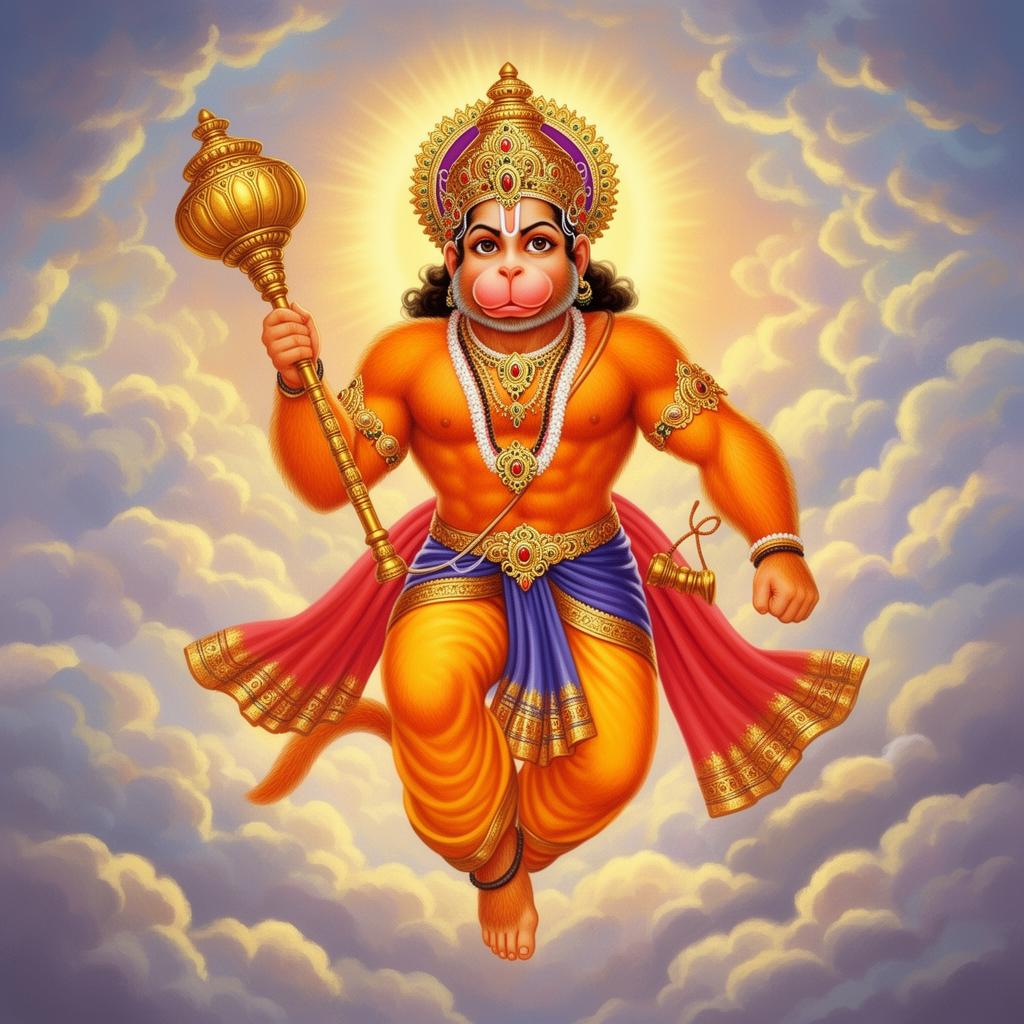
Kondagattu, the Anjaneya Swamy temple, stands on a hill in Jagtial district, Telangana, about 35 km from Karimnagar.
What is there:
- Anjaneya Swamy, Hanuman, as the principal deity
- A hill temple reached by road and steps, in wooded country
- Substantial modern facilities, since the temple handles very large numbers
- Accommodation and canteen provision, because many devotees stay for extended periods
The katha:
- A cowherd named Singam Sanjeeva, in the traditional account, found the image on the hill
- Worship began there
- The temple in its present form is attributed to Krishna Rao Deshmukh, roughly three centuries ago, who is said to have built it after a vision
Why Kondagattu is significant. Two reasons, and they are connected.
- It is the culmination point of the Hanuman Deeksha, a forty one day vow undertaken by very large numbers of men across Telangana and Andhra Pradesh each year
- It has a long standing reputation as a place where people bring family members suffering from mental illness, and some stay for extended periods
The first is a major regional religious practice and is described below. The second raises questions that a guide of this kind has an obligation to address honestly, and it is addressed in its own section.
Scale. On the principal days the temple handles crowds in the hundreds of thousands. It is one of the busiest Hanuman shrines in India and among the most important religious sites in Telangana.
The Hanuman Deeksha
The Hanuman Deeksha is among the largest and most visible religious observances in Telangana and Andhra Pradesh, and it is not well known outside the Telugu country.
What it is:
- A forty one day vow, a mandala deeksha
- Undertaken principally by men, in very large numbers, across all social classes
- Beginning on Chaitra Purnima, the full moon of Chaitra, generally in April
- Concluding on Vaisakha Bahula Dasami, which is Hanuman Jayanti in the Telugu calendar, generally in May
- Culminating in a visit to a major Hanuman shrine, of which Kondagattu is the most important
Note on the date. Hanuman Jayanti falls at different times in different regions.
- In most of north India it is on Chaitra Purnima
- In the Telugu country it is on Vaisakha Bahula Dasami, ten days into the dark fortnight of Vaisakha
- The forty one days between the two is what defines the deeksha period
- In Tamil Nadu and Karnataka other dates are followed
That regional difference is genuine and often confuses people planning a visit.
The observances. Those under deeksha follow a strict regime.
- Wearing saffron, orange, or in some traditions black, throughout
- A mala, worn from the initiation and removed only at the end
- Bare feet for the entire period, including at work and on roads
- One meal a day, vegetarian, generally cooked by the devotee or by a household under deeksha
- Sleeping on the floor, not on a bed
- Brahmacharya, celibacy
- No alcohol, no tobacco, no meat
- Daily bathing before dawn and daily prayer
- Regular recitation of the Hanuman Chalisa and other stotras
- Addressing fellow devotees under deeksha as Swami
The culmination. At the end of the forty one days, devotees travel to Kondagattu or another shrine, often walking part or all of the way, and complete the vow by breaking the mala at the temple.
Comparable practices:
- The Sabarimala deeksha in Kerala, a forty one day vow ending with the pilgrimage to Ayyappa, which is the closest parallel and is very likely the model
- Bhavani deeksha at Vijayawada
- Various Ayyappa deekshas across the south
- The Kanwar Yatra in the north, though the structure is different
Why forty one days. The mandala period of forty one days, or forty eight in some counts, is a standard unit in Indian religious and Ayurvedic practice.
- It is long enough to establish a genuine change of habit
- It is short enough to be completed alongside ordinary working life
- It appears in Ayurvedic treatment courses, in vratas and in temple observances across traditions
What the deeksha does socially. This is worth noticing because it is a large part of the practice's function.
- It creates a visible community. Men in saffron, barefoot, addressing each other as Swami, are recognisable to each other across a city
- It cuts across class and caste in ways ordinary life does not
- It provides a structured period of abstinence for men who might otherwise have no framework for it, and the abstention from alcohol in particular is a significant social effect
- It ends in a shared journey, which produces bonds that outlast the vow
The Mental Health Question
Kondagattu has a long standing reputation as a place where families bring relatives suffering from mental illness, and this needs addressing directly and without evasion.
What happens:
- Families bring relatives with mental illness to the temple
- Some stay for extended periods, sometimes a mandalam of forty days or longer
- Practices include darshan, staying in the temple precincts, prayer and the giving of prasadam
- The belief is that Hanuman's presence removes affliction, including affliction understood as possession or as the effect of malign influence
Why families do this. The reasons are not irrational and it is important to say so plainly.
- Mental health services in rural India are thinly distributed. Many districts have no psychiatrist
- Treatment is expensive, often requires travel, and is frequently unavailable at all in the public system
- Mental illness carries severe stigma, and a family that takes a relative to a temple attracts less comment than one that takes them to a hospital
- The temple offers community, food, shelter and something to do, none of which the family may have access to otherwise
- A great many families have already tried what medical care they could reach
What Vandnaa's position is, stated plainly.
Mental illness is illness. Schizophrenia, bipolar disorder, severe depression and psychosis are medical conditions with established treatments. They respond to medication, to therapy and to structured care. They do not respond to the removal of a curse, because there is no curse.
Prayer is not a substitute for treatment. A person with a serious mental illness needs a doctor. Bringing them to a temple as well is a matter for the family and can provide real comfort and community. Bringing them to a temple instead is dangerous, and untreated psychosis and severe mood disorder carry a real risk of death.
Restraint is never acceptable. Chaining, confinement or physical restraint of a mentally ill person at any religious site is unlawful and is abuse. If you see it, report it.
Why that last point is stated so firmly. India has a history on this.
- In 2001, at Erwadi in Tamil Nadu, twenty eight mentally ill people who were chained at a faith healing centre died in a fire because they could not escape
- The case led to Supreme Court directions, state regulation of such centres, and a national reckoning with the treatment of the mentally ill at religious sites
- The Mental Healthcare Act 2017 establishes the right of persons with mental illness to treatment, prohibits cruel and degrading treatment, and sets out that no person shall be chained under any circumstances
What good practice looks like. Faith and treatment are not in competition, and the best outcomes come from both.
- Get a diagnosis and treatment from a qualified doctor
- Keep taking prescribed medication, including when the person seems better, because relapse on stopping is the single commonest cause of deterioration
- Use the temple for what it genuinely gives: community, structure, dignity, and the sense that the family is doing something
- Use the Tele MANAS national mental health helpline on 14416, which is free and available in multiple languages
- District hospitals and the District Mental Health Programme provide services in most districts
A word to families. If you have brought somebody here, you are almost certainly doing your best with what you have, and nothing in this section is a criticism of you.
What it is, is a request. Add a doctor to what you are already doing. The temple will still be there, the deeksha will still count, and the person you brought will have a considerably better chance.
Why Hanuman Is Asked for Strength
Hanuman is the deity most widely petitioned in India for courage, protection and endurance, and the reasons are specific to his story rather than generic.
What Hanuman is asked for:
- Courage, and specifically courage in the face of something the devotee thinks they cannot handle
- Protection from harm and from malign influence
- Strength in illness and physical difficulty
- Success in effort, particularly effort undertaken for somebody else
- Freedom from fear, which the Hanuman Chalisa states directly
Why these and not others:
- Hanuman does not ask for anything for himself in the Ramayana. Every act is in service
- He is not the protagonist. He is the one who makes the protagonist's work possible
- He is characterised by loyalty rather than by power, although he has enormous power
- He is the deity of the person who is helping someone else and is not sure they are equal to it
The forgetting, again. As set out in the Keesaragutta entry, Hanuman's powers were sealed in childhood so that he did not remember what he could do, and Jambavan had to remind him before the ocean crossing.
That is the central fact for a devotee asking for strength.
- The capacity was already there
- What was missing was the knowledge of it
- The remedy was somebody telling him
- The deeksha, the temple visit and the recitation are all versions of that telling
The Hanuman Chalisa. Written by Tulsidas in Awadhi, it is very probably the single most recited devotional text in India.
- Forty verses plus an opening and closing couplet
- Recited by enormous numbers daily, and particularly on Tuesdays and Saturdays
- Used specifically for fear, for protection at night, and before difficult undertakings
- The verse stating that where Hanuman is remembered there is no fear is the one people hold on to
Tuesdays and Saturdays. Hanuman's days.
- Tuesday is Mangalwar, associated with Mangal or Mars, and Hanuman is petitioned in that connection
- Saturday is Shanivar, and Hanuman is understood to give relief from Shani's affliction, which is why Saturday worship is so widespread
- Offerings include sindoor and oil, vada mala in the south, betel leaves, and in Telangana specifically the offering of appalu and other preparations
On sindoor. Hanuman images are commonly coated in sindoor and oil, and the practice has its own story.
Hanuman saw Sita applying sindoor and asked why. She said it was for Rama's long life. He then covered his entire body in it, reasoning that if a little gave long life, complete coverage would give more.
It is a story about somebody taking devotion literally and to excess, told affectionately rather than as a criticism, and it is the reason for the red images across India.
A note for devotees under deeksha. The vow is physically demanding, particularly the barefoot walking in the Telugu summer, which is genuinely severe.
- Watch for heat exhaustion. The deeksha falls in April and May, the hottest months
- Drink water. Abstaining from food is part of the vow; abstaining from water is not, and dehydration is dangerous
- Take care of your feet. Road surfaces reach temperatures that cause burns
- A person with diabetes should not walk barefoot for extended periods, since foot injury can be serious and may not be felt. Discuss it with a doctor before undertaking the vow
- Anyone with a heart condition or on medication should take advice before a forty one day dietary change
The Karimnagar Country
Kondagattu sits in a part of northern Telangana that has more in it than visitors expect.
The region:
- Jagtial, Karimnagar, Peddapalli and Nizamabad districts
- Rolling plateau country with granite outcrops, cut by the Godavari and its tributaries
- Agricultural, with paddy and cotton
- Historically part of the Kakatiya and later the Nizam's territories
Nearby of interest:
- Dharmapuri, on the Godavari, with the Lakshmi Narasimha temple, one of the older shrines on the river and a bathing tirtha
- Vemulawada, with the Rajarajeswara temple, which is among the most important Shiva temples in Telangana and has a distinctive practice of devotees offering a Kode Mokku, a bull, which is then circumambulated
- Elgandal fort, near Karimnagar
- Ramagundam and the Godavari valley
- Kaleshwaram, further east
- Basara, to the west
Vemulawada deserves a note. The Kode Mokku practice there is one of the more unusual living rituals in India.
- A devotee vows to offer a bull
- The bull is brought to the temple and circumambulated with the devotee
- It is then handed over and the vow is complete
- The bulls are sold on and the cycle continues, so the same animals may be offered repeatedly
What makes it interesting is that no animal is harmed and the offering is entirely symbolic in effect, but the form is that of a live offering. It is a good example of how a practice can be preserved while its content changes completely.
Karimnagar silver filigree. The town is known for silver filigree work, a fine craft in which silver wire is worked into openwork designs, with a GI tag. It is worth seeking out, and pieces are available in the town.
Telangana Bathukamma. If your visit falls in September or October, the Bathukamma festival is worth knowing about.
- A nine day floral festival, observed principally by women across Telangana
- Flowers are arranged in a conical stack, the bathukamma, and set on a plate
- Women gather in circles around it, sing, and clap and dance
- On the final day the stacks are floated on water
- It is the state's most distinctive festival and has no close equivalent elsewhere
The flowers used are seasonal wildflowers that bloom after the monsoon, and the festival's timing, its ecology and its exclusively female organisation make it one of the most interesting festivals in India.
Getting a sense of the region. Northern Telangana is not on any tourist route and has almost no visitor infrastructure outside the temple towns.
What it has is a very high density of active shrines, a distinctive festival calendar, good food, and the kind of landscape that people drive through without stopping.
Visiting Kondagattu
Getting there
- Kondagattu, Jagtial district, Telangana
- About 35 km from Karimnagar and roughly 200 km from Hyderabad
- Karimnagar and Jagtial are the nearest towns; the nearest railheads are at Karimnagar and Peddapalli
- Hyderabad for air
- Buses run from Karimnagar and Jagtial; road access goes to the temple
Timings
- The temple opens early, before dawn, and runs through the day. Check current timings
When to go
- Hanuman Jayanti in the Telugu calendar, on Vaisakha Bahula Dasami, generally May, when the deeksha concludes and the crowds are at their largest
- Tuesdays and Saturdays, Hanuman's days, which are busy
- Ordinary weekdays for a quiet darshan
- October to February for weather. April to June here is severe
Facilities
- The temple provides accommodation and a canteen, and can be booked
- Prasadam counters and shops operate at the temple
- Facilities have expanded considerably in recent years to handle the numbers
If you are under deeksha
- Follow the practical health guidance in the section above, particularly on heat, water and feet
- Plan the final journey with enough time. Walking in the heat with a large crowd is exhausting and people collapse every year
- Look after the people around you as well as yourself
If you are bringing somebody who is unwell
- Everything in the mental health section applies
- Bring their medication and keep giving it
- Bring their doctor's contact and any records
- Do not leave a vulnerable person unattended in a large crowd
- If anyone at any site suggests restraint or confinement, refuse and leave
- The Tele MANAS helpline is 14416
Practicalities
- Traditional dress is appropriate
- Carry water
- The hill has road access and steps
- Crowds on the principal days are very large. Go early or accept a long wait
Combining the visit
- Vemulawada, about 40 km, for the Rajarajeswara temple and the Kode Mokku
- Dharmapuri, on the Godavari
- Karimnagar, for the silver filigree
- Elgandal fort
- Basara, to the west
- Kaleshwaram, to the east
- Ramagundam and the Godavari
A closing thought. What Kondagattu offers, at its best, is what the Hanuman story offers: the assurance that a person is capable of more than they believe, and that somebody needs to tell them so.
Forty one days of discipline, a hill walked barefoot with several hundred thousand other people, and a deity who was himself once unable to remember what he could do. That is a coherent piece of religion and it does real good for a great many people.
Where it is asked to do the work of a hospital, it will fail, and the people it fails will be the ones who could least afford it. Both things are true, and a guide that told you only the first would not be worth reading.
What People Ask Most
Where is Kondagattu?+
On a hill in Jagtial district, Telangana, about 35 km from Karimnagar and roughly 200 km from Hyderabad. Karimnagar and Peddapalli are the nearest railheads, Hyderabad is the nearest airport, and buses run from Karimnagar and Jagtial with road access to the temple.
What is the Hanuman Deeksha?+
A forty one day vow taken principally by men across Telangana and Andhra Pradesh, beginning on Chaitra Purnima and ending on Vaisakha Bahula Dasami, which is Hanuman Jayanti in the Telugu calendar. Devotees wear saffron or black, go barefoot, eat one vegetarian meal a day, sleep on the floor, observe celibacy, and address each other as Swami, culminating in a visit to Kondagattu.
Why is Hanuman Jayanti on a different date in Telangana?+
In most of north India it falls on Chaitra Purnima, while in the Telugu country it falls on Vaisakha Bahula Dasami, ten days into the dark fortnight of Vaisakha. The forty one days between the two is what defines the deeksha period. Tamil Nadu and Karnataka follow other dates again. The regional difference is genuine and often confuses visitors.
Should I bring a family member with mental illness to Kondagattu?+
Mental illness is illness and needs a doctor. Schizophrenia, bipolar disorder, severe depression and psychosis are medical conditions with established treatments and do not respond to the removal of a curse. Bringing someone to the temple as well as to treatment can give real comfort and community; bringing them instead of treatment is dangerous. Restraint or chaining at any site is unlawful abuse. The Tele MANAS helpline is 14416.
Why is Hanuman asked for strength?+
Because his powers were sealed in childhood so that he did not remember what he could do, and Jambavan had to remind him before the ocean crossing. The capacity was already there and what was missing was knowledge of it. He also asks nothing for himself in the Ramayana, is not the protagonist but the one who makes the protagonist's work possible, and is characterised by loyalty rather than power.
What health precautions should someone under deeksha take?+
The deeksha falls in April and May, the hottest months. Watch for heat exhaustion, drink water since abstaining from water is not part of the vow, and take care of your feet because road surfaces reach temperatures that cause burns. A person with diabetes should not walk barefoot for extended periods, and anyone with a heart condition or on medication should take advice before a forty one day dietary change.
About the author
Pandit Ravindra Sharma · Vedic Rituals & Bhakti, 22+ years
Pandit Ravindra is the Vandnaa editorial team's resident specialist on aarti, chalisa, and daily devotion. He has performed home and temple pujas across Varanasi and Delhi for over two decades and contributes the bhakti-focused articles on this site.
Meet the Vandnaa editorial team →