The Hill and Its Lingas
Keesaragutta is a rocky hill in Medchal Malkajgiri district, Telangana, about 30 km from Hyderabad, with the Ramalingeswara Swamy temple on top.
What is there:
- A Shiva temple on the summit, reached by steps
- Hundreds of lingas scattered across the hill and around the temple, of varying sizes, many simply lying on the rock
- Excavated remains of a substantial early temple complex, under the Archaeological Survey
- Views across the plateau toward Hyderabad
The scattered lingas. This is what makes the hill unlike anywhere else, and it is genuinely startling on first sight.
The hilltop is not a single shrine with a linga in it. It is a landscape littered with them. They lie among the boulders, in clusters and singly, some worshipped, some plain, some half buried.
The katha explains why, and it is set out below.
The archaeology. Keesaragutta is also an important early historic site, and this is much less well known than the story.
- Excavations have revealed the remains of a large temple complex of the Vishnukundin period, roughly the fifth to sixth centuries CE
- The Vishnukundins ruled much of the Deccan between the Satavahanas and the Chalukyas, and Keesaragutta is associated with their period and possibly with Govindavarma
- Brick structures, sculptural fragments and inscriptions have been recovered
- The site is therefore among the older excavated temple sites in Telangana
So there are two things on this hill, a story about Rama and Hanuman that people come for, and an archaeological record of a temple complex from a period most visitors have never heard of.
Both are worth an hour.
The Katha of the Late Arrival
The story is one of the more interesting temple kathas in Telangana because of what it does with its central character.
As it is told:
- After killing Ravana, Rama carried the burden of brahmahatya dosha, the sin of having killed a brahmana, since Ravana was one
- On the advice of sages, he undertook to install and worship a Shiva linga in expiation
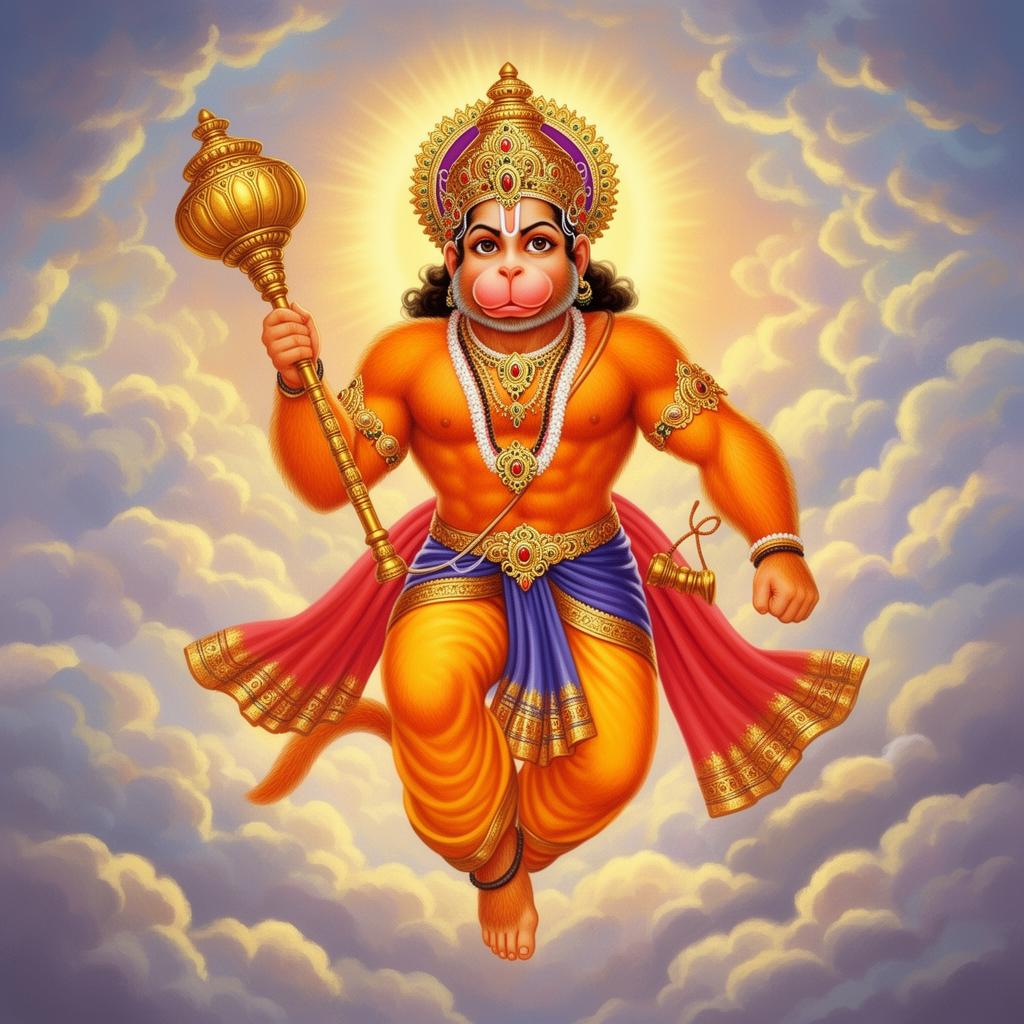
- He asked Hanuman to fetch a linga from Kashi
- A muhurta, an auspicious moment, was fixed for the installation
- Hanuman went, obtained lingas, and started back
- The muhurta arrived and Hanuman had not
- A swayambhu linga manifested at the spot, and Rama installed and worshipped that one
- Hanuman returned shortly afterwards with the lingas he had carried from Kashi and found the rite completed
Hanuman's reaction. This is the part that makes the story worth telling.
- He was hurt and angry
- In the tellings he threw down the lingas he had brought, or attempted to uproot the installed linga with his tail and could not
- Rama consoled him
- Rama declared that the lingas Hanuman had brought would be installed around the hill, and that they would be worshipped first, before the principal deity
- Local practice at Keesaragutta follows this, with the scattered lingas honoured
Why the story is good. Most temple kathas are about a deity's power. This one is about somebody's feelings being hurt, and about the response.
- Hanuman did nothing wrong. He was sent on a long errand and did it
- He was late through no fault of his own, since Kashi is a very long way from the Deccan even for him
- His work was made unnecessary by circumstances
- That is a recognisable and quite painful situation, and it happens to people constantly
- The resolution is not that Rama explains that it does not matter. It is that Rama finds a use for the work and gives it precedence
What the tradition is teaching. Effort made in good faith is not wasted even when it arrives too late for its original purpose.
That is a genuinely useful thing to be told, and putting it in the mouth of Rama, to Hanuman, at a site where the evidence is scattered across a hillside, is a more effective way of teaching it than saying it directly.
The name. Various derivations are offered for Keesaragutta, including from Kesari, Hanuman's father, and gutta, the Telugu word for hill. Others derive it differently. The Kesari reading fits the story, which is generally how such derivations work.
A note on brahmahatya. Rama's expiation after killing Ravana is a recurring theme and appears at several temples, including Rameswaram, where the same requirement produces the same story with different details.
The theological point is consistent and worth noting. Even a justified killing, even by an avatar, incurs a debt that must be discharged. The tradition does not treat necessary violence as costless.
Hanuman and the Uses of Failure
The Keesaragutta story belongs to a small and interesting set of episodes in which Hanuman does not simply succeed.
Hanuman's usual mode. He is the deity of completed tasks.
- He crosses the ocean
- He finds Sita
- He burns Lanka
- He carries the mountain when he cannot identify the herb
- He is present at every point where a job needs doing and is done
Where the tradition complicates it:
- At Keesaragutta, he arrives too late and his work is not needed
- In the Sanjeevani episode, he cannot identify the herb and brings the whole mountain, which is a solution but not the one asked for
- As a child, he swallows the sun and has to be struck down by Indra, and his powers are then sealed so that he forgets them until reminded
- In several tellings he must be reminded who he is before he can act, most famously before the ocean crossing, when Jambavan has to tell him what he is capable of
The forgetting. That last point is the theologically substantial one and it is worth setting out.
- Hanuman's powers were sealed by a curse or a boon in childhood, so that he would not misuse them
- As a result he does not remember what he can do
- Before the leap to Lanka, Jambavan recites his own history to him, and only then does he grow to full size and cross
- The teaching is that the capacity was there the whole time, unused because unremembered
Why devotees find this useful. Hanuman is, in practical devotion, the deity people turn to for courage and for strength they do not think they have.
The story explains why. He is not a deity of natural confidence. He is a deity who had to be told what he was capable of, and who then did it.
That is a considerably more useful model than a figure who was always sure.
Hanuman in Telangana specifically. He is worshipped very heavily across the Telugu country, and this region has some of the largest Hanuman traditions in India.
- Kondagattu, in Jagtial district, with its forty one day deeksha
- Karmanghat, in Hyderabad
- Numerous village Anjaneya shrines, often at the boundary
- The Hanuman Deeksha tradition, in which large numbers of men undertake a forty one day vow in black or orange, which is a major regional practice
The deeksha is described in the Kondagattu account, and is one of the most visible religious observances in Telangana each year.
Why boundary shrines. Anjaneya is very commonly placed at the edge of a village or at a crossroads, facing outward.
He is the guardian who keeps out what should not come in, which is why the placement is at the perimeter rather than at the centre, and why his shrines are often the first thing you pass on the way into a settlement.
The Vishnukundins and the Site
The excavated remains at Keesaragutta belong to a period of Deccan history that is genuinely obscure, and knowing a little about it makes the site far more interesting.
The Vishnukundins:
- Ruled parts of the eastern Deccan roughly from the fifth to the seventh centuries CE
- Came between the decline of the Satavahanas and the rise of the Eastern Chalukyas
- Their capital moved between several places, and identifications are debated
- They are known primarily from copper plate grants and a limited number of sites
- Govindavarma and Madhavavarma are the best known rulers
Why the period matters:
- This is when the Deccan was transitioning from Buddhist to primarily Hindu patronage
- Structural temple building, as against rock cut work, was becoming established
- Brick temples of this period are rare survivals, since brick does not last as stone does
- Very few sites of the period have been excavated, so each one carries disproportionate weight
What was found at Keesaragutta:
- Remains of a substantial brick temple complex
- Sculptural fragments
- Inscriptions
- Evidence of a planned layout rather than an accreted one
What that means for the linga story. It is worth putting the two accounts side by side without forcing them together.
- The katha places the site in the Ramayana and explains the scattered lingas by Hanuman's disappointment
- The archaeology shows a temple complex of the fifth or sixth century, which is a real and datable thing
- Neither account is a version of the other
A plausible reading of the scattered lingas is that they are votive lingas, offered by devotees over a very long period, which is a common practice at Shaiva sites and produces exactly this appearance.
That reading takes nothing from the story. It says that generations of people came to this hill and left a linga, which is if anything a more affecting fact than the one the story supplies.
Seeing the excavated area. The archaeological remains are on the hill and are accessible. They are not signposted in any detail and most visitors walk past them entirely on the way to the temple.
If you have any interest in what a fifth century Deccan temple was made of, spend ten minutes on the brick foundations before going up.
The wider Telangana archaeological picture. This region holds a great deal that is barely visited.
- Kondapur, a Satavahana site with a museum
- Phanigiri, a major Buddhist site with remarkable sculpture
- Nagarjunakonda, now largely submerged, with its museum on an island
- Kolanupaka, with its Jain temple and Someswara temple
- Alampur, with the Navabrahma temples, early Badami Chalukya work of the highest quality
Any of these would be a major attraction in a better publicised state.
Votive Lingas and Why People Leave Them
The scattered lingas at Keesaragutta are worth thinking about as a practice, because leaving objects at shrines is one of the most universal religious behaviours there is.
What a votive offering is. Something left at a shrine as a physical record of a request, a vow or a thanksgiving.
What Indian shrines accumulate:
- Lingas, at Shaiva sites, as here
- Terracotta horses, at Ayyanar shrines in Tamil Nadu, in some cases thousands of them
- Cradles, tied to trees at temples where children are prayed for
- Threads, tied at Sufi dargahs, at temple trees, at Shani shrines and at countless local sites
- Bangles, at Devi temples
- Locks, at some shrines and now at bridges worldwide
- Stones, piled at pass shrines in the Himalaya
- Nails and rags, at particular tree shrines
- Silver eyes, limbs and organs, at healing shrines, showing what needed curing
What the practice does:
- It makes a request physical, so it exists outside the person who made it
- It leaves the request in place, so it continues after the devotee has gone home
- It joins the devotee to everybody else who left something, which is why an accumulation is more powerful than a single object
- It provides a record, so a returning devotee can find their own
The accumulation is the point. A hill with one linga on it says one person came. A hill with hundreds says this has been going on for longer than anyone can remember, and that everyone who came before you was in the same position you are in now.
That is the actual religious content of a site like Keesaragutta, and no story about Hanuman is needed to produce it.
A note on adding to it. Do not carry a linga up the hill and leave it. The site is under archaeological protection in part, the practice is not currently encouraged, and adding modern objects to a protected site causes real problems for the people who look after it.
If you want to make an offering, make it at the temple in the normal way.
A note on removing from it. This should not need saying but it does. Do not take anything from the hill. Stones, fragments and sculpture from archaeological sites are not souvenirs, and removing them is both an offence and a small permanent loss to a record that is already thin.
Visiting Keesaragutta
Getting there
- Keesaragutta, Medchal Malkajgiri district, Telangana
- About 30 km from Hyderabad, near Keesara
- Off the Hyderabad to Warangal road
- Hyderabad for rail and air
- It is a straightforward half day trip from the city and buses and autos run
Timings
- The temple opens early and runs through the day with a break. Check locally
The climb
- Steps to the summit, a moderate climb
- There is road access partway
- Manageable for most people but hot in the middle of the day
When to go
- Maha Shivaratri, the principal festival, with very large crowds and an all night observance
- Karthika Masam, November or December
- Mondays, which are Shiva's day
- Early morning for the light and for the view across the plateau
- October to February for weather
What to look at
- The scattered lingas, across the hill and around the temple
- The excavated remains of the Vishnukundin period complex, which most visitors miss
- The view, which takes in a large stretch of the Telangana plateau
- The rock formations themselves, which are the Deccan granite boulder landscape at its most characteristic
Practicalities
- Traditional dress is appropriate
- Carry water
- Footwear is left at the appropriate point
- Facilities are limited on the hill
Combining the visit
- Hyderabad, with Golconda, the Qutb Shahi tombs, the Charminar and the Salar Jung museum
- Yadagirigutta, about 40 km, with its Lakshmi Narasimha temple, which has been extensively rebuilt in recent years
- Bhongir fort, on its monolithic rock, about 50 km
- Kolanupaka, about 70 km, with the Jain temple and the Someswara temple
- Warangal and the Kakatiya sites, further east
- Medak and the Edupayala temple, to the north west
A Hyderabad weekend circuit. Keesaragutta, Yadagirigutta, Bhongir and Kolanupaka can be done comfortably in a day or two from Hyderabad, and between them cover a hill temple with archaeology, a major Narasimha shrine, a spectacular fort on a single rock, and a Jain and Shaiva site with a fine early temple.
That is a considerably better use of a weekend than most people leaving Hyderabad make of one.
A closing thought. The story here is about somebody who did exactly what was asked, arrived too late, and had to be told his work still counted.
There are hundreds of stone lingas lying on that hill as a result. Some of them have been lying there for a very long time, and people still climb up, walk past them, and touch them on the way to the temple.
Frequently Asked Questions
Where is Keesaragutta?+
A rocky hill in Medchal Malkajgiri district, Telangana, about 30 km from Hyderabad near Keesara, off the Hyderabad to Warangal road. It is a straightforward half day trip from the city, with buses and autos running and steps to the summit, plus road access partway.
Why are there so many lingas on the hill?+
The katha says Rama sent Hanuman to Kashi for a linga to expiate brahmahatya dosha after killing Ravana, but the muhurta passed before he returned, so Rama installed a swayambhu linga instead. Hanuman was hurt, and Rama declared that the lingas he had brought would be installed around the hill and worshipped first. Historically they are likely votive lingas left by devotees over centuries.
What is the archaeological importance of Keesaragutta?+
Excavations have revealed a substantial brick temple complex of the Vishnukundin period, roughly the fifth to sixth centuries CE, with sculptural fragments and inscriptions. The Vishnukundins ruled the eastern Deccan between the Satavahanas and the Eastern Chalukyas, and very few sites of that period have been excavated, so this one carries disproportionate weight.
What does the Hanuman story teach?+
That effort made in good faith is not wasted even when it arrives too late for its original purpose. Hanuman did nothing wrong, was late through no fault of his own, and found his work made unnecessary by circumstances. Rama's response is not to say it does not matter but to find a use for the work and give it precedence.
What is a votive offering?+
Something left at a shrine as a physical record of a request, vow or thanksgiving. Indian shrines accumulate lingas, terracotta horses, cradles tied to trees, threads, bangles, stones at Himalayan passes and silver eyes and limbs at healing shrines. The accumulation is the point: it shows that everyone who came before was in the same position you are in now.
Can I leave a linga on the hill?+
No. The site is under archaeological protection in part, the practice is not currently encouraged, and adding modern objects to a protected site causes real problems for those who look after it. Make your offering at the temple in the normal way. Equally, do not take anything from the hill, since stones and fragments from archaeological sites are not souvenirs.
About the author
Pandit Ravindra Sharma · Vedic Rituals & Bhakti, 22+ years
Pandit Ravindra is the Vandnaa editorial team's resident specialist on aarti, chalisa, and daily devotion. He has performed home and temple pujas across Varanasi and Delhi for over two decades and contributes the bhakti-focused articles on this site.
Meet the Vandnaa editorial team →