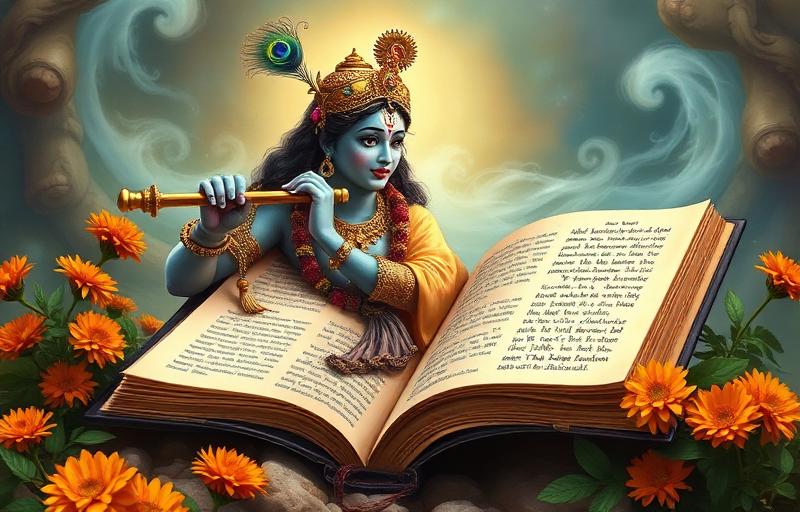
What Is the Law of Karma?
The word karma comes from the Sanskrit root kri, 'to do or act'. It means action - and, by extension, the law that every action carries a consequence. What we sow, we reap; not only in this life but across the cycle of births.
Karma is not blind fate or punishment. It is a natural moral law, like gravity - just, impartial and exact. Good actions sow seeds of good fruit; harmful actions sow suffering. The intention behind the act matters as much as the act itself.
Karma includes more than physical deeds:
- Action of body - what we do
- Action of speech - what we say
- Action of mind - what we think and intend
Every one of these leaves an impression and, in time, bears fruit.
The Three Types of Karma
The scriptures describe three kinds of karma:
- Sanchita Karma - the accumulated store of all karmas from countless past lives, not yet ripened. This is the vast warehouse of seeds waiting their turn.
- Prarabdha Karma - the portion of sanchita that has begun to bear fruit in this present life. It shapes our birth, body, family and many of life's circumstances. Prarabdha is often compared to an arrow already released - it must run its course.
- Kriyamana Karma (also called Agami) - the karma we are creating right now by our present actions. This is where our free will lives. Today's deeds become tomorrow's sanchita.
In short: sanchita is the granary, prarabdha is the grain taken out to cook today, and kriyamana is the new grain we are sowing for future harvests.
Karma in the Bhagavad Gita
The Bhagavad Gita is the great text of karma yoga - the path of action. Its most famous verse teaches:
'Karmanye vadhikaraste ma phaleshu kadachana' - 'You have a right to action alone, never to its fruits' (Gita 2.47).
Krishna does not ask Arjuna to give up action - that is impossible, for no one can remain without acting even for a moment (Gita 3.5). Instead, he teaches nishkama karma - selfless action done as duty, without anxious attachment to the result.
When action is offered to the Divine and performed without selfish craving, it stops binding the soul. This is the secret the Gita reveals: it is not action itself but attachment and ego behind action that tie us to the wheel of karma. Act, but act as an offering, and you become free even while doing.
How to Live Wisely with Karma

Understanding karma changes how we live:
- Take responsibility - much of our present is the fruit of past action, and our future is being written by what we do now.
- Act with good intention - since the motive behind a deed shapes its fruit, keep the heart pure and kind.
- Accept what cannot be changed - prarabdha must run its course; meet it with patience rather than bitterness.
- Shape your future through kriyamana - this is where free will lives. Every honest, kind, selfless act sows good seed.
- Offer your actions to God - the surest way to lighten karma is bhakti and nishkama karma, doing your duty without selfish craving.
Karma is not fatalism. It is the most empowering teaching: you are not a helpless victim of fate but the author of your own destiny, one action at a time.
Common Questions From Devotees
What are the three types of karma?+
The three types are sanchita (the accumulated store of all past karmas not yet ripened), prarabdha (the portion now bearing fruit in this life), and kriyamana or agami (the karma we are creating right now through present actions).
Can karma be changed?+
Prarabdha karma - the karma already bearing fruit in this life - must largely run its course, like an arrow already released. But sanchita and especially kriyamana karma can be shaped by present good action, devotion and selfless service, so the future is in our hands.
Is karma the same as fate?+
No. Fate suggests we are helpless; karma teaches the opposite. While part of life (prarabdha) is set, our present actions (kriyamana) constantly create the future. Karma makes us the authors of our destiny, not its victims.
How does the Gita say we can be free from karma's binding?+
Through nishkama karma - acting out of duty without selfish attachment to results, and offering the action to God. The Gita teaches that it is attachment and ego behind action, not action itself, that bind us. Selfless action performed as an offering does not bind the soul.
About the author
Anjali Mehta · Editor, M.A. Religious Studies
Anjali is the managing editor for Vandnaa and oversees the festival and vrat coverage. She holds an M.A. in Religious Studies and reviews every published article for accuracy, accessibility, and tradition-fidelity.
Meet the Vandnaa editorial team →