What Does Dharma Mean?
Dharma comes from the Sanskrit root dhri, meaning 'to hold, support or uphold'. So dharma is literally that which holds things together - the moral and natural law that sustains the individual, society and the cosmos.
There is no single English word for it. Depending on context, dharma can mean:
- Righteous duty - the right action for a person in their situation
- Virtue and ethics - truth, non-violence, compassion, self-control
- The natural law - the order (rita) by which the universe runs
- One's essential nature - the dharma of fire is to burn, of water to flow
To live in dharma is to act in harmony with this deeper order, doing what is right rather than only what is convenient.
Dharma in the Gita and the Vedas
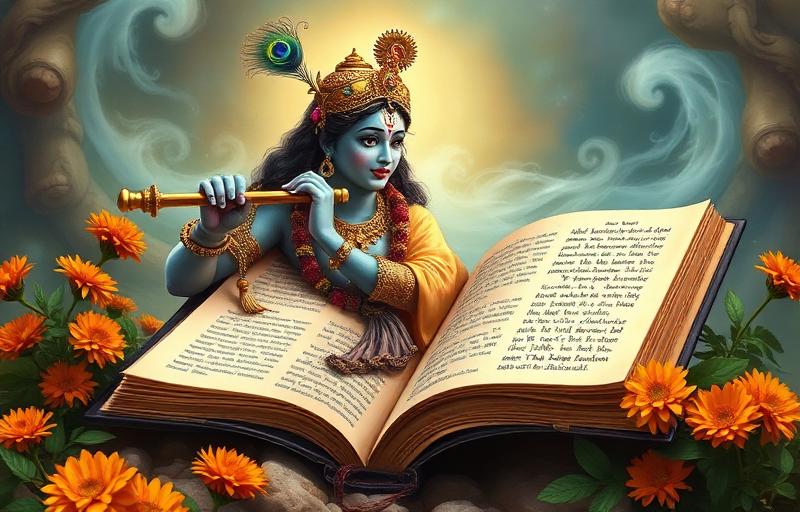
The whole Bhagavad Gita is set on a battlefield of dharma. Arjuna's crisis is a dharma-sankat - a conflict of duties - and Krishna's teaching is about how to act rightly. A central verse declares:
'Shreyan svadharmo vigunah para-dharmat svanushthitat' - 'It is better to do one's own dharma imperfectly than another's dharma well' (Gita 3.35).
The Gita also gives the famous promise that whenever dharma declines and adharma rises, the Divine descends to restore it (Gita 4.7-8).
In the Vedas and Upanishads, dharma is tied to rita, the cosmic order. The Taittiriya Upanishad instructs the student: 'Satyam vada, dharmam chara' - 'Speak the truth, practise dharma.' Across these texts, dharma is not just personal morality but the very thread that keeps creation in balance.
Svadharma and the Kinds of Dharma
Hindu thought recognises that dharma has many layers:
- Sanatana Dharma - the eternal, universal values that apply to all: truth, non-violence (ahimsa), purity, self-control, compassion.
- Svadharma - one's own dharma, shaped by one's nature, stage of life and role. A soldier's, a teacher's and a parent's duties differ.
- Ashrama Dharma - the duties of the four life stages: student (brahmacharya), householder (grihastha), retirement (vanaprastha) and renunciation (sannyasa).
- Apad Dharma - what is permissible in times of crisis, when normal rules cannot be followed.
The great teaching of svadharma is that you do not have to live another's life. Doing your own duty sincerely - as a child, parent, worker or seeker - is itself a spiritual path.
How to Live by Your Dharma
Dharma is not an abstract idea - it is a way of acting each day:
- Be truthful and fair in word, work and dealings; let honesty guide you even when it costs you.
- Fulfil your roles with care - your duties to family, work and society are your svadharma.
- Practise ahimsa - cause the least harm; choose compassion over cruelty.
- Act without selfish craving for results, as the Gita teaches (nishkama karma); offer the fruit to God.
- When duties clash, choose the higher good - the action that protects truth, life and the welfare of the many.
Lived this way, dharma becomes a quiet inner compass. It does not make life easy, but it makes it upright, meaningful and at peace with the deeper order of things.
Common Questions From Devotees
What is the simplest meaning of dharma?+
Dharma means 'that which upholds' - righteous duty and the moral law that sustains life. In simple terms, it is doing what is right and true in your situation, in harmony with the order of the world.
Is dharma the same as religion?+
Not exactly. The English word 'religion' is narrower. Dharma covers duty, virtue, ethics, natural law and one's essential nature - it is about right living and the order that upholds existence, not only worship or belief.
What is svadharma?+
Svadharma is your own dharma - the duty that fits your nature, role and stage of life. The Gita teaches that it is better to follow one's own dharma imperfectly than to follow another's perfectly.
What does the Bhagavad Gita say about dharma?+
The Gita teaches one to follow one's svadharma, act without attachment to results, and trust that the Divine restores dharma whenever it declines (Gita 4.7-8). Its core lesson is to do right action selflessly and offer the fruit to God.
About the author
Anjali Mehta · Editor, M.A. Religious Studies
Anjali is the managing editor for Vandnaa and oversees the festival and vrat coverage. She holds an M.A. in Religious Studies and reviews every published article for accuracy, accessibility, and tradition-fidelity.
Meet the Vandnaa editorial team →