Who Kechaikhaiti Is
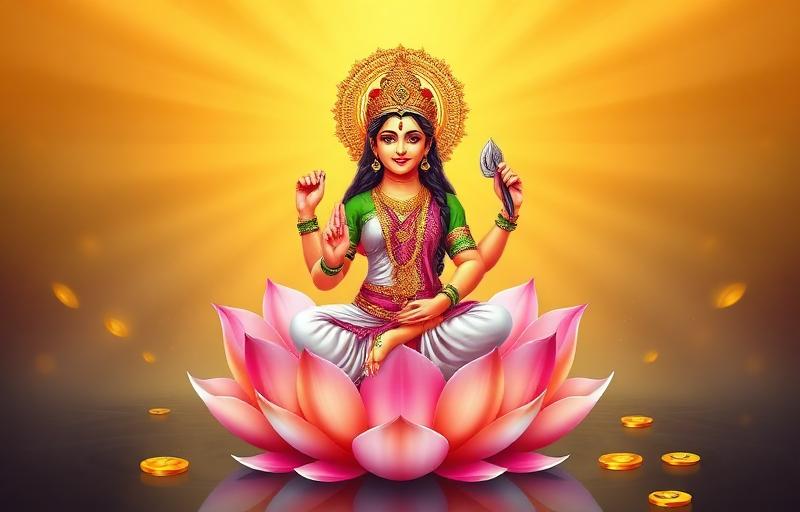
Kechaikhaiti, also written Kesai Khati, Kechai Khaiti and in other forms, is a goddess of the Bodo Kachari group of peoples of Assam and the surrounding region.
The name:
- In the Bodo language, generally parsed as the eater of raw flesh
- Kechai or kesai, raw
- Khaiti or khati, eating
Who worships her:
- The Bodo
- The Dimasa
- The Chutia, historically
- The Rabha, Tiwa and other related communities in varying forms
- And within the wider Assamese tradition, where she is identified with Durga and with the Shakta goddesses
Where:
- The best known site is at Sadiya, in eastern Assam, where the Tamreswari temple stood
- Also in the Dima Hasao district, the Dimasa homeland
- And in Bodoland, in western Assam, in various local forms
Tamreswari:
- The temple at Sadiya, called the copper roofed temple, since tamra means copper
- Associated with the Chutia kingdom, which ruled eastern Assam before the Ahoms took it in the sixteenth century
- The goddess there was Kechaikhaiti in the local tradition and Tamreswari in the Sanskritic one
- The temple is now in ruins, and what stands is the remains of the enclosure and structure
The Chutia kingdom. Worth a note.
- A kingdom in eastern Assam, around Sadiya, from roughly the twelfth century
- Conquered by the Ahoms in 1523
- Its history is partly reconstructed and is a live subject in Assam, since Chutia identity and its historical claims are politically significant
- The Tamreswari temple is its principal surviving monument
The priests. This is one of the most significant facts about the site.
Worship at Tamreswari was conducted not by brahmana priests but by the Deori, a distinct community with their own priesthood, in their own tradition and language.
The Deori people continue as a Scheduled Tribe of Assam. Their priestly role at Tamreswari is a matter of historical record, and it means the site was served by a non brahmanical priesthood within a broadly Hindu framework, for centuries, under royal patronage.
That is not an exception. It is one visible instance of an extremely widespread Indian pattern.
The Difficult History
This is the part that requires care and it should be dealt with directly rather than avoided.
What the record says. Human sacrifice is recorded at some Shakta sites in medieval Assam, including at Kamakhya and, in some accounts, at Tamreswari.
What is actually known:
- Some medieval texts and later colonial accounts record the practice
- At Kamakhya, the practice is recorded, and the individuals were described as bhogi, volunteers who consented and who were treated with honour for a period beforehand
- How frequent it was, how reliably the sources report it, and how much colonial accounts exaggerated it are all contested by historians
- The practice ended. It was prohibited under British administration in the nineteenth century and does not occur
Why it should be stated. Because it is in the record, because visitors to these sites will encounter the claim, and because a guide that omits it is not trustworthy on anything else.
Why it should be stated carefully:
- Colonial writing about Indian religion had a strong interest in emphasising the lurid, and human sacrifice accounts were used to justify rule. They cannot be taken at face value
- The practice, where it occurred, was rare, ritually bounded, and involved consent in the accounts that describe it
- Comparable practices occur in the histories of very many religions and cultures. Singling out Indian instances is a choice, not a neutral description
- It stopped nearly two centuries ago and has no bearing on what happens at these sites now
Animal sacrifice. This is the live question rather than the historical one.
- Bali, animal sacrifice, is practised at Kamakhya, at Tripura Sundari and at many Shakta and community shrines including those in the Bodo and Dimasa traditions
- Goats and, at some sites, buffalo and birds
- It is ancient, it is genuine tradition, and it is legal in most states with restrictions
Where the tradition itself stands:
- Vaishnava traditions overwhelmingly reject it. Sankaradeva's Ekasarana in Assam explicitly rejects sacrifice, and the sattras do not perform it
- Many Shakta communities have themselves ended it, replacing the animal with a pumpkin, a coconut, a gourd or a sugarcane
- The Assam and northeast Shakta sites where it continues do so as living practice with community support
- Several states have restricted or banned it, and courts have ruled on it in different directions in different places
How a devotional guide should handle this. By saying what is true.
Animal sacrifice is part of some living Hindu traditions and is rejected by others. Both positions are held by devout people within the tradition. It is not a foreign accretion and it is not universal.
A visitor who finds it distressing should simply not attend on days when it happens, which is straightforward: it concentrates on particular festivals and can be avoided.
A visitor who wishes to argue about it at somebody else's shrine should not.
The substitution movement. Worth knowing because it is the tradition changing itself from inside.
Across India, community after community has replaced animal sacrifice with a vegetable offering, generally by a decision of the community itself, often on the initiative of reformers within the tradition.
The pumpkin cut in place of the goat, the ash gourd broken, the coconut offered.
That is not the tradition being reformed by outsiders. It is what a tradition looks like when it argues with itself over centuries and reaches a different position, and it is still happening.
Tagore's Visarjan. Since it was mentioned in the Unakoti entry, it belongs here.
His play, set in Tripura, is about a king who ends animal sacrifice at the goddess's temple and the conflict that follows with the priest.
The argument the play makes is that the goddess does not want blood, and that the person insisting on it is defending his own position rather than her wish.
That is a Hindu argument made by a Hindu writer about Hindu practice, in 1890, and it is a better guide to how this question has actually been debated than any external account.
How Local Deities Become Puranic
Kechaikhaiti's history is a clear case of a process that has happened thousands of times across India, and understanding it explains a great deal about how the tradition is actually built.
The process:
- A community worships a deity, with its own name, its own priesthood, its own rites and its own stories
- Contact increases with the wider Sanskritic tradition, through trade, kingship, migration or brahmana settlement
- The local deity is identified with a Puranic one: this goddess is Durga, this god is Shiva, this local form is an avatara
- A Sanskrit name appears alongside the local one, so Kechaikhaiti is also Tamreswari
- A sthala purana develops, connecting the site to a Puranic story
- Brahmanical rites are added, frequently alongside rather than replacing the local ones
- The original priesthood may continue, may share, or may be displaced
What happens to the local element. This varies enormously and it is the interesting part.
- Sometimes it persists fully, with the local priesthood retaining primacy, as at Puri where the Daitapati have hereditary rights
- Sometimes it persists in specific rites, so the local community has a defined role at particular moments
- Sometimes it survives in the name, the offerings, the festival date or the form of the image, while the priesthood changes
- Sometimes it is largely displaced
Examples across India:
- Jagannath at Puri, whose wooden image, Daitapati priests and Navakalevara rite are widely understood as pre Puranic and tribal in origin, absorbed into the Vishnu tradition
- Vitthal at Pandharpur, standing on a brick, hands on hips, in a form unlike standard Vishnu iconography
- Ayyappa at Sabarimala, and the whole Kerala pattern of forest deities
- Khandoba in Maharashtra, a folk deity identified with Shiva
- Tirupati, where the identification of the deity has itself been debated between Vaishnava and Shaiva readings
- The Gramadevatas across the south, village goddesses identified with Durga or Kali while retaining their own names and rites
- Kamakhya itself, where the Shakta and Tantric tradition sits over an older substratum
Why this matters for how you think about the tradition. Because the standard account, of a single Vedic tradition spreading outward, is not what happened.
What happened is continuous absorption in both directions over three thousand years. Local practice entered the mainstream and mainstream practice entered local traditions, and the result is not a hierarchy with a pure centre and derivative edges.
The honest version:
- Hinduism is not one religion that spread. It is what you get when a very large number of traditions across a subcontinent are in contact for a very long time
- The Puranas themselves are the record of this. They incorporate, reconcile and rank local traditions
- The Shakti Peetha scheme is an instance: a list that ties dozens of independent goddess shrines across the subcontinent into a single story about Sati's body
- The jyotirlinga scheme does the same for Shiva sites
The Peetha scheme deserves the emphasis. Somebody, at some point, took a large number of unrelated goddess shrines, each with its own local tradition, and connected them by saying that a part of Sati's body fell at each.
That is an act of enormous synthetic imagination and it created a pan Indian pilgrimage geography out of local worship.
And it did not erase the local shrines. Kamakhya is still Kamakhya, with its own rites. It is also a Peetha.
The political dimension now. This must be handled honestly because it is contested.
Communities such as the Bodo, Dimasa, Rabha, Tiwa and others in the northeast have their own religious traditions. Some of their members identify as Hindu. Some identify their tradition as distinct, with movements such as Bathouism among the Bodo asserting an independent identity. Some have become Christian.
Bathouism is the Bodo traditional religion, centred on Bathoubwrai, with the sijou plant as its symbol and its own priesthood and rites.
How to be accurate:
- These communities' traditions have both distinct and shared elements with the wider Hindu tradition, and both are real
- The question of whether a given community's religion is Hinduism, a related tradition, or a separate religion is a question for that community, and members of it disagree among themselves
- Describing a community's deity as simply a form of Durga can be experienced as erasure by people who hold that their tradition is their own
- Describing it as entirely unrelated is also inaccurate, given centuries of shared practice
- The respectful position is to name both: Kechaikhaiti of the Bodo and Dimasa, identified in the Assamese Shakta tradition with Durga, worshipped at Tamreswari by Deori priests
Which is longer than a label and is what is actually the case.
The Dimasa and Their Kingdom
The Dimasa are one of the peoples who carry this goddess, and their history is substantial and not widely known.
Who they are:
- A Tibeto Burman speaking people, part of the wider Bodo Kachari group
- Principally in Dima Hasao district of Assam, formerly North Cachar Hills, and in parts of Cachar, Karbi Anglong and Nagaland
- Their language is Dimasa
- The name is generally parsed as sons of the big river, from di meaning water
The Dimasa Kachari kingdom:
- A kingdom with a long history, at various times centred at Dimapur, then Maibang, then Khaspur
- Dimapur, now in Nagaland, was its capital and the ruins there, including the remarkable carved stone pillars, are its principal monument
- Pressed by the Ahoms, the kingdom moved its capital south to Maibang in the hills
- Later to Khaspur in the Cachar plains
- Ended with British annexation in 1832
Dimapur's ruins. Worth stating because they are extraordinary and almost unvisited.
The site holds rows of large carved stone pillars, of a distinctive shape sometimes described as chessmen, along with a brick gateway and tank remains.
Their exact purpose is debated. They are unlike anything else in Indian architecture and they are the surviving trace of a kingdom most Indians have not heard of.
Dimasa religion:
- Traditional worship of Shibrai, identified with Shiva, as the principal deity
- A set of clan and household deities
- Madai worship, the general term for their deities
- The daikho, the shrine areas, each associated with particular clans
- Kechaikhaiti among the deities honoured
- Alongside, over centuries, substantial adoption of Hindu practice, with the royal house taking Hindu titles and patronising temples
The clan system. The Dimasa have a distinctive double descent system, with male clans, sengphong, inherited from the father, and female clans, jaddi or julu, inherited from the mother.
That is anthropologically unusual and is one of the reasons Dimasa social organisation has been studied closely.
Ranachandi and the other goddesses. Dimasa tradition includes goddess worship, and the wider Kachari group's goddesses appear under various names across the region.
Festivals:
- Busu, the harvest festival, in its several forms
- Rajini Gabra and Harni Gabra, the village worship
- Clan and daikho observances
The Bodo. The larger community of the same group, principally in western Assam.
- The Bodo are the largest Scheduled Tribe in Assam
- Bodoland, the Bodoland Territorial Region, is an autonomous area under the Sixth Schedule
- Their traditional religion is Bathouism, centred on Bathoubwrai, with the sijou plant, a euphorbia, as its living symbol, planted in the household altar area
- The Kherai puja is their principal ritual, involving the doudini, a female medium who dances and is possessed
- Many Bodo are Hindu, many follow Bathouism as a distinct religion, and a substantial number are Christian
- Bwisagu is the Bodo new year festival, corresponding to Bihu
Bathouism deserves the detail. The sijou plant with five stages, surrounded by a fence of five pairs of bamboo strips, is the altar. The number five recurs and is explained in terms of the five elements.
It has its own theology, its own priesthood and, since the twentieth century, its own organised institutions asserting it as a religion in its own right.
Bihu and Bwisagu. Worth a note on how these relate.
Assam's Bihu exists in three forms: Bohag or Rongali Bihu in spring, Kati or Kongali Bihu in autumn, and Magh or Bhogali Bihu in winter.
The spring Bihu, at Bohag Sankranti, is the new year and the great festival of Assam, with dancing, the husori singing groups, and the whole population involved.
And the Bodo Bwisagu, the Dimasa Busu, the Rabha and Tiwa equivalents and the Assamese Bihu are all the same seasonal moment observed by different communities in their own forms.
Which is, once more, the point about how this all fits together.
Where to See This Tradition
This is not a single temple guide, since the tradition is spread across communities and districts. Here is what a visitor can actually see.
Tamreswari, Sadiya
- In Tinsukia district, eastern Assam, near Sadiya
- The ruins of the copper roofed temple, with the enclosure wall and structural remains
- It is an archaeological site rather than a functioning temple
- Sadiya is around 500 kilometres from Guwahati, in the far east of the state
- Reached from Tinsukia or Dibrugarh
- The Dhola Sadiya bridge, opened in 2017, which is among India's longest, crosses the Lohit here and has made Sadiya far easier to reach
Dima Hasao district
- The Dimasa heartland, formerly North Cachar Hills
- Haflong, the district headquarters, Assam's only hill station
- Maibang, the old Dimasa capital, with stone remains including a rock cut temple
- Jatinga, notorious for the bird phenomenon
- Hilly, forested, reached by road from Silchar or Guwahati, and by the hill railway
Jatinga. Since it will come up, the facts are worth stating plainly.
On certain foggy, moonless nights in the late monsoon, birds fly toward lights in the village and are disoriented, and are then killed by villagers.
It is frequently reported as birds committing suicide. They do not. It is a case of disorientation by light and fog in a specific topographic funnel, affecting migrating and local birds.
Conservation efforts have substantially reduced the killing and the phenomenon is now studied and managed rather than exploited.
Dimapur, Nagaland
- The Kachari ruins, with the carved stone pillars
- In the city, easy to reach, and remarkable
- Nagaland requires an Inner Line Permit for Indian citizens from outside the state, obtainable online or at entry points, though Dimapur itself has at times been exempt. Check current rules
Bodoland, western Assam
- Kokrajhar, Chirang, Baksa, Udalguri districts
- Bathou shrines with the sijou plant, which are household and community rather than monumental
- Manas National Park, in Bodoland, a tiger reserve and UNESCO World Heritage site of outstanding quality
- Bwisagu in April
Manas deserves the mention. It is one of India's great national parks, it is in Bodoland, it was severely damaged during the years of conflict and has been substantially restored, with the community involved in its protection.
The recovery of Manas is one of the better conservation stories in India and it is directly connected to the peace settlement in Bodoland.
Kamakhya, Guwahati
- The great Shakta temple, where the layering of traditions this entry describes is most visible
- Ambubachi mela, in Ashadha, when the temple closes for three days for the goddess's menstruation and reopens, drawing very large numbers
- Which is itself a practice with no clear Vedic precedent and every appearance of deep local origin
Etiquette at community shrines. Since some of these are living traditions of specific communities rather than public temples, this matters.
- A Bathou altar in a household courtyard is not a tourist site. Do not photograph somebody's household shrine without asking
- At community rituals, ask before attending. Some are open, some are not
- Do not treat a living tradition as folklore. The people practising it are not a museum exhibit
- If somebody explains their tradition to you, listen to their account rather than correcting it with what you have read
- Do not photograph the doudini or any medium in possession without explicit permission
A closing thought. There is a temptation, writing about a goddess like Kechaikhaiti, to resolve her: to say that she is really Durga, or that she is really a tribal deity later Hinduised, and to pick one.
The accurate answer is that she is what her worshippers say she is, that different worshippers say different things, that the traditions have been in contact for a very long time, and that this is how nearly every deity in India came to be what they are.
The subcontinent's religion is not a tree with a trunk. It is a very old braid.
Devi Worship for a Household
For a reader who has come this far and wants something to actually do, here is Devi worship in a plain household form, which works whether your goddess is Kechaikhaiti, Kamakhya, Durga or the deity of your own village.
The basic daily form:
- A lamp in the evening, at the household shrine or a clean shelf
- Water in a clean vessel
- A flower, if you have one
- A few minutes of sitting
- Whatever name you use
A mantra. If you want one, the simplest and most widely used:
Om Aim Hreem Kleem Chamundayai Vichche
That is the Navarna mantra, the nine syllable mantra of the Devi, and it is used across Shakta practice.
Or simply Jai Mata Di, or the name your family uses.
The Durga Saptashati. The principal text.
- Also called the Devi Mahatmya or Chandi Path
- Seven hundred verses, from the Markandeya Purana
- The three great episodes: Madhu Kaitabha, Mahishasura, and Shumbha Nishumbha
- Recited entirely during Navaratri by those who observe it
- Also recited in parts, and the Argala, Kilaka and Kavacha are the associated shorter texts
If seven hundred verses is too much, and for most households it is:
- The Devi Kavacha alone
- The Argala Stotra
- The Mahishasura Mardini Stotra, Ayi Giri Nandini, which is metrically extraordinary and is widely sung
- Or simply the mantra
Navaratri:
- Sharad Navaratri, in Ashvin, September or October, the principal one
- Chaitra Navaratri, in spring
- Nine nights, nine forms of the goddess as the Navadurga
- Ashtami and Navami as the principal days
- Vijayadashami on the tenth
The Navadurga: Shailaputri, Brahmacharini, Chandraghanta, Kushmanda, Skandamata, Katyayani, Kalaratri, Mahagauri, Siddhidatri.
Regional Navaratri. Since this series has covered so much ground, the variety is worth noting.
- Bengal and the east: Durga Puja, with the pandals and the images and the immersion, principally Shashthi to Dashami
- Gujarat: Garba and dandiya raas, nine nights of dancing around the garbo lamp
- Tamil Nadu, Andhra, Karnataka: Golu or Bommai Kolu, the tiered display of dolls
- Karnataka: Mysuru Dasara, the state festival with the procession
- North India: fasting, the Ramlila, and Dussehra with the burning of Ravana
- Kullu Dussehra, which starts when everybody else's ends
- Maharashtra: Ghatasthapana and the observances
All of it is the same nine nights.
Fasting, once more. The same caution as elsewhere in this series.
If you are diabetic, pregnant, breastfeeding, elderly, ill or on medication requiring food, modify or skip the fast. The tradition permits it. Phalahar is a recognised form. Do not stop medication to fast.
What Devi worship offers. In the tradition's own reading:
The Devi is Shakti, power, the active principle, and the texts are unusually direct about what that means: she is the one who fights when the devas cannot, who is not rescued but rescues, and who is addressed as the source rather than as a consort.
The Saptashati has the devas praising her at length, and the substance of the praise is that everything they have is hers.
That is a strong theological position and it is why Devi worship has the character it does across India: not gentle, not merely maternal, but the acknowledgment that power is hers and that a person who is in difficulty is asking somebody who can actually act.
Which is what a household lamp in the evening, in front of a picture, is for.
What People Ask Most
Who is Kechaikhaiti?+
A goddess of the Bodo Kachari group of peoples of Assam, worshipped by the Bodo, Dimasa, Chutia, Rabha and Tiwa communities in varying forms, and identified within the wider Assamese Shakta tradition with Durga. The name is generally parsed in Bodo as the eater of raw flesh. Her best known site is Tamreswari at Sadiya in eastern Assam, where worship was conducted by Deori priests rather than brahmanas.
What is the Tamreswari temple?+
The copper roofed temple at Sadiya in Tinsukia district of eastern Assam, associated with the Chutia kingdom which ruled there before the Ahoms took it in 1523. The goddess was Kechaikhaiti in the local tradition and Tamreswari in the Sanskritic one, and the priests were Deori rather than brahmana. The temple is now in ruins and is an archaeological site rather than a functioning shrine.
Is animal sacrifice still practised?+
Yes, at some Shakta and community shrines including Kamakhya and Tripura Sundari and within Bodo and Dimasa traditions, though many communities have themselves replaced it with a pumpkin, gourd or coconut. Vaishnava traditions including Sankaradeva's Ekasarana in Assam reject it entirely. Both positions are held by devout people within the tradition. A visitor who finds it distressing can simply avoid the particular festival days when it happens.
Was there human sacrifice at these temples?+
It is recorded at some Shakta sites in medieval Assam, including Kamakhya and in some accounts Tamreswari, where the individuals were described as bhogi, volunteers who consented. How frequent it was and how much colonial accounts exaggerated it are contested by historians, since such accounts were used to justify rule and cannot be taken at face value. The practice was prohibited in the nineteenth century and does not occur.
What is Bathouism?+
The traditional religion of the Bodo people, centred on Bathoubwrai, with the sijou plant, a euphorbia with five stages, as its living symbol, planted in the household altar area and surrounded by a fence of five pairs of bamboo strips. It has its own theology, priesthood and organised institutions asserting it as a religion in its own right. Many Bodo are Hindu, many follow Bathouism as distinct, and a substantial number are Christian.
How should I behave at a community shrine?+
Some of these are living traditions of specific communities rather than public temples. A Bathou altar in a household courtyard is not a tourist site, so do not photograph somebody's household shrine without asking. Ask before attending community rituals, since some are open and some are not. Do not treat a living tradition as folklore, listen to people's own account of their tradition rather than correcting it, and do not photograph a medium in possession without explicit permission.
About the author
Pandit Ravindra Sharma · Vedic Rituals & Bhakti, 22+ years
Pandit Ravindra is the Vandnaa editorial team's resident specialist on aarti, chalisa, and daily devotion. He has performed home and temple pujas across Varanasi and Delhi for over two decades and contributes the bhakti-focused articles on this site.
Meet the Vandnaa editorial team →