A Familiar Diwali Sight
During Diwali, many homes across India draw a pair of small footprints, often outlined in rice flour, kumkum or coloured powder, leading from the entrance toward the puja room. These are known as Lakshmi's charan, her sacred footprints.
This simple, beautiful tradition is one of the most visible ways devotees prepare their homes to welcome the goddess of prosperity.
What the Footprints Symbolise
The footprints represent an invitation, a visible, tangible sign that Lakshmi is welcome to walk into the home and settle there. Just as one would lay out a path for an honoured guest, devotees create this path for the goddess with love and anticipation.
They also serve as a quiet reminder throughout the festival that the home has been prepared, cleaned and made worthy of receiving her grace.
How the Footprints Are Traditionally Drawn
- The footprints are usually drawn starting from the main entrance or gate and moving inward toward the puja altar or the place where Lakshmi will be worshipped.
- Rice flour, turmeric, kumkum or coloured rangoli powders are used, with the footprints often decorated further with small dots or floral patterns.
- Some families use a small stencil or mould, while others draw them freehand as a skill passed down through generations.
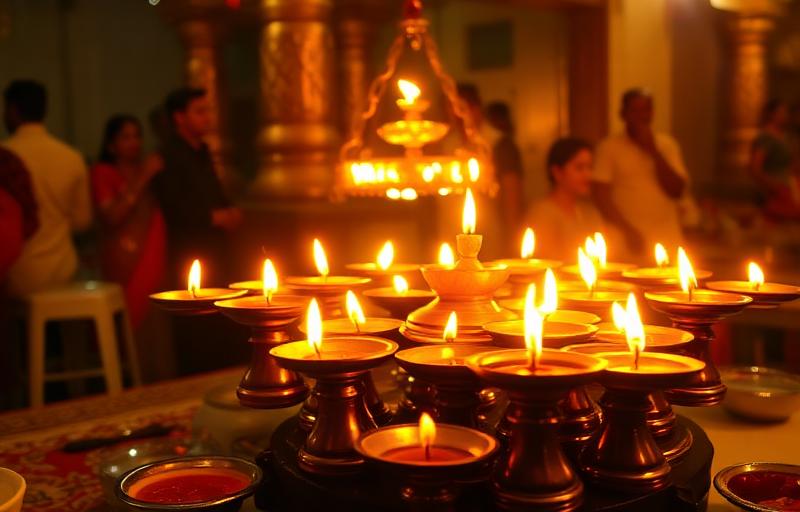
- Alongside the footprints, diyas are placed at intervals to light the goddess's path after dusk.
The act of drawing them is itself treated as a small devotional practice, done with care rather than haste.
Why the Direction of the Footprints Matters
Devotees take care to draw the footprints facing inward, toward the home, and never facing outward toward the street. This detail matters because the symbolism is entirely about invitation and arrival, not departure.
Some families extend the footprints from the gate all the way to the kitchen or the place where money and valuables are kept, symbolically guiding the goddess to every corner that needs her blessing.
Rangoli as a Wider Welcome
The footprints are usually part of a larger rangoli design at the entrance, filled with colourful patterns, flowers and sometimes images of diyas or lotuses, all created to make the home appear festive, clean and inviting.
In this way, rangoli as a whole and the footprints within it work together as both an artistic expression and a devotional gesture of hospitality toward the divine.
A Simple Takeaway
Lakshmi's footprints in rangoli are a small, artistic act of devotion that turns a doorway into an invitation. As per tradition, drawing them each year with care is an act of faith and love, not a transaction.
What People Ask Most
Which direction should Lakshmi's footprints face?+
They should face inward, into the home, symbolising the goddess entering and settling, never facing outward toward the street.
What materials are used to draw the footprints?+
Rice flour, turmeric, kumkum and coloured rangoli powders are commonly used, sometimes with a stencil for a neat, symmetrical shape.
Where should the footprints lead to?+
They typically lead from the main entrance toward the puja altar, and in some homes, further to the kitchen or place where valuables are kept.
About the author
Pandit Mahesh Trivedi · Festival Traditions & Panchang
Pandit Mahesh leads the festival-date and Panchang content on Vandnaa. He cross-references multiple regional panchangs (Drik, Vaishnava, Bengali, Marathi) for every festival date published on the site.
Meet the Vandnaa editorial team →