Lakshmi and Narayana - Who They Are
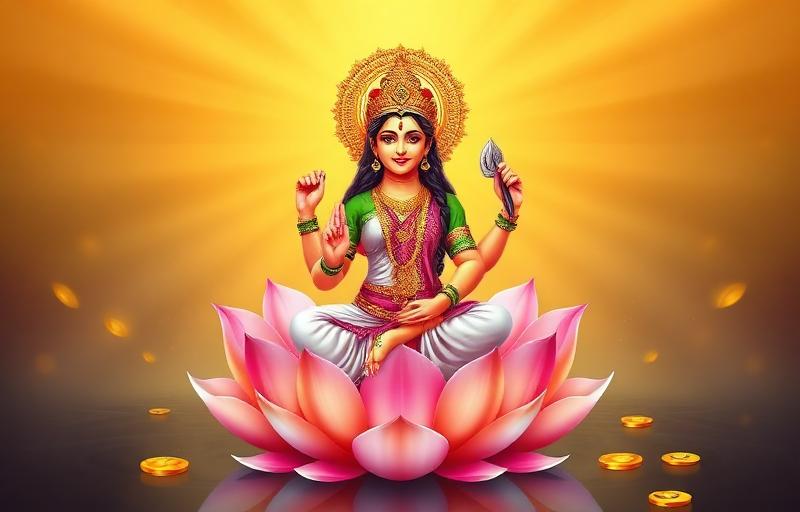
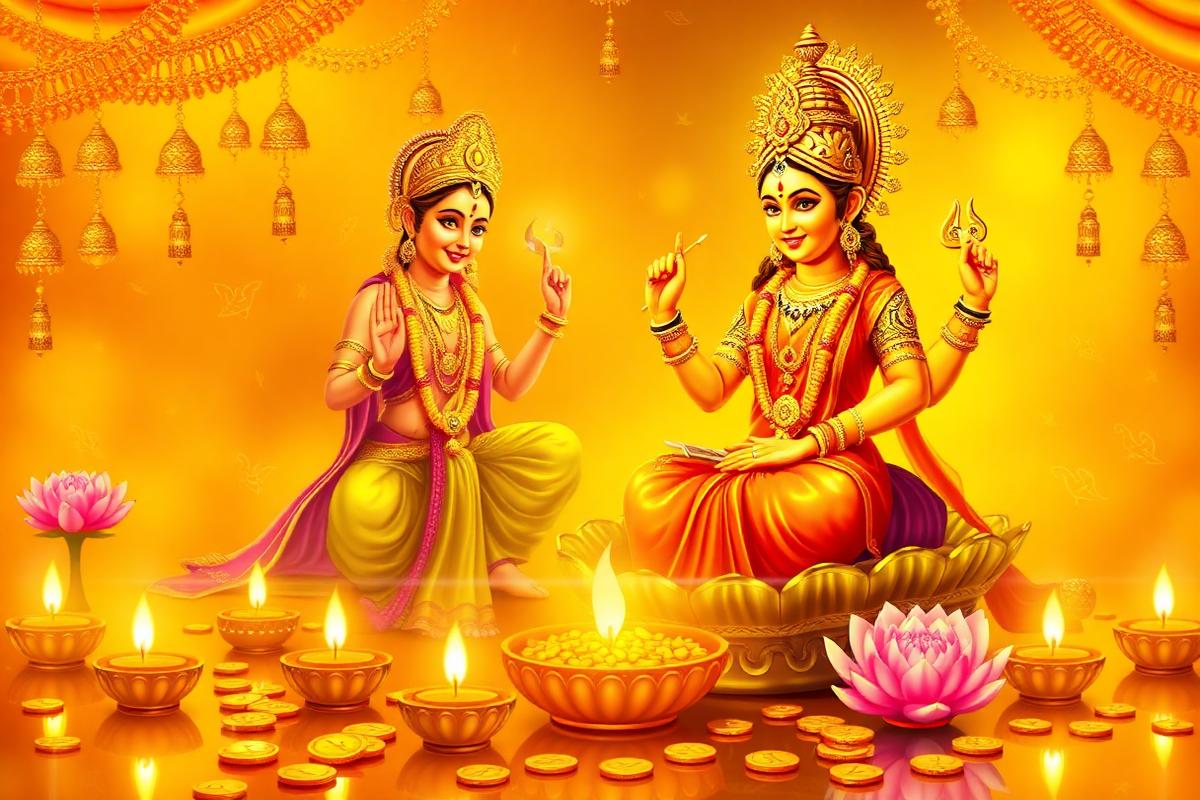
In Hindu tradition, Goddess Lakshmi and Lord Narayana, a form of Vishnu, are regarded as an eternal, inseparable pair. Lakshmi is the goddess of wealth, beauty and abundance, while Narayana is the preserver of the universe, upholding order and dharma.
Together they represent a complete picture of prosperity: not wealth for its own sake, but wealth held within the framework of righteousness and care for creation.
The Eternal Consort - A Recurring Bond
Tradition holds that wherever Vishnu takes an avatar, Lakshmi accompanies him in a matching form. As Sita, she stood beside Rama; as Rukmini, and in some traditions as an aspect connected to Radha's devotion, she remained close to Krishna.
This recurring pattern teaches devotees that prosperity and righteousness are meant to travel together through every age, never truly separate.
What Their Pairing Means
In temple iconography, Lakshmi is often shown seated at Vishnu's feet or on his chest, close to his heart, symbolising that wealth finds its rightful place only when it stays close to virtue and is never allowed to overshadow it.
Devotees see in this image a gentle correction to the idea that money and morality are separate pursuits. In Hindu thought, true abundance is meant to serve dharma, not compete with it.
How Devotees Worship Them Together
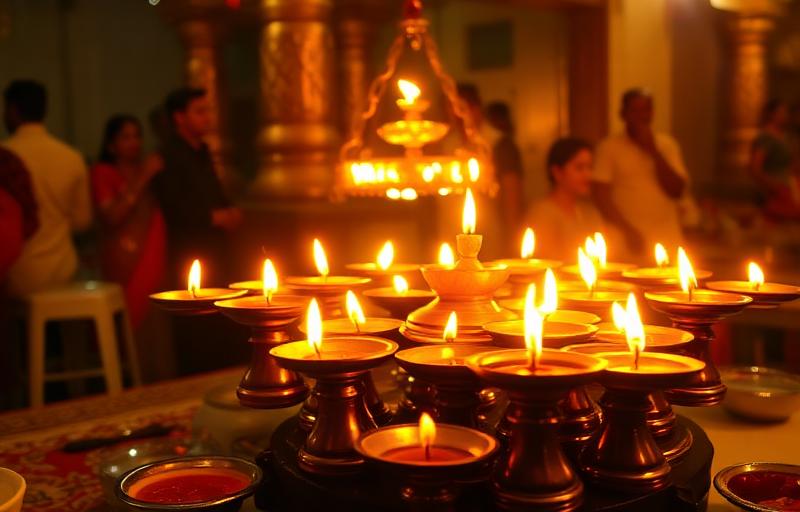
- Many households keep an image or idol of Lakshmi Narayan together on the home altar, rather than separate images.
- Fridays and Thursdays are both considered suitable, since one is associated with Lakshmi and the other with Vishnu.
- During festivals such as Diwali and Tulsi Vivah, prayers are offered to both together, acknowledging their shared presence.
- Simple offerings of tulsi leaves, alongside flowers and sweets for Lakshmi, are common, since tulsi is especially dear to Vishnu.
The joint worship is less about ritual precision and more about honouring the idea that wealth and righteousness belong together.
The Lesson: Wealth Needs Dharma
As per tradition, wealth that is earned or kept without regard for dharma is considered fragile and fleeting, much like the restlessness attributed to Lakshmi when she is not honoured alongside Narayana.
Worshipping them together is a reminder that lasting prosperity comes from earning honestly, spending wisely and remembering the divine even amid material comfort.
A Simple Takeaway
Lakshmi Narayan worship gently teaches that money and meaning are not opposites. As per tradition, honouring both together, in the home and in daily choices, is an act of faith and love, not a transaction.
What People Ask Most
Why is Lakshmi shown at Vishnu's feet in some images?+
This traditional depiction symbolises humility and the idea that wealth finds its rightful place when held close to virtue rather than placed above it.
Is it necessary to worship Lakshmi and Narayana together?+
It is not mandatory, but many devotees consider it especially auspicious, since tradition holds that Lakshmi's grace is most steady when honoured alongside Narayana.
What is the connection between Sita, Rukmini and Lakshmi?+
Tradition holds that Lakshmi accompanies Vishnu's avatars in matching forms, appearing as Sita alongside Rama and as Rukmini alongside Krishna.
About the author
Pandit Mahesh Trivedi · Festival Traditions & Panchang
Pandit Mahesh leads the festival-date and Panchang content on Vandnaa. He cross-references multiple regional panchangs (Drik, Vaishnava, Bengali, Marathi) for every festival date published on the site.
Meet the Vandnaa editorial team →